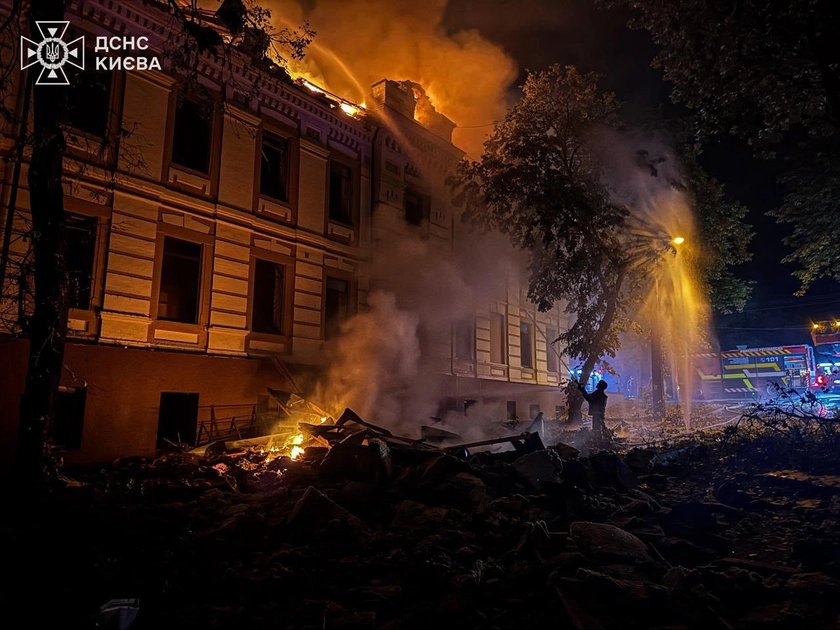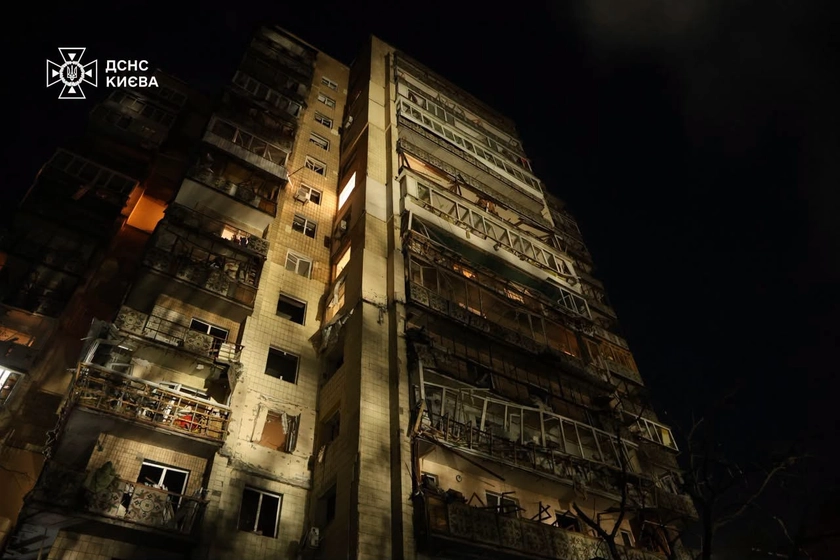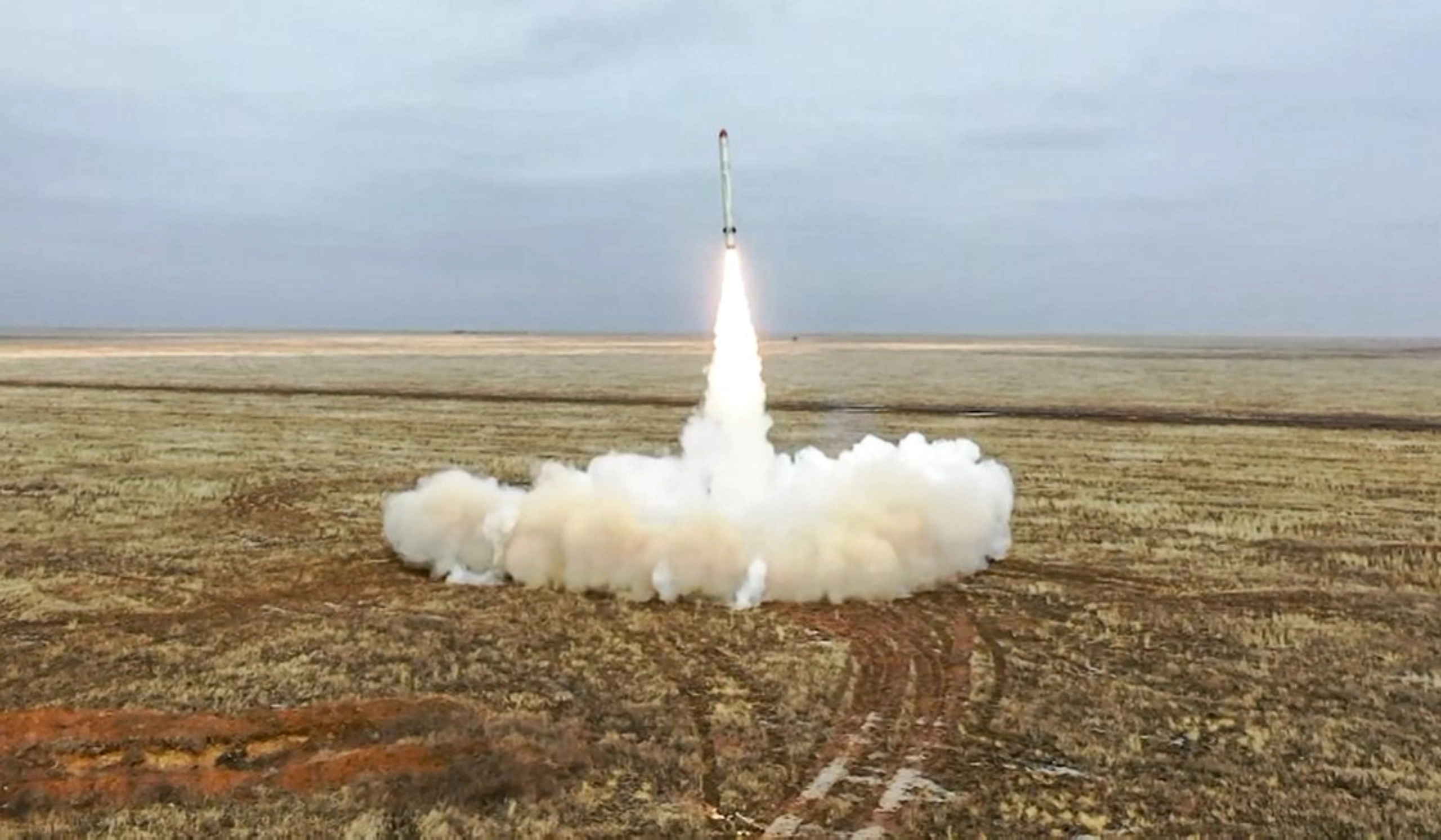
Russia has used more ballistic missiles in the first 19 days of July than its defense industry is estimated to produce in an entire month, while also expending two-thirds of its planned annual output of 3M22 Zircon missiles.
The analysis by Ukrainian defense outlet Militarnyi, based on data from the Ukrainian Air Force and regional air commands, found that Russia launched 107 ballistic missiles and 20 Zircon missiles between July 1 and July 19, including during a massive overnight attack on Sunday.
JOIN US ON TELEGRAM
Follow our coverage of the war on the @Kyivpost_official.
By comparison, Russian forces fired 102 Iskander-M and S-400 ballistic missiles, two Kh-47M2 Kinzhal missiles, and 15 Zircon missiles throughout June.
According to estimates from Ukraine’s Military Intelligence (HUR), Russia currently produces around 60 9M723 Iskander-M ballistic missiles and 40 RM-48U missiles used by S-400 air defense systems each month, for a combined monthly output of roughly 100 ballistic missiles.
With 107 ballistic missiles launched in less than three weeks, Russia has already exceeded that estimated monthly production capacity.
HUR estimates Moscow plans to manufacture only 30 Zircon missiles in 2026, meaning the 20 fired so far this month account for about two-thirds of the year’s planned production.
Before the latest wave of strikes, HUR estimated Russia’s missile stockpiles included more than 100 Iskander-M missiles, over 400 RM-48U missiles, and more than 120 Zircon missiles.

Russian Anti-War Politician Ends Political Campaign After Pressure from Kremlin
Since December 2025, Russia had maintained an estimated stockpile of around 200 Iskander-M ballistic missiles, suggesting it has recently begun drawing more heavily on accumulated reserves.
Militarnyi said the increased use of stored missiles may reflect an effort to overwhelm Ukraine’s air defenses while exploiting limited interceptor supplies during large-scale attacks.
However, the outlet noted that such a rate of expenditure would gradually reduce Russia’s missile reserves faster than they can be replenished.
Separately, recent analysis by independent missile expert Fabian Hinz has challenged the widely held view that the 3M22 Zircon is a hypersonic cruise missile.
According to Hinz, the weapon is more accurately described as a quasi-ballistic missile that follows a ballistic flight path while retaining some maneuverability. He argues that categorizing missiles simply as “hypersonic” or “non-hypersonic” overlooks important differences in flight characteristics.
Even if Zircon is not a true hypersonic cruise missile, Hinz noted, its speed and limited maneuverability still make it a difficult target for missile defense systems.
You can also highlight the text and press Ctrl + Enter