Ukraine and Russia have dramatically intensified attacks against civilian cargo ships in the Black Sea since Saturday, ending a tacit agreement between the two countries that technically neutral vessels would not be systematically targeted with anti-ship attacks, news reports on Tuesday said.
Ukraine’s escalation in the form of drone swarms hit three oil tankers in two days, on Sunday and Monday, while the vessels were loading at a Russian oil terminal built for the export of third-party crude pumped from Kazakhstan. Ukrainian military and Kazakh official sources confirmed the attacks.
JOIN US ON TELEGRAM
Follow our coverage of the war on the @Kyivpost_official.
The Russian escalation in the form of a salvo of anti-ship cruise missiles on Sunday saw a bulk cargo ship loaded with grain in the Ukrainian port of Odesa attacked within sight of shore and the worst casualties suffered by a civilian ship crew of the entire war, among them 10 dead. Ukrainian naval sources and commercial maritime media in Ukraine and Turkey confirmed the attack took place and caused damage and casualties.
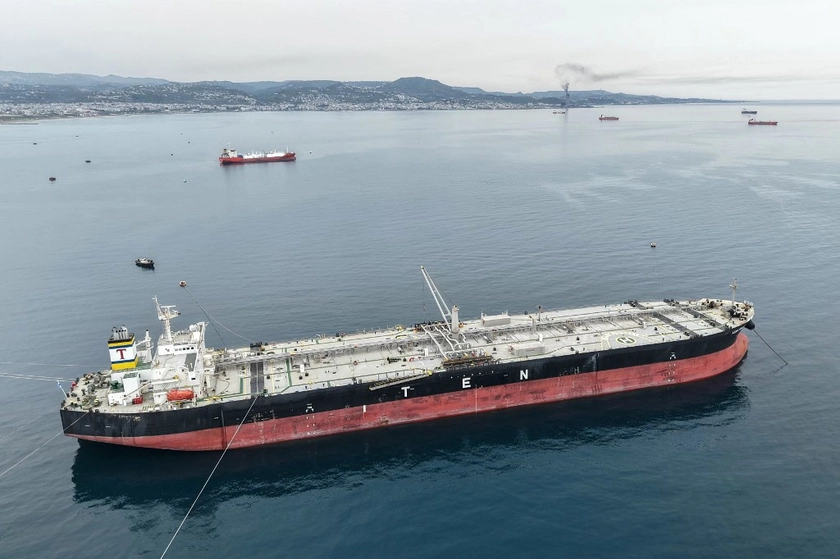
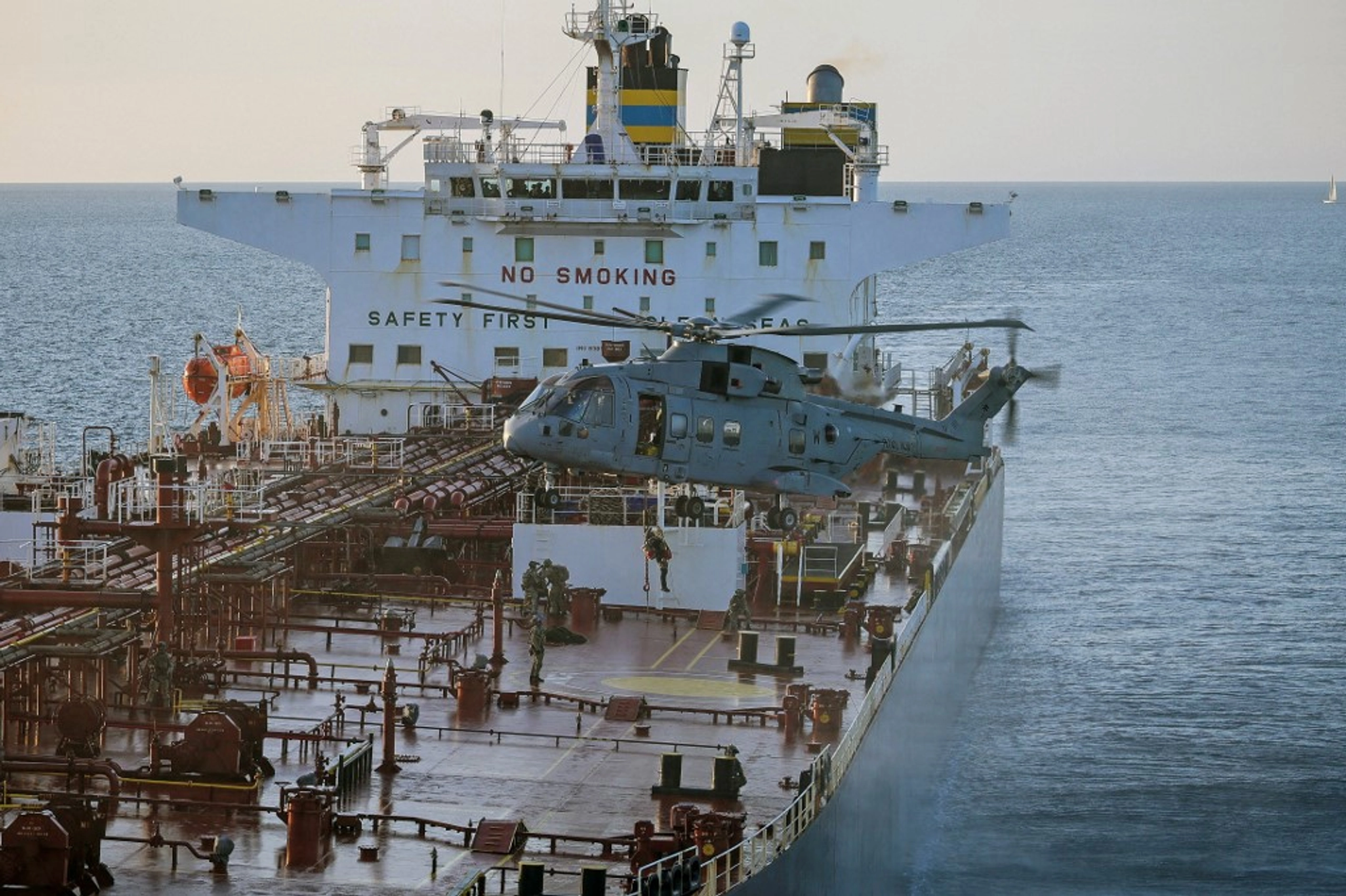
The most recent attack, a Monday air raid by long-range drones swooping in on Russia’s KTK Marine Terminal 26 km (16 miles) north of Novorossiysk, hit and set afire the crude oil tanker Nelsa as it was loading product.
The Cameroon-flagged tanker had, according to industry reports, been taking Kazakhstan-produced crude aboard when it was hit in the superstructure between the bridge and boiler rooms. Firefighters fought a blaze aboard the ship for most of the day , and 22 of the 24 crew aboard were evacuated, with the Master and Chief Mate reportedly remaining at their posts.
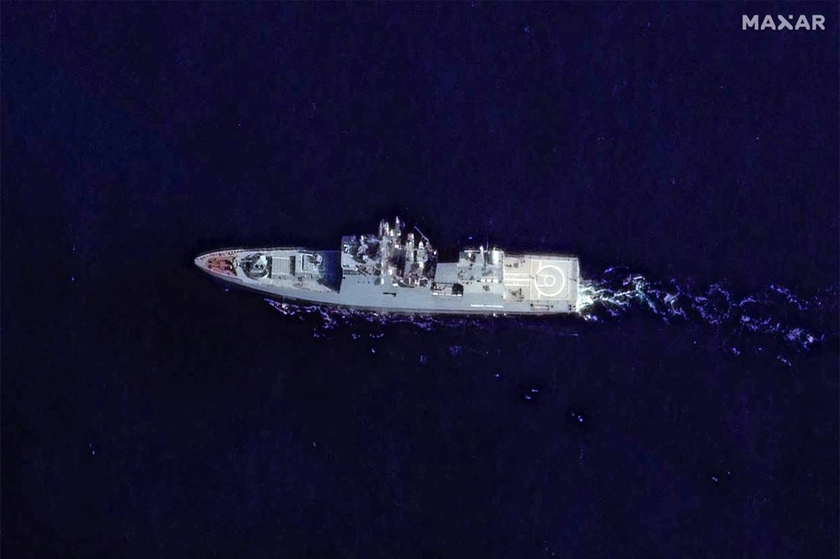
Russian Warship Conducts Live-Fire Drill Off Britain’s Plymouth
Tuesday news reports citing shore-side eyewitnesses said the vessel currently at anchor appeared in no danger of sinking. Still, her starboard aft sections seemed heavily damaged by explosion and fire.
“KTK” is the Russian abbreviation for Каспийский Трубопроводный Консорциум, or Caspian Pipeline Consortium, a company formed in 1992 to facilitate export of Central Asian crude oil to international markets. Russia and Kazakhstan are major shareholders and Oman is a minority shareholder in the project. The multinationals Chevron, ExxonMobil, Shell and Eni reportedly own KTK shares as well.
The Nesla is a confirmed member of Russia’s “shadow tanker” fleet, and the ship and its operators are under sanctions by the EU, the UK, Canada, Switzerland, New Zealand and Ukraine for helping Russia sell oil abroad in violation of Russo-Ukrainian War-related restrictions on Kremlin foreign energy sales imposed by those countries.
A July 2026 Reuters report identified the 156,000-ton deadweight Nelsa as possibly flying a false Cameroon flag to facilitate sanctions evasion. According to sanctions tracking groups, the most commonly reported owner and operator of the ship are based in Dubai. Ukrainian news agencies on Monday reported the tanker had been loading with crude oil pumped to Novorossiysk from Kazakhstan.
Ukrainian drones on Sunday attacking the KTK terminal hit a pair of tankers, the Liberia-flagged/Greek-owned Asia and the Marshall Islands-flagged Nissos Ios/Greek-owned, setting both afire. Neither vessel is listed as a known member of Russia’s shadow tanker fleet. The blazes were extinguished.
A late Monday statement, issued jointly by the Kazakhstan Ministries of Foreign Affairs and Energy on Tuesday, criticized the Ukrainian drone attacks on KTK-loading tankers, calling them “terrorist attacks” illegally interfering with the peaceful shipment of US- and Kazakh-owned crude oil aboard neutral vessels.
While not mentioning the Ukrainian Armed Forces (AFU) by name, the note claimed Astana officials had cleared the ships’ loading with relevant authorities and that the Ukrainian attack violated those clearances.
“Despite the fact that the specified applications [for the ship’s loading and departure not to be subject to Ukrainian attack] were certainly received by the addressees, on July 20, 2026, a civilian sea tanker at the KTK sea terminal was again attacked,” the statement said in part. “The aggressor country [i.e., Ukraine], when preparing an attack on a tanker under load, understood that it creates huge ecological and man-made risks, as well as endangers the lives of crew members from various countries.”
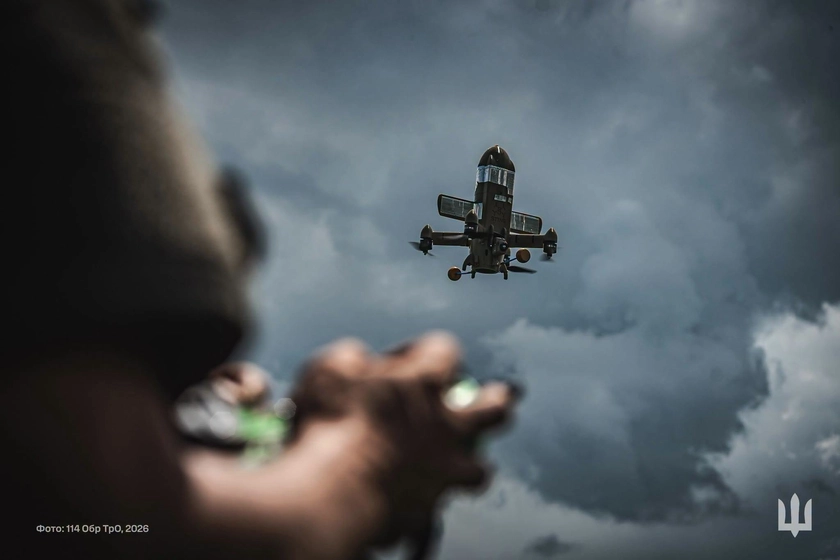
Ukraine’s drone forces commander Robert Brovdi, in a July 16 Telegram comment, said that his pilots focus their kamikaze drones on tanker bridges and engine rooms well above the waterline. The tactic disables the tanker by killing or wounding critical crew, demolishing navigation and communication equipment, and knocking engines and power production offline without risking oil spills that would pollute both Russian and Ukrainian sea lanes and wetlands, he said.
Contradicting open-source news reports that the Nesla appeared too damaged to operate, the official Kazakhstan statement asserted that the tanker had resumed loading and would proceed to its destination. The declaration did not mention the phalanx of Western sanctions currently in effect against the tanker, including by the United States.
Were a consignee to be the recipient of or otherwise earn profit from cargo carried by the Nesla, notwithstanding the Kazakhstan government claim the shipment was legitimate, then any company participating in the transfer – even a US-headquartered multinational – would be in violation of US law and potentially subject to prosecution for sanctions evasion.
The Russian cruise missile attack, probably launched by bomber or attack fighter aircraft, took place less than twelve hours before the first Ukrainian drones hit Russia’s Krasnodar region and the KTK terminal.
In that daylight attack, Russian forces launched three X-59 or possibly upgraded X-69 anti-ship cruise missiles at a cargo ship departing Ukraine’s Black Sea port of Odesa, scoring a single hit and causing heavy damage. News reports identified the ship as the Golden Leo, a bulk carrier flying a Gineau-Bissau flag and owned by a Turkish company.
The half-ton warhead killed 10 members of a mostly Syrian and Indian crew and left the ship adrift and wallowing in calm to moderate seas. Ukrainian coast guard and emergency response teams evacuated eight crew members to shore, a Tuesday statement by Ukraine’s Administration of Sea Ports said. Early reports had put the total number of crew at 17 personnel.
An article detailing the attack published on Monday by the shipping trade journal Tradewinds News reported the Russian attack was the deadliest against civilian shipping by either side, in the entire war.
Ukraine’s drone forces on July 6 unleashed a massed assault campaign targeting Russian civilian shipping in the Sea of Azov and Black Sea that, in two weeks of flight operations, has claimed effective hits on 120+ Russian ships in the Azov Sea and 54+ in the Black Sea.
Concentrating largely on Russia-flagged vessels linking the Russian-occupied Crimea region with mainland Russia, thus far, it has been one of the most successful attack operations by Ukraine’s drone forces of the entire war. The KTK attacks marked the first time the attack operation had expanded to Russia’s Krasnodar shoreline.
Before the Golden Leo attack, the most lethal Russian – or Ukrainian – attack against civilian shipping took place on July 13 when Russian forces hit a Togo-flagged merchant vessel offshore Odesa killing five and injuring ten. It was not clear whether Russian cruise missiles or drones were responsible.
Other recent Russian attacks against civilian shipping have been a July 18 attack against a Marshall Islands-flagged merchant vessel, and July 14 twin attacks against Tanzania- and Liberia-flagged vessels killing the captain of one of the ships and injuring a total 11 sailors, and a July 15 drone attack hitting a Marshall Islands-flagged cargo ship loading in Odesa port. Odesa regional official Oleh Kiper told the RBK-Ukraina news agency that Shahed drones, a relatively cheap, bat-wing aircraft designed by Iran for Russia, carried out those attacks.
You can also highlight the text and press Ctrl + Enter

OPINION: The Bill for Crimea Comes Due for Putin