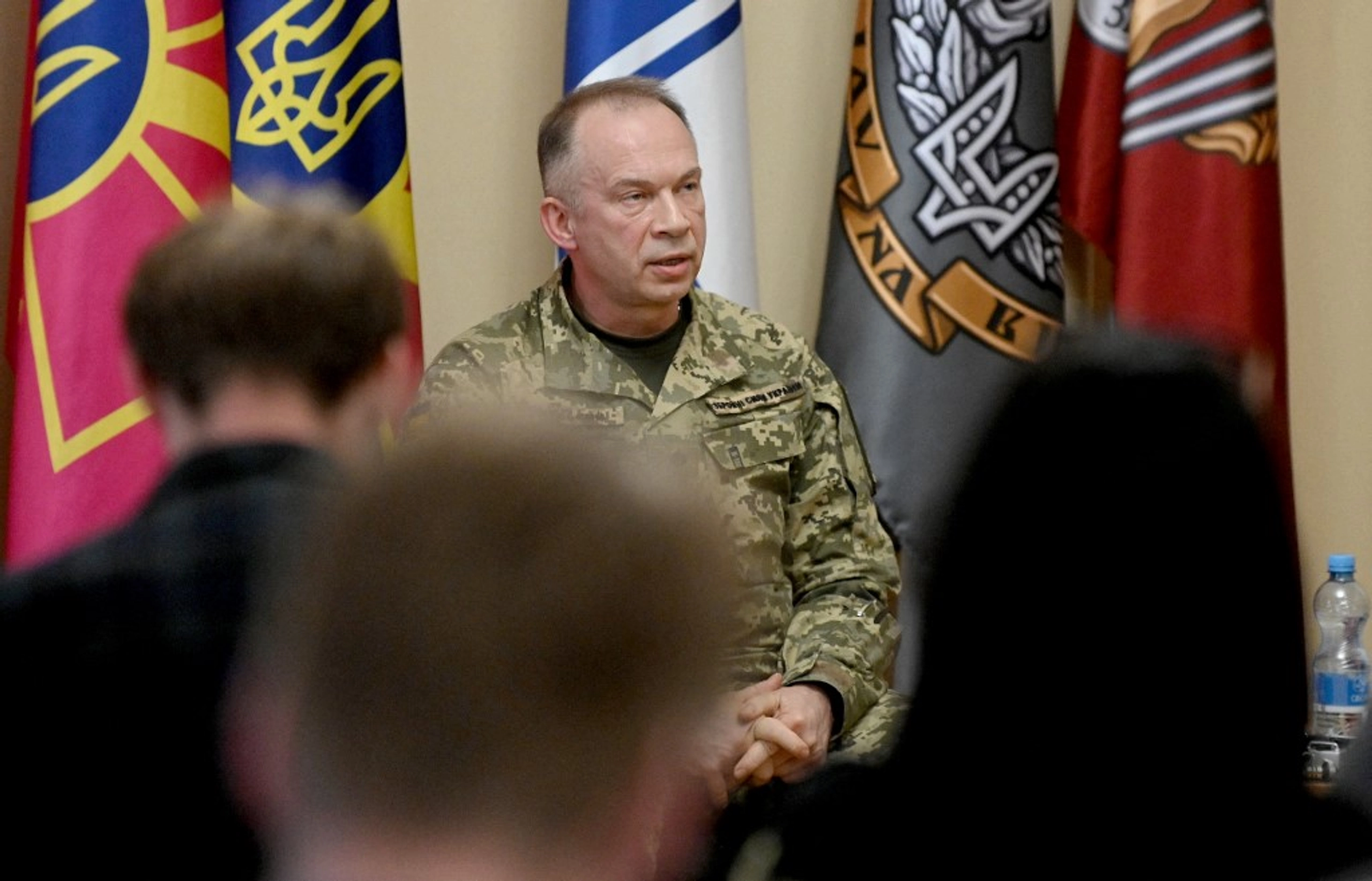
Commander-in-Chief of the Armed Forces of Ukraine (AFU) Oleksandr Syrsky publicly apologized to former Defense Minister Mykhailo Fedorov in a rare personal column, saying he did not know there was a conflict between them until it spilled into public view.
Syrsky published the column himself, explaining that he typically avoids public statements, but felt compelled to respond after his initial silence was increasingly read as agreement with claims of sabotage and dysfunction surrounding the army and General Staff.
JOIN US ON TELEGRAM
Follow our coverage of the war on the @Kyivpost_official.
“For me, it was a surprise to learn that the minister and I had a conflict. I saw our relationship as a working one, with difficult questions and different positions. That is how it should be between two institutions during a great war,” Syrsky wrote.
“If I offended someone with something: Mykhailo Albertovych [Fedorov], I’m sorry. I can be tough,” he continued. “But I ask you, and everyone following this story with such enthusiasm, to focus not on the personal but on the global one. On victory.”
Syrsky warns against personalizing the war
Reducing the war to rivalry between two individuals plays directly into Russia’s hands, Syrsky said, adding that “Ukraine is bigger than Fedorov, Syrsky, or any of us,” and that the country holds together precisely because of its army, institutions and millions of other people doing their jobs – not because any of them is irreplaceable.
He warned against Ukrainians splitting into a “Fedorov camp” and a “Syrsky camp,” describing the emerging issue as far more complicated than social media suggests. “This war will be won by real work, not by the public drama around it,” he continued.
Russian Strike Hits Civilian Enterprise in Odesa, Kills 6, Wounds 6
Dividing responsibilities
In his column, Syrsky also laid out what he described as the basic division of labor that got lost in the public debate: the defense ministry handles army supply, procurement and policy, while war strategy and battlefield operations fall under the legal responsibility of the commander-in-chief. And this is “not because I ‘do not let’ someone succeed,” Syrsky said, “but because the institutional processes are built that way in all the armies of the world,” he continued, adding that it’s not the task, nor the responsibility of the minister of defense to be a war strategist.
He has also pushed back on claims he lacks a strategy, saying that a war strategy is not a social media post, but something reported directly to the president, with its results visible mainly on the front line. Anyone who demands the public presentation of a strategy, “demands to present it to the enemy,” he argued.
Proper chain of command according to Syrsky
Syrsky denied accusations that he micromanaged the war effort, insisting that after more than 40 years in the army, he does not run daily operations through messaging apps. Instead, he said, a force as large as Ukraine’s operates through a proper chain of command, where field commanders make decisions for their units.
As an example, he pointed to his most recent move, in which he gave corps commanders more power to decide troop transfers themselves – the opposite, he argued, of trying to control everything from the top.
Rejection of claims that he resists using drones
“The strangest criticism I heard is that I supposedly ‘don’t want to fight with drones’,” he said, noting that he helped set up Ukraine’s dedicated drone force and picked its commander, Robert “Madyar” Brovdi, despite it being an unconventional choice at the time.
Still, he said, drones alone cannot win the war – to use them effectively, soldiers also need artillery, mortars, engineering equipment, and air defense systems alongside other technology. According to him, switching the army to mainly rely on drones within just a couple of months would be reckless and could cost soldiers’ lives and Ukrainian territory.
Drone use expanded under Fedorov’s tenure
Fedorov served as defense minister for roughly seven months before his dismissal on Wednesday, July 15. During this period, Ukraine advanced its military acquisitions and deepened its reliance on unmanned systems for dangerous frontline missions. Notable results were achieved in many sectors under Fedorov’s tenure, including the removal of Starlink access for Russian troops and the launch of Kyiv’s drone-strike campaign targeting Russian oil facilities and logistics networks.
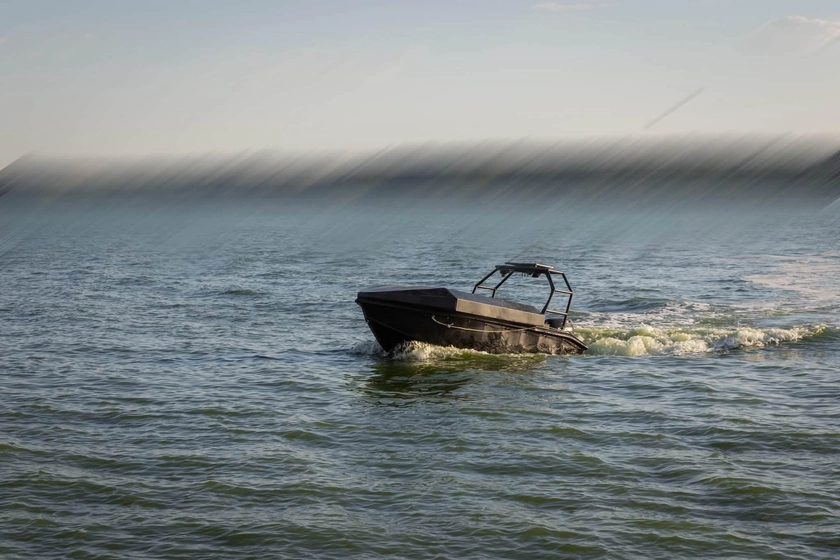
Since January, the military has carried out more than 50,000 logistics and evacuation missions using ground robotic complexes (GRCs) in order to preserve soldiers’ lives in high-risk situations. By comparison, Syrsky is perceived by some in Ukraine as a commander coming from Soviet-style attrition warfare, who describes manpower losses as an unfortunate but necessary aspect of warfare.
Following his resignation, Fedorov accused Syrsky of sowing division and obstructing reforms, confirming that the dispute between them was the central reason behind his removal.
Because of this, many Ukrainians have expressed frustration, saying he was dismissed as soon as his efforts began showing results, arguing that authorities who deliver progress are too often pushed out of their posts. That same frustration has fueled ongoing street protests throughout Ukraine, with Sunday, July 19, marking their fourth consecutive day. Although the demonstrators have called for Fedorov’s reinstatement, reports indicate that he turned down alternative positions offered by President Volodymyr Zelensky as of Monday afternoon.
Broader cabinet reshuffle
Fedorov’s dismissal came as a part of a broader cabinet reshuffle. Ukraine’s Verkhovna Rada approved a new government on Thursday, with a cabinet of ministers headed by Koretskyi.
Prime Minister Yulia Svyrydenko was the first to resign, with 258 lawmakers voting for her dismissal on Tuesday after Zelensky signaled a cabinet reshuffle days earlier. Ukraine’s parliament subsequently confirmed Koretskyi as her replacement.
You can also highlight the text and press Ctrl + Enter

OPINION: The Bill for Crimea Comes Due for Putin