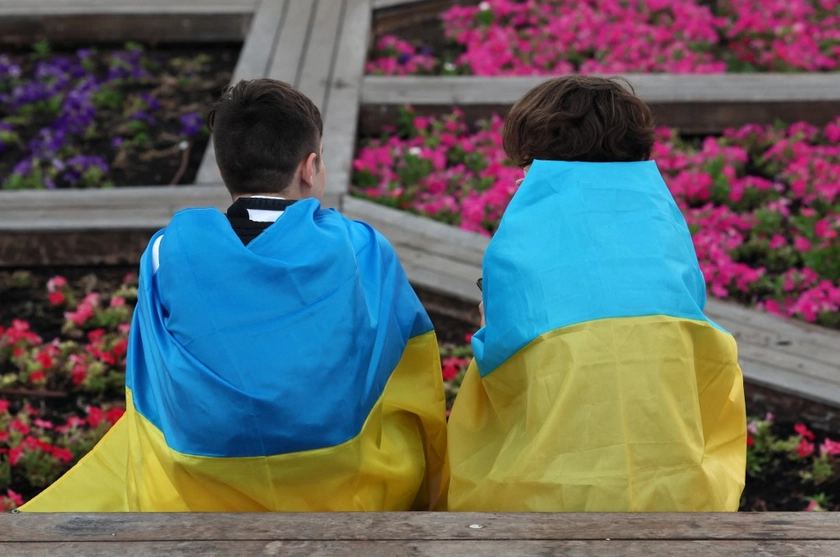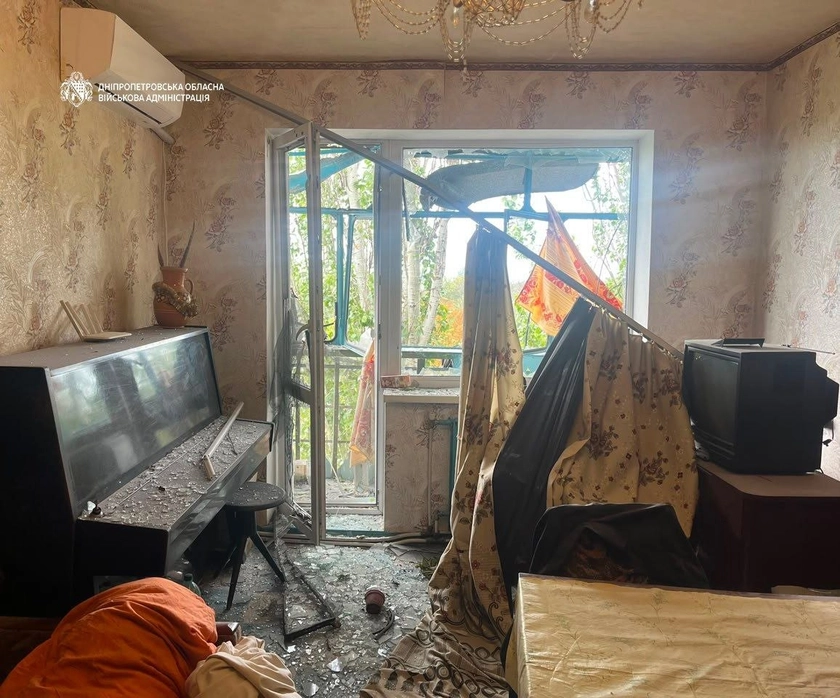
Since the Euromaidan Revolution, Ukraine has steadily won the hearts and minds of Western societies. That became even more evident in 2022, when Russia launched its full-scale invasion.
As the unmistakable victim of aggression, resisting heroically while millions of people fled their homes, Ukraine inspired both sympathy and admiration. Ukrainians proved they are the modern, European society with clear democratic and Western aspirations. This image was reinforced by an exceptionally effective communication strategy.
JOIN US ON TELEGRAM
Follow our coverage of the war on the @Kyivpost_official.
Yet with each passing year of the war, that image has gradually weakened. There are many reasons for this: public fatigue with a protracted conflict, the relentless work of Russian propaganda, and mistakes made by Ukrainian politicians themselves.
A historical front with Poland
For several weeks, Ukraine and Poland have been embroiled in a dispute over history – more specifically, over the legacy of the Ukrainian Insurgent Army (UPA). A long-defused but never fully dismantled political bomb exploded when President Volodymyr Zelensky named a military unit after UPA heroes, an organization associated in Poland with the massacre of Polish civilians during World War II.
Following the escalation, both governments gradually sought to calm tensions in a dispute neither side truly wanted. In mid-July, after internal consultations, Zelensky announced measures intended to ease the crisis, including opening Ukrainian security service archives related to World War II and accelerating permits for Polish institutions to conduct search and exhumation work in Ukraine.
EU Agency Halts Venice Biennale Funding Over Russia’s Return
The key question, however, is whether these steps represent a lasting solution or merely another attempt at damage control. The former would clearly be preferable. Future crises will become increasingly costly for Ukraine and could eventually bring an end to a principle that has guided Polish policy since 1991: separating strategic and particular interests from historical disputes.
There are already growing concerns in Poland that Ukraine’s newly established National Pantheon may include figures directly responsible for the killing of Polish civilians. The stakes are rising. Not long ago, the debate focused primarily on exhumations and commemorating victims. Increasingly, however, the discussion is shifting toward the legitimacy of honoring the UPA itself.
Sovereigntism vs pragmatism
Historical policy, as its name suggests, is ultimately politics. It can be driven by dignity, pragmatism, or sovereigntist thinking – and these approaches often overlap. One thing is certain: it is not an academic discipline. Winston Churchill is remembered primarily as the leader who helped defeat Nazi Germany, not as an opponent of women’s suffrage.
In recent years, alongside Cossack-era hetmans, Ukraine has increasingly commemorated partisan units and commanders from the Second World War. Whenever Poland raises objections, responses from the Ukrainian side often follow a familiar pattern: “No one will tell us who our heroes should be.”
This is a populist, sovereigntist argument that is frequently mistaken in Poland for evidence of Ukraine’s alleged “Banderization.” Such rhetoric is politically convenient, particularly during wartime and amid heightened patriotic sentiment. Yet it is also deeply counterproductive.
Across the European Union, few would expect Slovakia to officially celebrate Jozef Tiso, while Spain long ago removed General Franco from places of state honor. Similar examples could be multiplied. None of these countries became less sovereign by distancing themselves from controversial historical figures. Instead, they reduced domestic tensions, strengthened relations with their neighbors, and created a political consensus that placed the most divisive nationalist legacies outside mainstream state commemoration.
The dispute over the UPA requires a durable political solution-not endless symmetry arguments or whataboutism. Otherwise, Ukraine may ultimately pay a significant price, even if some politicians continue exploiting the issue for short-term domestic gain. The reality is simple: official state commemoration of certain figures will remain unacceptable to many of Ukraine’s partners. This is not about allowing other countries to write Ukraine’s history. It is about establishing mutually understood red lines and accepting that both sides- in this case Poland and Ukraine-have legitimate sensitivities. It is equally important to distinguish between state commemoration, local initiatives, NGO activities, and individual expressions of memory. These are fundamentally different levels of historical remembrance.
Winning the next battle
Ukraine has repeatedly demonstrated that it can conduct highly effective public diplomacy and act pragmatically when necessary. Yet the current moment could have been managed far better. At a time when Viktor Orbán is no longer blocking Ukraine inside the EU, Emmanuel Macron remains supportive, and Kyiv is simultaneously facing a domestic political crisis, opening a historical front with Poland was a strategic mistake. The window of opportunity is slowly beginning to close. It is entirely understandable that Ukraine, after centuries of domination, is only now reclaiming the right to tell its own national story. But others also have the right to question elements of that narrative. What is needed now is less emotionally driven rhetoric and more diplomacy grounded in political realism.
In the end, it really doesn’t matter who is morally right. What matters are pragmatic decisions that produce positive political outcomes. As Ukraine moves toward EU membership, it will need not only the formal support of governments but also the goodwill of European societies. For now, Peter Magyar has already pledged to hold a referendum in Hungary on Ukraine’s EU membership. Winning that support is ultimately the responsibility of Ukrainian political leaders. History, if handled wisely, can strengthen Ukraine’s European future. If handled poorly, it could become another battlefield-one entirely of its own making.
The views expressed in this opinion article are the author’s and not necessarily those of Kyiv Post.
You can also highlight the text and press Ctrl + Enter