Background, education, personal life and early career
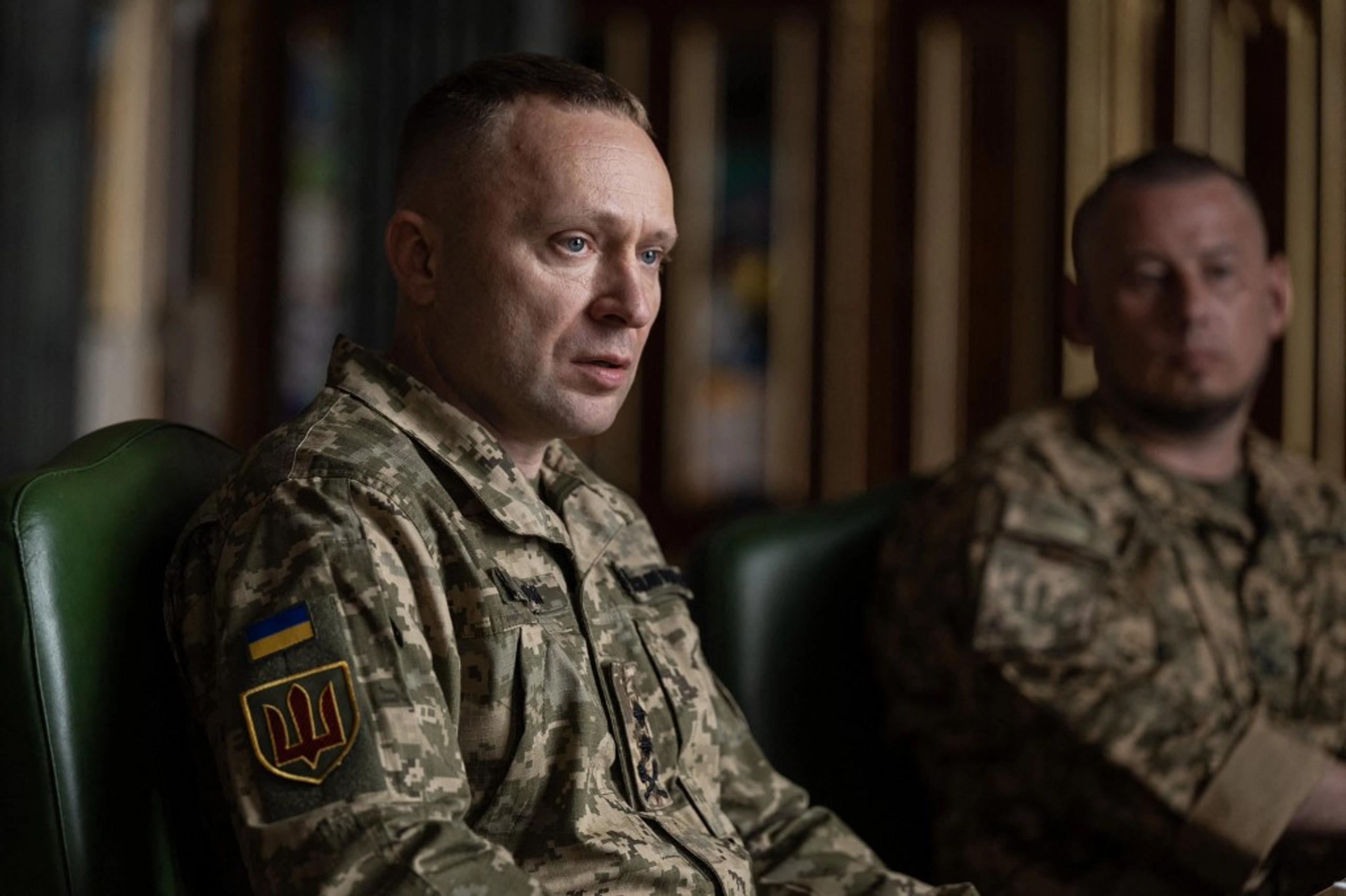
Mykhailo Drapaty, 43, is a professional officer who was served his entire career in the Armed Forces of Ukraine (AFU). From 2014 he has troops in combat successfully, at every level of command to which he was assigned. By conventional war experience, he is one of the most seasoned field commanders in the AFU and by many measures in the continent of Europe.
Drapaty was born in Ukraine’s western city Kamianets-Podilskyi, in Khmelnytsky region. His wife Yuliia Drapata teaches at Bila Tserkva Art School No. 5 and is a member of the bandura (a Ukrainian stringed instrument) ensemble “Oleksandriia.” The couple met when then-lieutenant Drapaty was assigned to 72nd Mechanized Brigade, an “old military” formation based in Bila Tserkva. The Drapatys have two children, a son and a daughter.
JOIN US ON TELEGRAM
Follow our coverage of the war on the @Kyivpost_official.
As a commander, Drapaty is known for a hands-on leadership style emphasizing soldier mastery of weapons and combat drills, authority and professionalism in junior leaders and initiative and physical fitness for all. Former subordinates recall Drapaty is comfortable sharing a joke or a beer with subordinates but that his style is 24/7 “in command.” He has criticized Soviet-style discipline allowing no initiative as a “culture of fear.”
In early interviews Drapaty told reporters the most difficult part of commanding troops is being responsible for soldier lives. He is a graduate of the famous (in Ukraine) Kharkiv Institute of Tank Troops.
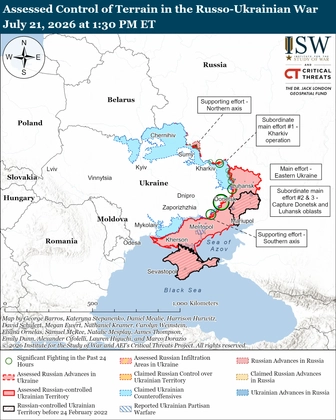
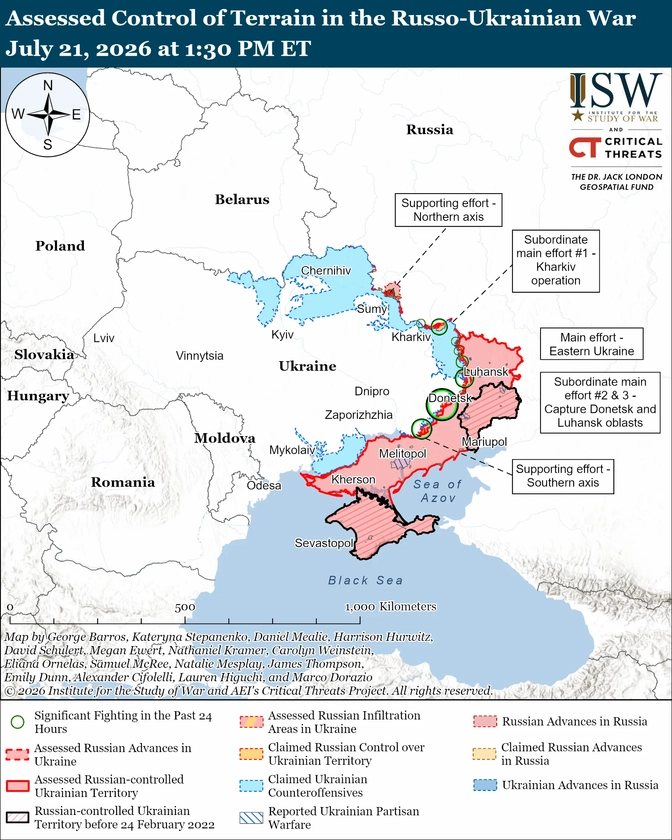
ISW Russian Offensive Campaign Assessment, July 21, 2026
He joined the AFU in 2004 and by 2014 had relatively quickly reached the rank of Major. At the time corruption and decay in the Ukrainian military were rife. Drapaty as a young officer was known – against the grain – as a man serious about military service and who worked harder than most colleagues.
Following Russia’s first invasion of Ukraine with its occupation of Crimea and raising of anti-Kyiv militia backed by regular Russian military troops in Ukraine’s eastern Donbas region, the hollowed-out AFU had practically no combat-ready units. Drapaty’s 2nd Battalion 72nd Brigade was one of the very few able to collect sufficient men and equipment for deployment eastward.
First battles in 2014 and the “ATO”
Maj. Drapaty became one of Ukraine’s first war heroes – although at the time he wasn’t identified – on May 9, 2014, (at the time, the national war holiday Victory Day) at the head of a 72nd Brigade armored column in the major Azov Sea port city Mariupol. When his troops encountered a road barricade constructed by pro-Russia activists and militia across a major road entering the city, Drapaty riding a BMP infantry fighting vehicle drove to the front of the column and ordered his driver to smash through the barricade at maximum speed.
It was a dangerous and career-risking decision because at the time Ukrainian regular military troops had avoided confrontation with civilians for fear of casualties and civil war. Kyiv authorities even invented a euphemism describing military operations against Russia’s first invasion of Ukraine, without actually calling it an “invasion” or a “war,” which would constitutionally require the establishment of martial law – it was given the politically correct term of “anti-terrorist operation,”or ATO.
Drapaty’s decision to charge the barricade and smash his column’s way to the city center helped galvanize pro-government resistance in Mariupol and demonstrate that even “ATO” meant the central government using military force against theoretically “civilian” resistance. By mid-June government forces had re-established control of the city. The fact that Drapaty was in the much-videoed BMP only became pubic knowledge in 2018.
Less well-known, but according to him and most fellow combatants more significant was the Battle of Izavarnye taking place Aug. 6-7, 2014, in Ukraine’s eastern Luhansk region, near the Russian Federation border. In that combat separatist militia backed by Russian military artillery and special operations commandos demanded Drapaty surrender his battalion and soldiers attached to it, and all their weapons, because they were surrounded, under constant observation by Russian military drones and well in range of Russian howitzer, mortar and rocket batteries.
The Russians promised the Ukrainians would be treated well. Drapaty on his own authority defied the surrender offer and led an tank-infantry assault that broke out of the encirclement and passed through a 24-hour gauntlet of Russian fire, with minimal losses.
“Ceasefire” period and early battles in Russia’s second invasion
During subsequent “ATO” years, from 2016-2021, while most western states thought a “ceasefire” to be mostly implemented in eastern Ukraine, Drapaty commanded troops from 30th Mechanized Brigade and later 58th Mechanized Brigade in combat around the front-line cities Avdiievka and Toretsk.
In 2021 he graduated with honors from an advanced staff officer’s course and was assigned as the senior training officer in Joint Command North. There he worked as senior training officer on the staff of the future AFU top commander, Valery Zaluzhny.
Following Russia’s second and much bigger invasion of Ukraine on Feb. 24, 2022, in mid-March Drapaty – probably on Zaluzhny’s orders – was assigned commander of the AFU’s Joint Forces South Group of troops. In that sector at the time, Russian forces had advanced the fastest and furthest than anywhere else in the war, because of a collapse of Ukrainian defenses there.
Drapaty was placed in charge of, on paper, a force of 20,000+ men, but dissolving formations and top-level decisions to send all possible resources and reserves to the defense of Kyiv left him with only a few thousand organized troops to hold a 200+ kilometer (130 mile) front. Using mobile columns, dedicated counterattack groups and police and even untrained militia fill gaps, Joint Forces South had stopped the Russia’s southern offensive by June 2022 and stabilized the sector.
In Oct.-Nov. 2022 AFU units shifted to the offensive in the southern sector and in systematic counterattacks Drapaty’s troops pushed Russian forces to the southern, left bank of the Dnipro River, liberating about 2,000 square kilometers (772 square miles) of territory including the major city Kherson. In those operations US-delivered HIMARS precision-guided artillery rockets were used in quantity for the first time in the war.
Drapaty’s strategy was to hit critical nodes like Russian headquarters and ammunition dumps, and to batter down bridges across the Dnipro and other waterways to interrupt Russian supply and force them to retreat, rather than attacking Russian defenses frontally.
Drapaty’s popularity with troops as a commander preferring to defeat the Russians with technology, metal and intelligence, rather than massed ground assaults, date to this time.
Trouble-shooter sent by HQ to the tough sectors, and drones – 2024-2026
For the rest of 2022 and 2023 Drapaty remained in command of Ukrainian forces in the generally stable southern sector. Notably, the two big Ukrainian offensives attempted during that time, an armored assault towards Crimea in June and a cross-Dnipro amphibious operation begun October, were run through command channels outside his area of responsibility. Both offensives were unsuccessful, the ground assault disastrously so because Ukrainian commanders there chose to attack well-prepared Russian defenses.
On May 24, following replacement of his old boss General Zaluzhny at the top of the AFU, Drapaty was transferred from the southern sector to the north-eastern Kharkiv sector where major Russian forces had assembled and a heavy offensive had just kicked off. In battles lasting through Spring and most of Summer 2024 Drapaty’s troops numbering 15,000 to 20,000 personnel held off a Russian attacking force probably three times its size. The Russian assault timed to exploit a widening deficit in Ukrainian shell supplies was halted by Ukrainian defenses incorporating for the first time tactical drones in large numbers for observation and strikes against attacking columns.
It would be inaccurate to call Drapaty the author of those tactics, which had been developed and refined by smaller unit commanders across the AFU since mid-2023. He was however the first high level commander, on either side, to field and execute a drone-dominant defense successfully, on a large scale.
In September, Drapaty was transferred again, this time to the eastern Donetsk sector, to counter the next major offensive planned, this time to drive to the cities Kramatorsk and Slovyansk. Drapaty’s drone-led defenses inflicted heavy and sometimes annihilating casualties on the Russian attacks, which became the last massed armored column assaults attempted by Kremlin forces of the war to date.
At the end of 2024, President Zelensky stepped on toes of the top military leadership, the military general staff, and appointed Drapaty commander of all Ukrainian Ground Forces and simultaneously field commander of the AFU’s single-biggest tactical group, a command called “Khortytsia” (later renamed Dnipro), which was responsible for practically the entire Eastern front, from the northern Kharkiv region to the southern Donetsk region.
Khortitsiya was the AFU’s single-biggest ground force, some 40-50,000 soldiers. Over the next six months its units deployed on the eastern front – some commanded by Drapaty back in the dark days of 2022 – implemented tactics called “drone wall,” with drone swarms making Russian vehicle attacks impossible and small Russian infiltration attacks so costly that by mid-2025 Russian combat losses for the first time in the war were exceeding recruiting.
Resignation on principle, and reinstatement
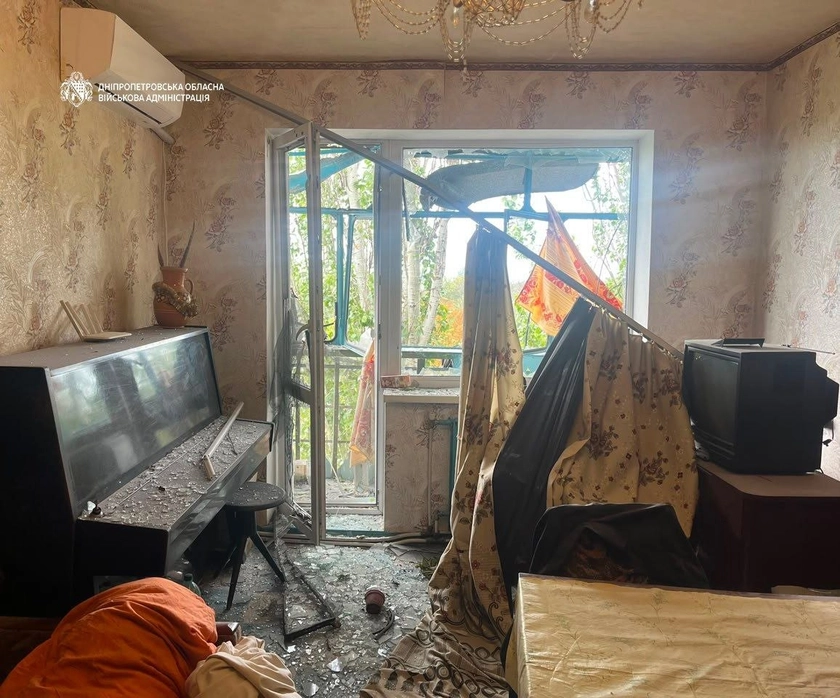
On June 1, 2025 Drapaty resigned from his job as Ground Forces commander following Russian missile strikes in May and June that had killed dozens of AFU personnel, probably because of leaked information about troop gatherings planned within range of the missiles. The worst was a June 1 attack hitting a training area in Dnipropetrovsk region that killed 12 and injured at least 60. Drapaty had taken personal responsibility for making troops train outside of Russian missile range and not leak information about training locations, so he resigned on the principle that he had failed to live up to his promise. The decision was widely seen in the AFU as a laudable – and for the AFU rare – acceptance of responsibility by senior officer for the errors of subordinates.
Zelensky accepted the resignation but retained him in the AFU’s top level headquarters, the Joint Forces command, as well as in the Khortitsiya field command. The general staff dissolved that command in October, in a move seen by many in the AFU as an attempt by the General Staff, led at the time by General Oleksandr Syrsky, to sideline Drapaty, who was seen by some as an overly-principled officer who thanks to good press had become a favorite of the President. Drapaty at the time said he was dedicated to defeating Russia and would serve in whatever capacity his country needed him.
By mid-Spring 2026 public criticism of Syrsky had coalesced around the civilian Defense Minister Mikhailo Fedorov who had come into open conflict with Syrsky and the General Staff about war strategy and resourcing the AFU. Fedorov’s early June resignation was initially seen as a Syrsky victory in maneuvers for position in Kyiv politics, but public reaction to Fedorov’s ouster and demands for Syrsky to be kicked out of the top command job appear to have opened the door for Drapaty, who is widely seen as Ukraine’s most skilled “new generation” general, to replace Syrsky in the top military job.
You can also highlight the text and press Ctrl + Enter