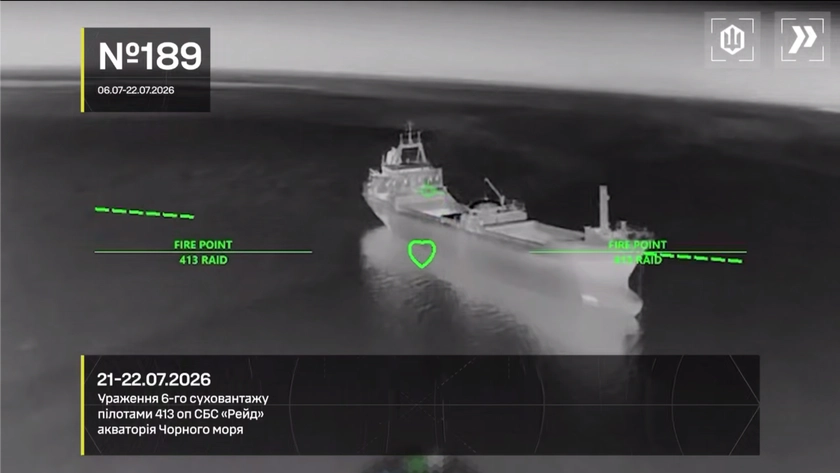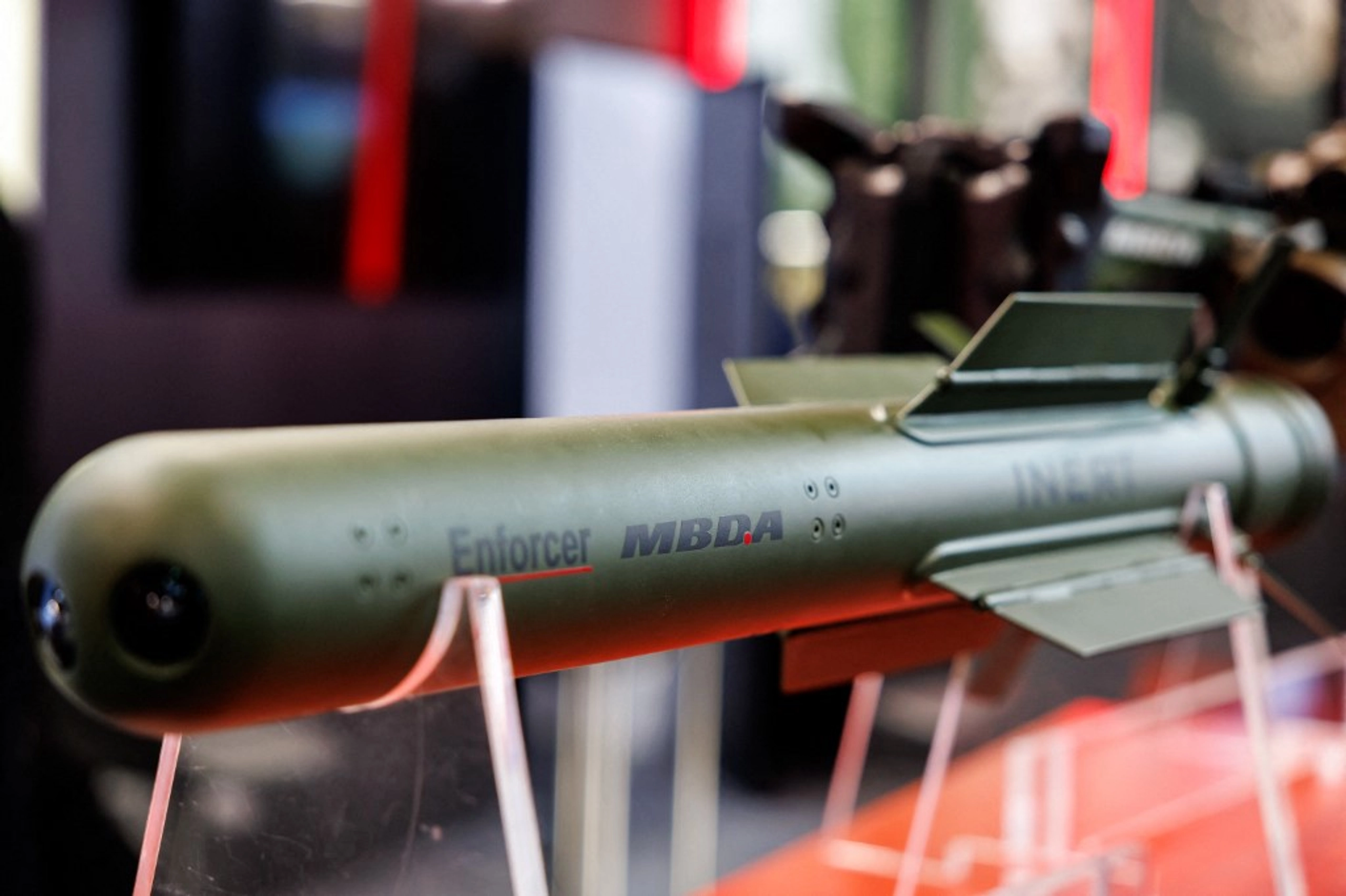
Britain and Germany are quietly developing a new long-range missile capable of striking targets up to 2,000 kilometers (1,243 miles) away inside Russia as part of a major expansion of European defense cooperation.
According to a report by the German newspaper Welt, published jointly with Britain’s The Telegraph, the classified Deep Precision Strike (DPS) program has become the flagship project of a rapidly expanding security partnership between London and Berlin.
JOIN US ON TELEGRAM
Follow our coverage of the war on the @Kyivpost_official.
Citing multiple anonymous British and German officials familiar with defense planning, Welt reported that the missile, expected to enter service by 2034, would be designed to conduct long-range precision strikes against strategic military targets, including logistics hubs and supply lines deep inside Russia in the event of a NATO conflict.
The DPS initiative was unveiled at NATO’s July summit in Ankara as a €35 billion ($40.8 billion) British-led program involving 12 alliance members, with Germany expected to play a central role. The program is also expected to combine German financial backing with British technological expertise, as per the report.
Officials told Welt that two missile concepts are currently under consideration: a low-flying cruise missile designed to evade Russian air defenses and a hypersonic missile capable of traveling at more than five times the speed of sound.
British officials reportedly want to move the project from the 2024 declaration stage to a formal development program as early as next year.
Ukraine's Drone Offensive Hits 13 Russian Ships and Crimea's Power Grid in 48 Hours
Defense analysts say the initiative reflects Europe’s growing effort to reduce its dependence on the US for long-range strike capabilities.
“Deep Precision Strike essentially means the ability to attack strategically important targets such as headquarters or logistics hubs whose destruction would cripple front-line supply networks,” missile expert Sidharth Kaushal of the Royal United Services Institute (RUSI) said.
Currently, NATO possesses only limited conventional deep-strike capabilities beyond a relatively small number of US-made Tomahawk cruise missiles.
The missile initiative is part of a broader expansion of UK-German defense cooperation under the 2024 Trinity House Declaration and the 2025 Kensington Agreement.
German defense firms have significantly increased investments in Britain, including Rheinmetall, which opened a new artillery production facility in Telford, Heckler & Koch, expanded manufacturing in Essex, and Helsing, and recently opened a factory producing AI-enabled underwater drones in Plymouth.
However, not everyone supports the project’s timeline.
Former US Army Europe commander Ben Hodges called the plan to field the missile by 2034 “absurd,” arguing that Ukraine already operates drones capable of striking targets 2,000 kilometers (1,243 miles) away.
German security expert Nico Lange also questioned the pace of the initiative, saying Europe should focus on deploying ground-based deep-strike capabilities within months, rather than waiting a decade.
You can also highlight the text and press Ctrl + Enter