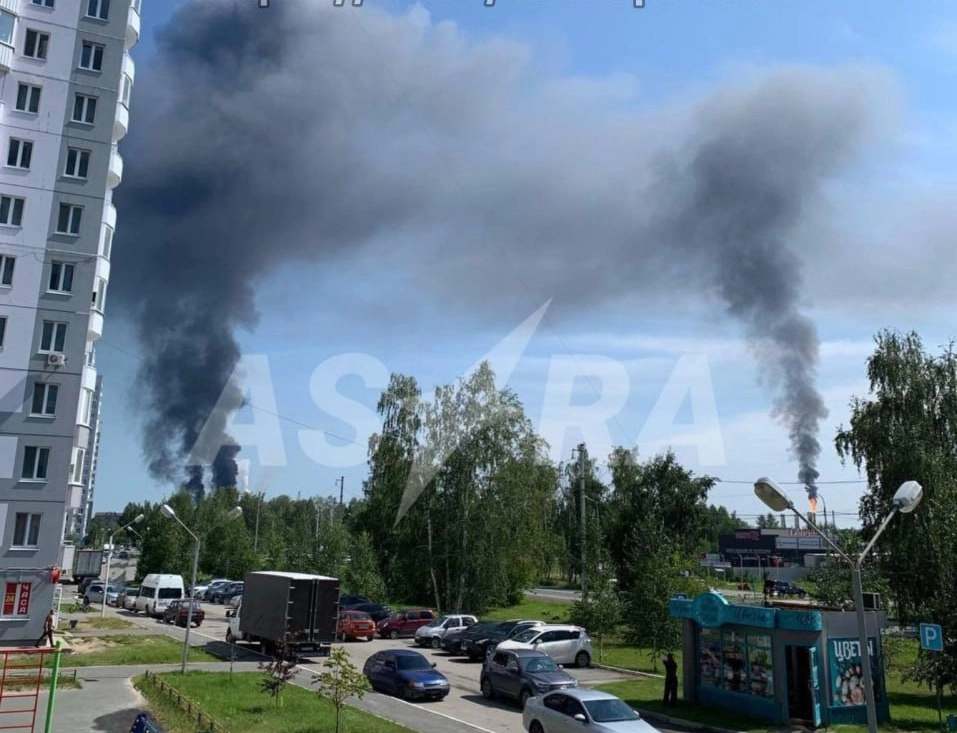
President Volodymyr Zelensky confirmed on Saturday, July 25, that the country’s defense forces conducted a widespread series of drone strikes targeting Russian military, naval, and logistics infrastructure up to 1,200 kilometers from the border.
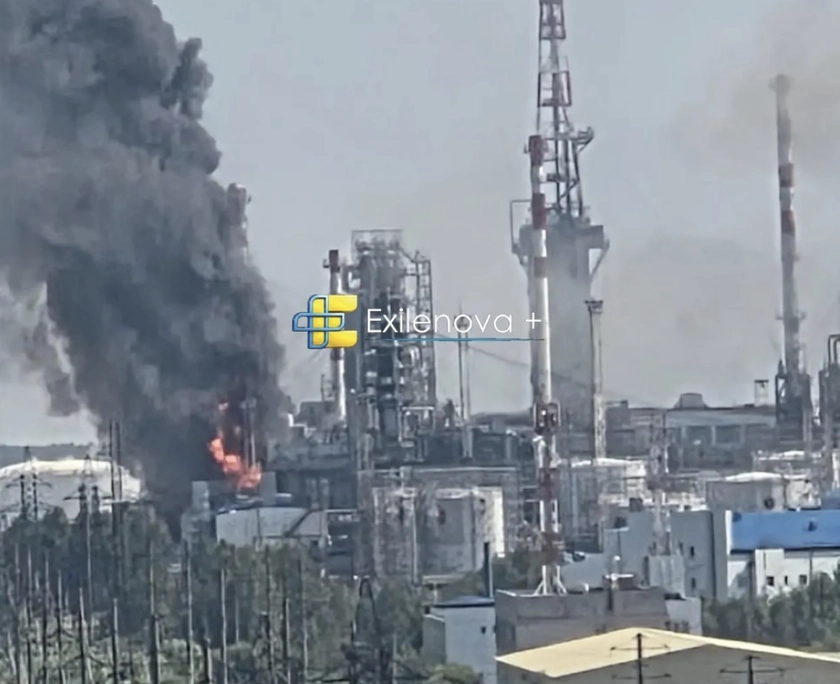
In a statement on Telegram, Zelensky detailed the scope of the overnight operations, noting that Ukrainian forces struck a manufacturing enterprise in the city of Kirov that produces components for Russian weapons systems, an oil refinery in Tyumen, a logistics facility in Yekaterinburg, and a fuel and lubricants depot in Rostov-on-Don.
JOIN US ON TELEGRAM
Follow our coverage of the war on the @Kyivpost_official.
The president also highlighted the results of long-range strikes in the Caspian Sea, confirming hits on a Russian warship and vessels involved in transporting military cargo from Iran.
Following Zelensky’s confirmation, the Security Service of Ukraine (SBU) released further operational details regarding the specific targets hit in Rostov and the Caspian Sea during the joint offensive.
Rostov and Caspian Sea targets
According to the SBU, long-range drones struck several military targets in the southern Russian city of Rostov-on-Don. The agency reported that the strikes hit a 92N6E “Grave Stone” multifunctional radar and antenna tower, which forms part of the S-400 “Triumph” anti-aircraft missile system.
The SBU stated that the attack in Rostov also destroyed a Tor-M2 surface-to-air missile system, a Pole-21 electronic warfare complex, and two warehouses storing FPV drones.
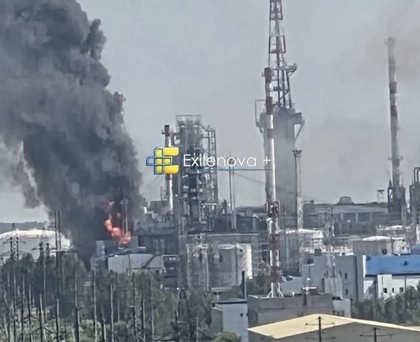
Drone Strike Sparks Fire at Tyumen Oil Refinery in Russia’s Ural Region
Detailing the operations in the Caspian Sea, the SBU identified the struck maritime assets as the Filanovsky oil platform and a Project 12418 Molniya-class missile boat.
The agency also stated it targeted two general cargo vessels, the Port Olya 2 and the Begey. Both vessels are currently under international sanctions for their role in transporting military cargo and munitions between Iran and Russia.
The SBU characterized the strikes as a response to Russian attacks on Ukrainian ports and stated that operations aimed at degrading Russian military logistics would continue.
Deep logistics infrastructure targeted
The strikes confirmed by Zelensky in Kirov, Tyumen, and Yekaterinburg occurred alongside a broader wave of attacks targeting Russian industrial and logistics sites deep within the country’s interior.
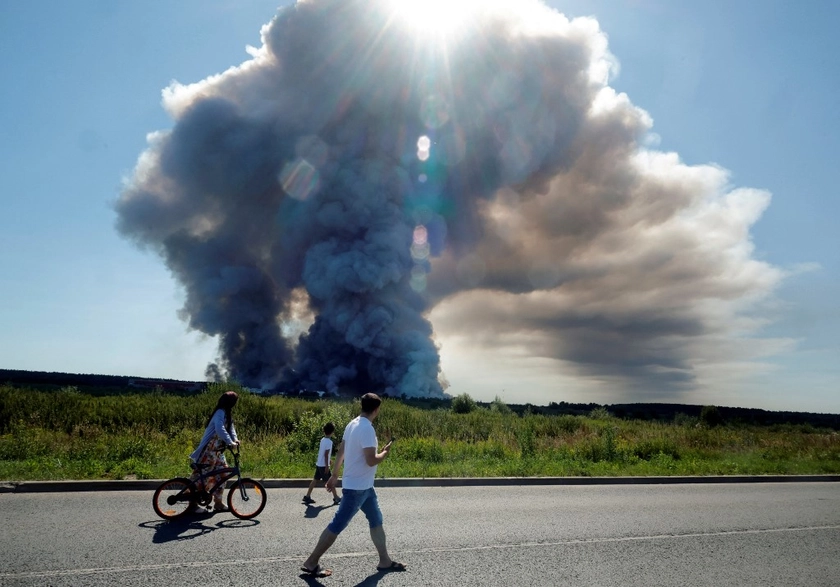
The attack on the Wildberries logistics facility in Yekaterinburg, situated roughly 1,080 miles from the border, follows a concentrated series of recent strikes against the logistics network of Russia’s largest e-commerce retailer. Previous strikes on Wildberries facilities in St. Petersburg, Voronezh, Elektrostal, Kotovsk, Krasnodar, and Nevinnomyssk had already disabled roughly 8% of the company’s total warehouse capacity.
These operations followed an aerial barrage that also targeted a suspected military unit near the Engels-2 strategic bomber base in the Saratov region. The Engels-2 airbase, a primary hub for Russia’s strategic aviation, was previously targeted by Ukrainian long-range drones on July 16, resulting in the destruction of a Tu-95MS strategic bomber.
You can also highlight the text and press Ctrl + Enter