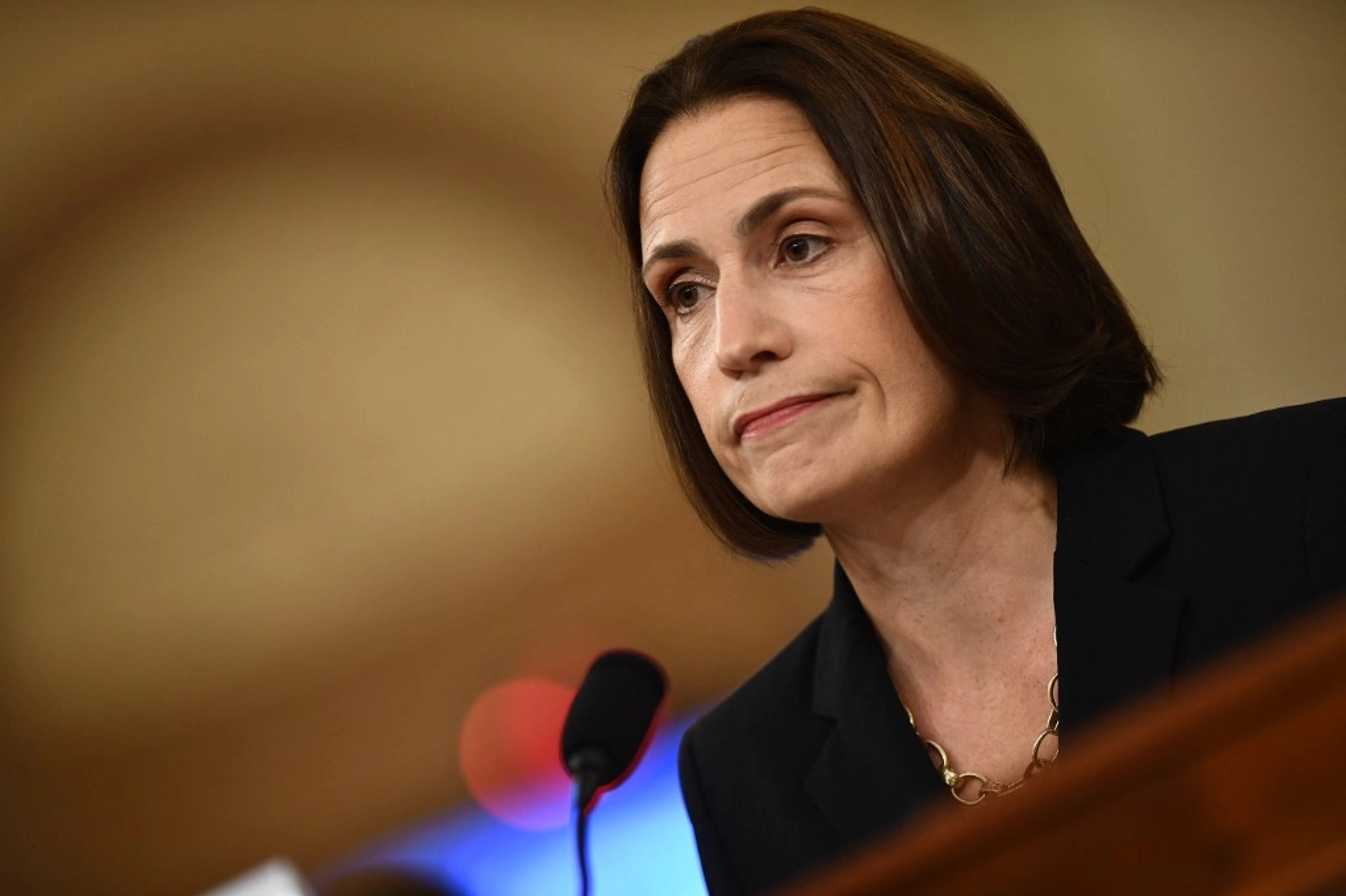
Former White House Russia adviser Fiona Hill says remarks she made in 2019 about a proposed Russia-Venezuela-Ukraine “swap” have taken on new relevance following the United States’ military operation that removed Venezuelan leader Nicolás Maduro from power.
Hill’s comments, delivered during congressional testimony in 2019, have circulated widely on social media this week as analysts reassess earlier warnings through the lens of Washington’s recent actions in Venezuela and shifting global power dynamics.
JOIN US ON TELEGRAM
Follow our coverage of the war on the @Kyivpost_official.
A warning revisited
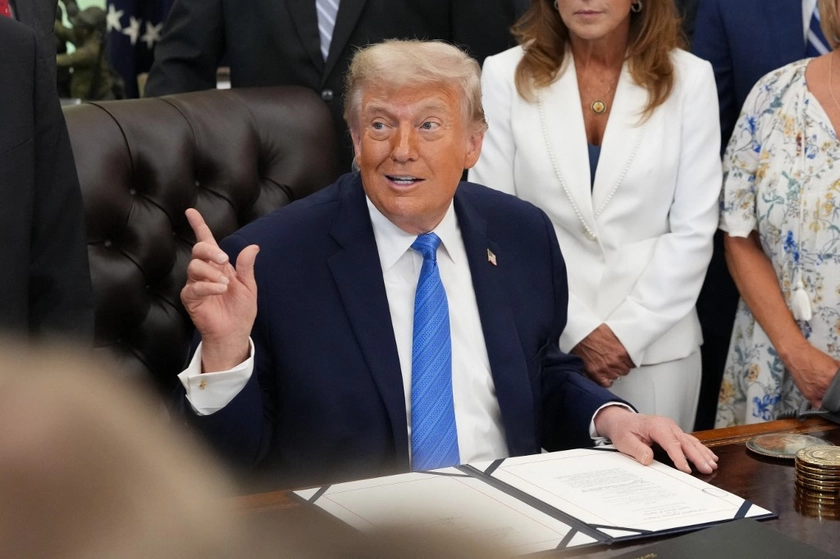
Hill, a former senior White House advisor on Russia and Europe, told US lawmakers during US President Donald Trump’s first impeachment inquiry that Russian officials were informally signaling a willingness to reduce support for Maduro in exchange for US restraint in Ukraine – a proposal she described at the time as a “very strange swap arrangement.”
Those remarks have now resurfaced after Washington confirmed it carried out a stealth operation to capture Maduro, prompting renewed scrutiny of past Russian overtures and the logic behind them.
Speaking this week, Hill emphasized that no formal offer was ever made and that the Trump administration rejected any attempt to link Venezuela and Ukraine.
“There was a ‘hint hint, nudge nudge’ approach,” Hill said in remarks cited by the Associated Press (AP), adding that US officials were instructed to tell Moscow that the two issues were not connected.
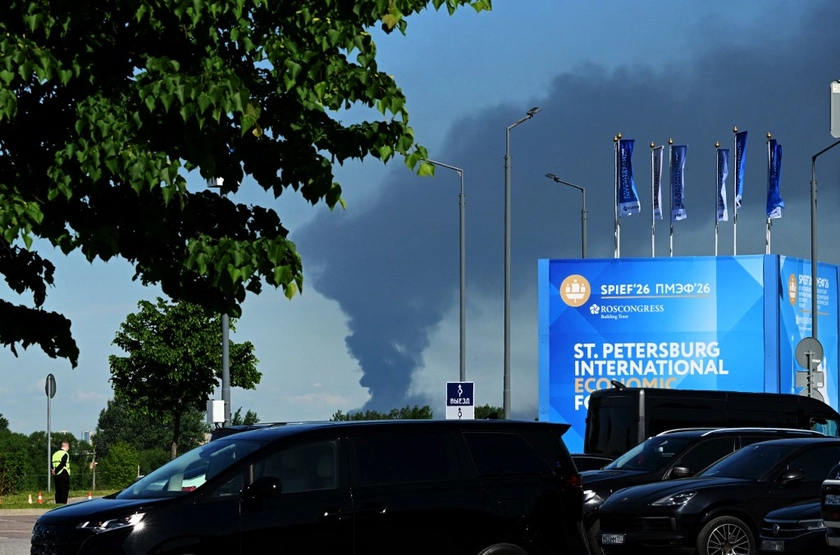
Crimea Cuts, St. Pete Double Tap, Boats Bashed
From theory to precedent
What has changed, Hill suggested, is the geopolitical context.
With Washington now asserting direct control over Venezuela policy following Maduro’s removal, she said the Kremlin – and other major powers – may interpret the episode as validation of a world ordered by spheres of influence rather than rules.
Russia will be “thrilled” by the idea that large countries get zones where “might makes right,” Hill said, warning that such logic mirrors Moscow’s own justification for its actions in Ukraine.
Russian political discourse has long framed Latin America as the United States’ natural domain, just as Ukraine is portrayed as falling under Russia’s historical shadow. Analysts note that Russian President Vladimir Putin has applied similar reasoning to much of Eastern Europe – a dynamic China is also closely observing.
According to the Guardian, US commentator David Rothkopf, described the trend as a slide away from a rules-based order toward competing spheres of influence, calling it the “Putinization of US foreign policy.”
Signals and speculation
The timing of US military moves has further fueled debate. In late 2025 – weeks after high-level US-Russia talks in Alaska – Washington deployed the USS Gerald R. Ford, the world’s largest aircraft carrier, to the Caribbean, officially as part of counter-narcotics operations.
Some analysts have asked whether Moscow interpreted those signals as confirmation that Washington was prepared to enforce influence in its own hemisphere, and whether Russia recalibrated its stance on Venezuela accordingly.
There is no evidence of any explicit deal, but Hill said the sequence of events has reinforced perceptions that global politics is increasingly shaped by leverage, not law.
Implications for Ukraine
Hill warned that Washington’s actions complicate efforts by Ukraine’s allies to frame Russia’s war as uniquely illegitimate.
“We’ve just had a situation where the US has taken over – or at least decapitated – the government of another country,” she said, adding that such precedents make it harder to argue that power politics belong only to Moscow.
Moscow’s response
The Trump administration has described the operation in Venezuela as a law-enforcement action and insists Maduro’s capture was legal.
Russia’s Foreign Ministry condemned the move as “aggression” but has otherwise offered little public comment. Putin himself has remained silent on the operation.
As Hill’s comments back in 2019 gain new traction, the question now confronting policymakers is whether what was once dismissed as an abstract proposal has become, in practice, a defining feature of a rapidly changing world order.
You can also highlight the text and press Ctrl + Enter