In 2025, Europe increased its funding for Kyiv to €72.8 billion ($84.4 billion), filling the gap left by the Trump administration, which largely ceased new aid allocations to Ukraine – but under the radar from 2022 to 2025, the total aid Europe sent to Ukraine was billions less than the cumulative amount Kyiv’s allies paid for Russian fossil fuels.
In February 2022, when the full-scale invasion began, Europe remained heavily dependent on Russian energy. EU countries imported approximately €17 billion ($19.7 billion) worth of Russian fossil fuels, inadvertantly funding Putin’s war against Ukraine, according to the environmental organization Centre for Research on Energy and Clean Air (CREA).
JOIN US ON TELEGRAM
Follow our coverage of the war on the @Kyivpost_official.
CREA, a scientific research group registered as a nonprofit in Finland, published the data on their website in a new article, “Financing Putin’s War: Fossil Fuel Imports From Russia During the Invasion of Ukraine.”
Successive EU sanctions caused the value of imported Russian petroleum products to fall sharply to around €1.3 billion ($1.51 billion) by December 2025. Europe has shifted its energy imports toward the United States, the Middle East, and Norway, which has increased energy prices for households and businesses and negatively affected the economy.
From the Kremlin’s full-scale invasion in 2022, the cumulative amount Europe paid for Russian fossil fuels [€231 billion ($267.8 billion)] remains higher than the total aid sent to Ukraine [€200.7 billion ($232.7 billion), per Kiel Institute data].
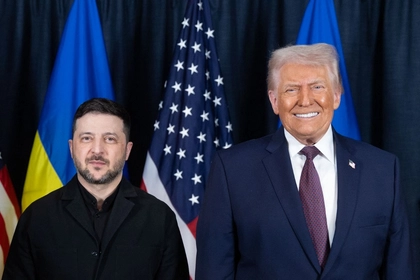
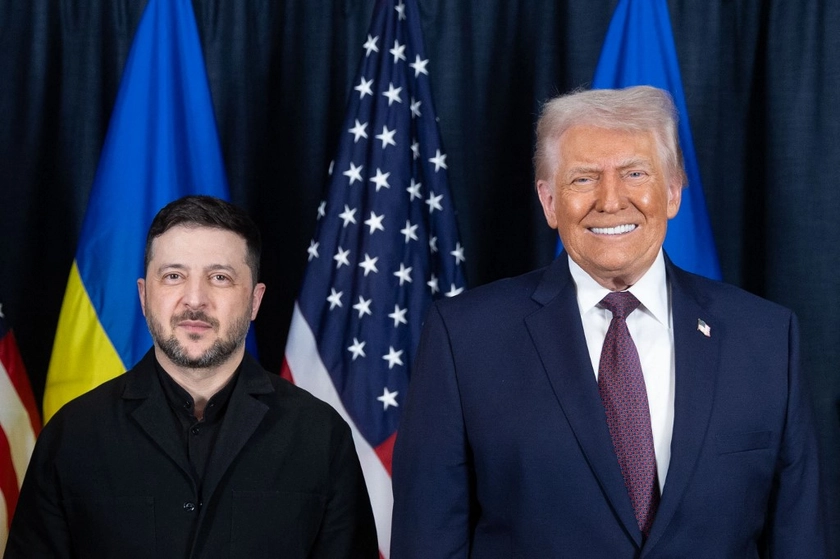
Trump to Join Zelensky for G7 Working Session on Ukraine Peace Conditions
Kyiv’s European allies now spending more on Ukrainian aid than Kremlin oil
However, since 2023, European aid to Ukraine has outpaced Russian fossil fuel imports on a yearly basis.
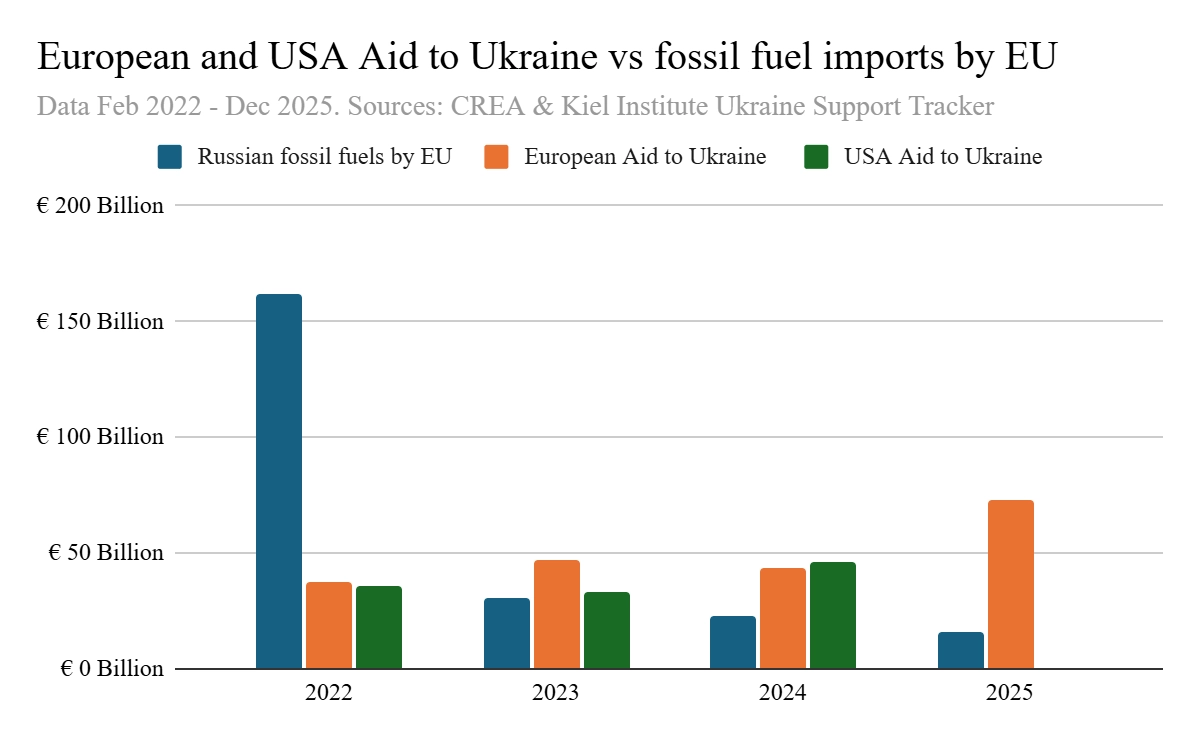
In 2025, the EU increased its support to approximately €72.8 billion ($84.4 billion), up from €43.5 billion ($50.4 billion) in 2024. This surge helped fill part of the funding gap left by the United States under the Trump administration, which ceased almost all new aid allocations to Ukraine in 2025.
Despite the overall decline, some imports persist
Hungary and Slovakia continue to receive Russian crude oil via the southern branch of the Druzhba pipeline under a specific EU exemption for landlocked countries. Some countries, such as Germany, Sweden, and Denmark, have fully stopped importing Russian fossil fuels, while others like France, Spain, Belgium, and the Netherlands still purchase Russian LNG, though in lower volumes than before the war.
Outlook
The EU continues to support Ukraine and approved a €90 billion ($104.3 billion) support package in late 2025, but Hungary’s Orban is now seeking to block elements of this deal amid a dispute over the Druzhba pipeline, which halted deliveries to Hungary and Slovakia following a Russian drone attack on Ukrainian infrastructure in late January 2026.
The EU has adopted a regulation to fully ban Russian LNG imports from the beginning of 2027 and pipeline gas imports from autumn 2027. Putin recently hinted that Russia could preemptively halt remaining gas supplies to the EU, well ahead of those deadlines, and redirect the volumes to other markets amid soaring global energy prices.
The war in Iran disrupts the global fossil fuel market, driving up prices and straining economies. While higher energy costs and domestic pressures may prompt some EU countries to scale back aid to Ukraine, the majority are likely to sustain their support.
You can also highlight the text and press Ctrl + Enter