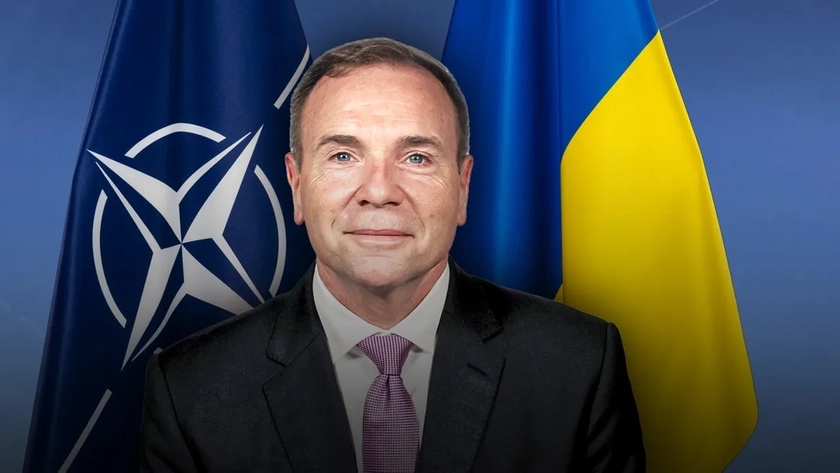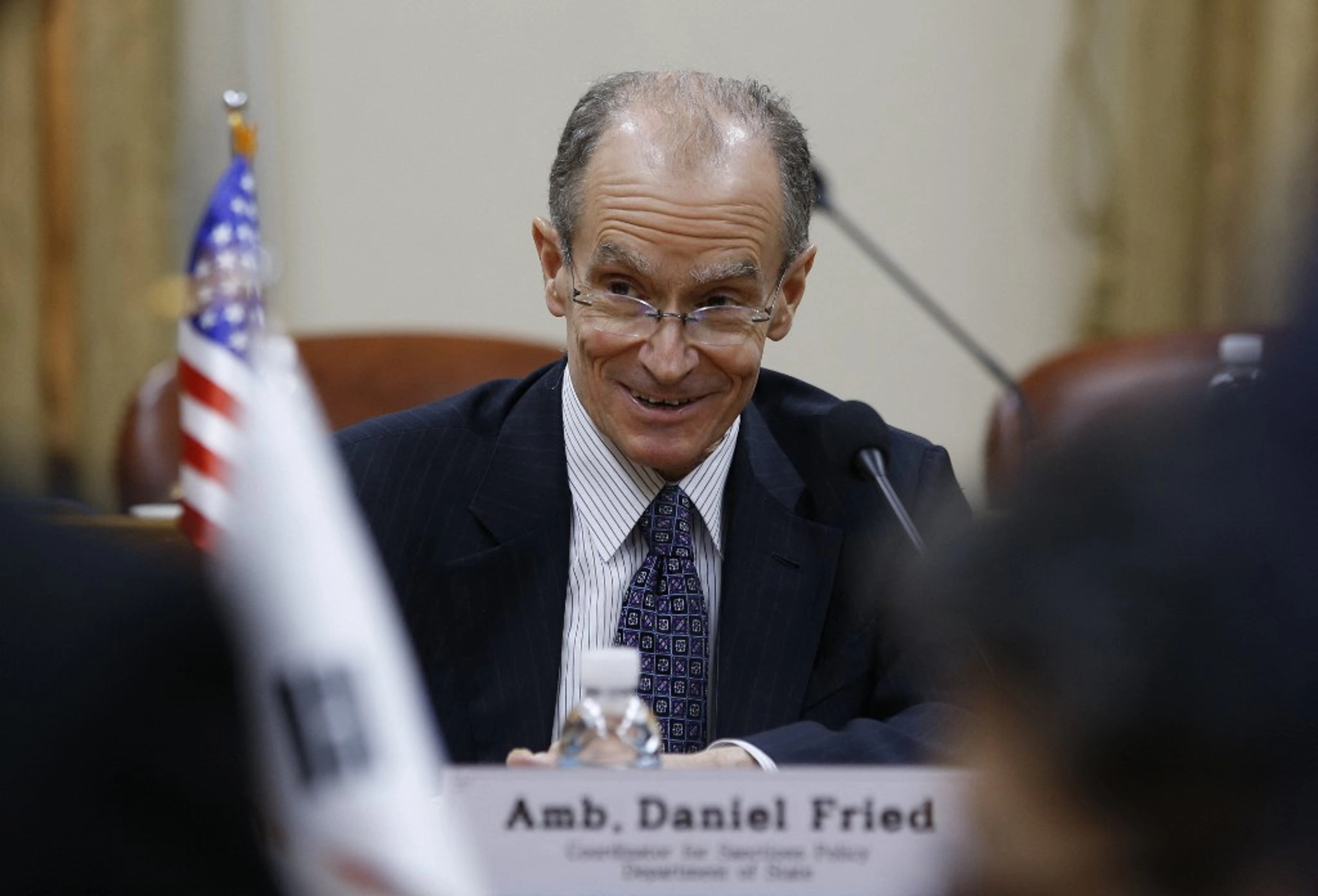
US President Donald Trump’s proposal to help Ukraine manufacture Patriot air defense missiles signals a significant shift in Washington and a growing recognition that Ukraine’s security directly serves US and broader Western interests, former US Assistant Secretary of State for European and Eurasian Affairs Daniel Fried told Kyiv Post.
While welcoming the initiative, the veteran diplomat cautioned that its success will depend on how quickly Washington and Kyiv can move from a high-level political announcement to practical industrial implementation.
JOIN US ON TELEGRAM
Follow our coverage of the war on the @Kyivpost_official.
“It is an excellent idea,” Fried said. “President Trump is recognizing that Ukraine’s ability to defend itself is in the US interest, which is true. The stronger Ukraine is, the better off Europe is, and the better off the free world is.”
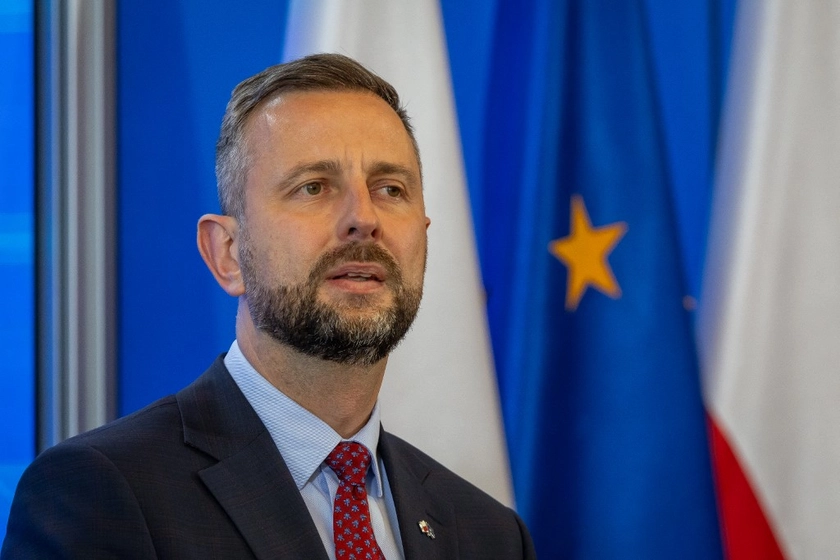
Fried highlighted Polish Defense Minister Władysław Kosiniak-Kamysz’s swift endorsement of the proposal, including Warsaw’s offer of technical assistance, as an important development.
“Poland has some of the technology needed and wants to get this production up and running very quickly,” he noted, describing Warsaw’s support as especially encouraging amid recent political tensions between Poland and Ukraine.
He also pointed to Germany’s efforts to expand Patriot production capacity but stressed that Ukraine cannot afford a similarly lengthy timetable.
Ukrainian MP: Trump-Zelensky Talks Point to Shift in US Policy
“Ukraine doesn’t have that kind of time,” Fried warned. “I hope that with President Trump’s announcement, there will be very rapid movement by the US side and work with Ukraine to set up the details and get moving quickly.”
NATO 3.0 and the emerging European pillar
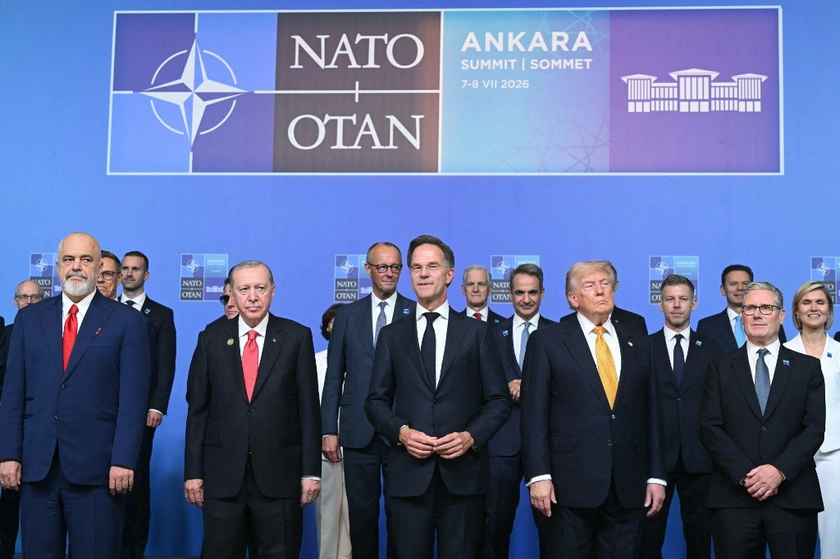
The announcement coincided with what Fried described as a broadly positive outcome from the latest NATO summit, despite Trump arriving with sharp criticism of some allies and renewed pressure over Greenland.
Inside the summit, however, the US president adopted a more constructive tone toward the alliance and its achievements.
“The US, the transatlantic alliance, Ukraine and the free world generally are better off for it,” Fried said. “It was a good day.”
NATO Secretary General Mark Rutte has framed the alliance’s transformation as “NATO 3.0” – moving beyond the Cold War model and the post-1991 era toward a structure built around significantly stronger European military capabilities.
“The Trump administration’s strongest argument is that many NATO allies allowed their militaries to deteriorate over time, which is true, unfortunately,” Fried said.
“If NATO 3.0 means a stronger NATO because of a stronger Europe, then it’s a good thing.”
He pointed to rapid defense expansion in Poland and Germany, alongside growing capabilities in Finland, Sweden and the Baltic states. The UK and France are also moving in the right direction, though more slowly than necessary, in his view.
Not every NATO member has embraced the new defense commitments, with Spain among the holdouts. But Fried emphasized that the countries most important to Ukraine’s security are increasing their military capacity.
Moscow’s rhetoric dismissed as ‘Soviet-style bluster’
Responding to the Russian Foreign Ministry’s claim that NATO’s latest decisions were “irresponsible and catastrophic,” Fried offered a blunt assessment.
“Maybe Russia should not have started a war, especially one that it cannot seem to win,” he said.
“Russia under [Russian President Vladimir] Putin is autocratic at home and aggressive abroad. I therefore discount complaints of the Russian Foreign Ministry as mere Soviet-style bluster.”
Moscow has acted aggressively since its initial invasion of Ukraine in 2014, repeatedly threatening NATO states and invoking nuclear escalation, he argued.
“If the Russians are serious, let them be serious about ending the war in Ukraine, such as through an immediate ceasefire,” Fried added.
Washington reassesses Ukraine’s battlefield resilience
Washington’s evolving posture partly reflects a growing recognition that Moscow’s predictions of an inevitable Russian victory have not materialized.
“The narrative of inevitable Russian victory over Ukraine has been proven false,” Fried said.
“It has been proven false conclusively in ways that have convinced the Trump administration that Ukraine is actually succeeding in defending itself against the aggression.”
US policy has moved back and forth under both the Biden and Trump administrations, Fried noted. Former US President Joe Biden supported Kyiv but was too hesitant in providing some of the weapons Ukraine needed, while Trump has alternated between backing Ukraine and directing what Fried described as unjustified criticism toward it.
Trump now appears to be moving toward a more supportive position.
Fried also pointed to durable bipartisan support for Ukraine in Congress and broad public backing across the US, including among Trump voters.
The increased defense spending by Poland and Germany may also have shaped the administration’s warmer approach toward traditional allies.
“The US was in fact winning the argument, and President Trump would be well advised to take the win,” Fried said.
Germany has increasingly acknowledged that its earlier assumptions about Russia were wrong and is now translating that reassessment into policy by rebuilding its military and supporting Ukraine.
“They’re not merely acknowledging it. They’re doing something,” he said. “They’re building up their military, backing Ukraine and taking Russian aggression seriously.”
Iran frustrations and Trump’s NATO recalculation
Fried suggested that frustration over the US war with Iran may have pushed Trump to seek clearer foreign policy successes.
“It may be that President Trump wanted to concentrate on areas where his leadership would make a positive difference,” he said.
That includes advancing a stronger version of NATO and supporting Ukraine as it continues fighting for its survival.
Putin’s narrative failed to convince Trump
Fried also addressed Trump’s 90-minute phone call with Putin, after which Moscow claimed that the Russian president had explained the “real situation” on the battlefield.
The Kremlin appeared to be referring to Russian territorial gains, including continued advances near Kostiantynivka. Fried acknowledged that Russian forces are still moving forward in some areas, but emphasized that progress remains slow and costly.
“They’re doing so very slowly and with very high casualties,” he said.
Ukraine, meanwhile, has achieved strategic successes through strikes on Russian oil infrastructure and transport links supporting Moscow’s war effort.
“Putin’s story that he informed Trump of Russia’s success is not credible – and even more important, Trump appears not to have found it credible,” Fried said.
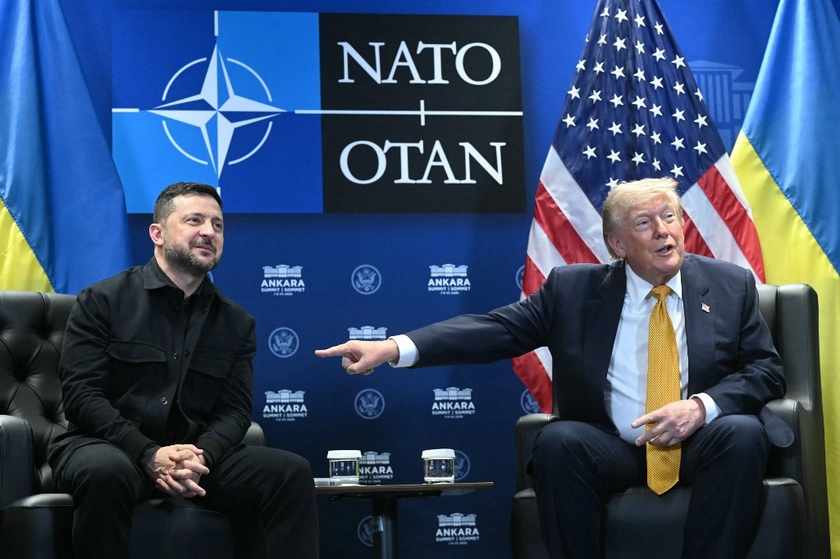
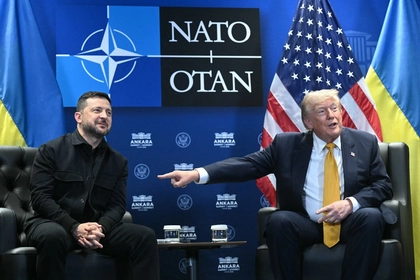
That is reflected in Trump’s support for NATO language on Ukraine, his meeting with President Volodymyr Zelensky and the offer to help Ukraine produce Patriot missiles.
“The Russians didn’t succeed,” Fried concluded.
You can also highlight the text and press Ctrl + Enter