In the past week the “peace talks” thankfully were shoved into the background as the White House – as had been widely predicted – ran out of ability to pay attention and now seems to be focusing on playing up tariff deals and arguing the court system can’t make rulings about laws that the executive branch should actually have to follow.
On the fighting front, the 3-day “ceasefire” announced by the Kremlin for the 80th anniversary (Russian style) of the end of WW2 turned out not to be a ceasefire at all. The shooting went on, engagements stayed at fairly intense levels, and both sides gained and lost ground marginally.
JOIN US ON TELEGRAM
Follow our coverage of the war on the @Kyivpost_official.

Khartiia and 92nd Brigade took back about 3-4 square kilometers (1.2-1.5 square miles) In Kharkiv sector, and honestly, the main point about that is that you can’t win a war if only a minority of your brigades can carry out a competent attack. That said, I understand from two sources it was well run, and cooperation was professional.
The most eye-catching news event must be the biggest long-range drone strike in, probably, not just in Ukrainian history, but in any country’s history, that took place this week, and it must lead.
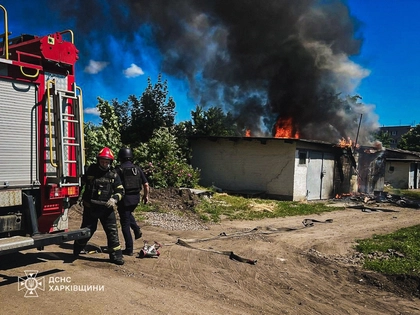
Russian FPV Drones and Artillery Kill Two, Wound Four Civilians Across Ukraine
The second this-must-be-printed development was less significant in war-related and/or geopolitical terms, but it has to do with espionage, East European ethnic antagonisms, and some Hungarian spy-work no less than Maxwell Smart would be proud of.

Biggest.Drone.Attack.In.History
Most of you will recall that from April 30 through to May 5, generally speaking, the Ukrainians cranked up their attacks on the Russian air defense network in general and air approaches to Crimea and the Kuban shore in particular, and the final act in that chain of impressively complex operations was a flotilla of kamikaze robot boats and a sea action off-shore of Novorossiysk in which a pair of advanced Russian fighter jets (Su-30SM, apparently) got shot down in air ambushes. Then there was a salvo of Neptune cruise missiles fired at, well, something. HUR finally took credit for orchestrating it all in the middle of the week. Here’s a general write-up on what all that was about.
The thing is – that wasn’t all.
On the night of May 7, Ukrainian drones attacked five military facilities inside mainland Russia, including:
- The GNPP Splav Plant, Tula Oblast (330 kilometers / 205 miles from probable Ukrainian drone launch sites) – This is a place that manufactures long-range artillery rockets like Grad, Smerch, Tornado-S MLRS. Explosions in the vicinity of the plant were observed, and smoke and fire were observed once the sun came up.
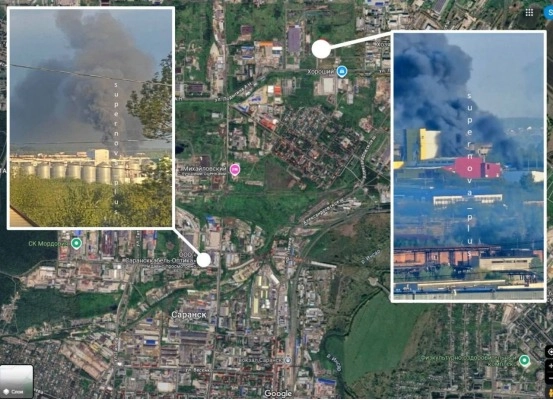
- PJSC Optical Fiber Systems plant, Saransk Oblast (660 kilometers / 410 miles) – They make fiber-optic cable for jamming-resistant drones. Lots of smoke, fire at two locations. Image, not mine.
- Kubinka Airfield, Moscow Oblast (420 kilometers / 261 miles) – Home base to the Russian Knights aerobatic team, which was going to do a flyby over the Kremlin 48 hours later. Also, this is a place where the Russians keep bombers and store missiles to launch at Ukraine. Multiple explosions. Fire Information for Resource Management System (FIRMS) imagery from NASA showed two pretty big fires, one probably between runways, one around where the airport control tower and hangars are.
- Shaykovka Airfield, Kaluga (210 kilometers / 130 miles) – Home base for Tu-22M3 bombers, they launch missiles at Ukraine. Reports are that drones were hitting intermittently all night. Fires observed, satellite images showed fueling stations and underground fuel tanks were hit. FIRMS imagery shows fuel reservoirs (lubricants?) were probably torched.
- Basalt Plant, Krasnoarmeysk (Moscow Region, 750 kilometers / 466 miles) – They make guided bombs here. Explosions were observed, but there was no clear evidence of major fires and secondary explosions.
The Russians claimed they shot down 525 drones over the course of the day, which is a wartime record, either side. Since the start of the month, the count is well over 1,500 weapons, which is a record for the Ukrainians.
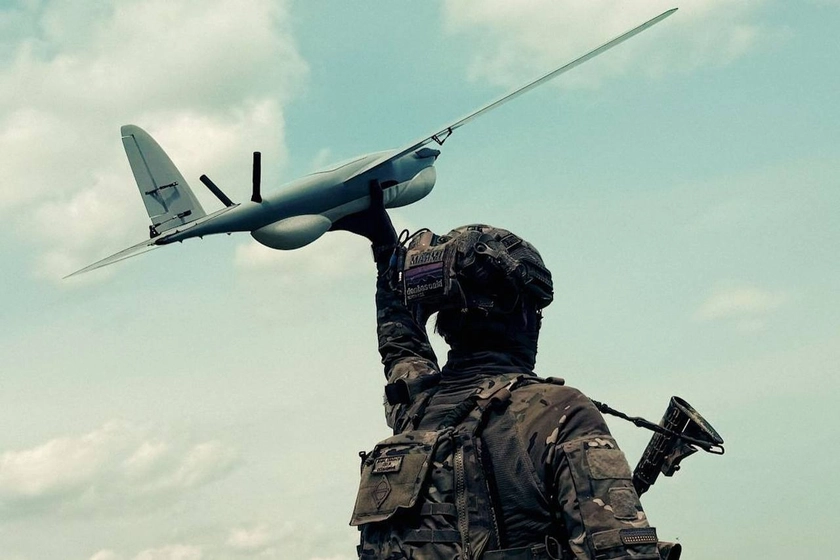
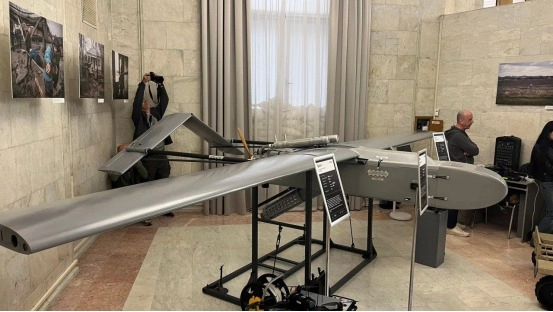
How anyone outside Ukraine can see the Ukrainians losing to Russia, at this point, is very difficult for me to understand. Image of the latest Ukrainian long-range drone, called an FP-1. Not saying it was used in these strikes.
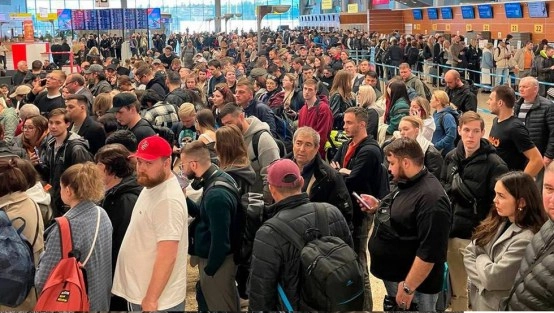
Besides the damage, which, by and large, appears to have been average and not more than that, the drone density, along with probably heightened Russian security worries (May 9 celebration coming up), brought Russian civilian air traffic west of the Urals to a full halt, for about half a day. About 60,000 travelers had their flights canceled or delayed, more than 350 flights were affected, and airport waiting lounges looked like the Tokyo subway at rush hour.
Spy Vs. Spy in the wilds of East Europe, or, It looks like the Ukrainians won this round
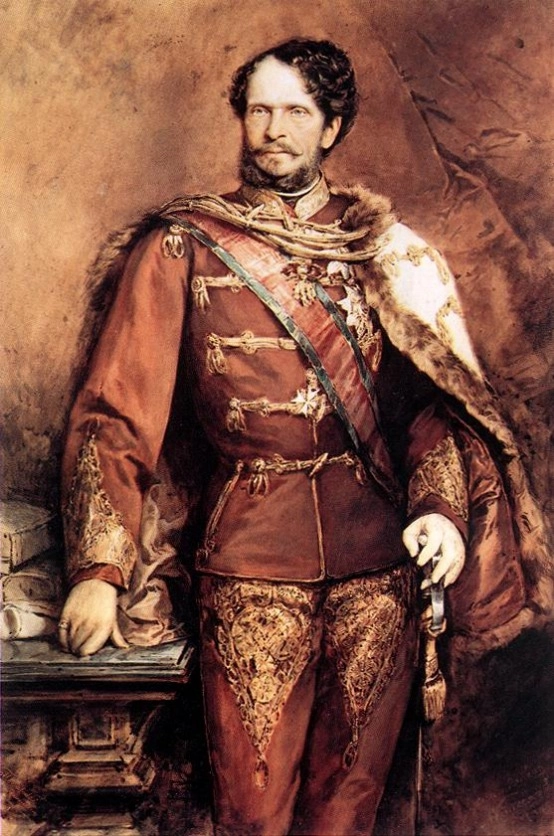
This is mostly about Hungary, so I’ll lead it with an image of Gyula Andrássy, Hungarian patriot and Foreign Minister of Austria-Hungary and delegation head to the 1878 Congress of Berlin, during which Andrássy convinced the Germans and the Russians that Turkey should no longer rule Bosnia and Austria-Hungary should. This placed Bosnia inside the Dual Monarchy and was rated a brilliant diplomatic coup at the time – but the problem was Bosnia was yet one more unstable ethnic minority in a shaky empire already crammed with ethnic minorities.
On to current events. One of the convenient things about espionage in the news is that there are lots of pop culture references, for instance, the inimitable secret operative Max Smart (Agent 86) and Agent 99 (real name never revealed), pictured for this review operating Cold War-era shoe phones.

They are characters from a fairly popular 1960s series on US television that spoofed James Bond and the spy genre. Their enemy was a murky, sort-of German sort-of East European agency bent on world domination called KAOS. The running joke in the show was the bumbling Max Smart always foiling KAOS’ nefarious plans, because as dumb as he was, they somehow always managed to be stupider.
On Friday morning Ukraine’s national intelligence service and spy agency, the SBU, announced that its operatives had arrested two agents employed by the Hungarian government for nefarious purposes, which included typical secret operative activities like clandestine communications with headquarters, locating military equipment and expanding an agent network, but – not making this up – collecting information about how the population of Ukraine’s western Zakarpattia region would react, if the Hungarian army invaded. As “peacekeepers.”
For reference, by most counts, there are about 120-150,000 ethnic Hungarians living in Ukraine, of whom most are concentrated in the western part of western Zakarpattia region. Total, end-to-end, Zakarpattia probably has about 1.2 million residents.
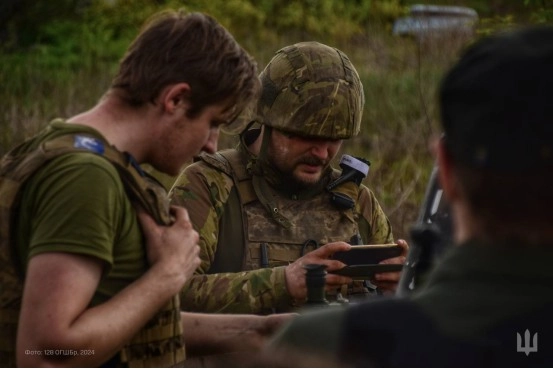
Ukraine’s Hungarians are generally supportive of the central government and one of the better fighting brigades, 128th Mountain Assault, was raised in Zakarpattia. However, there is tension between parents who want their kids to learn Hungarian in school and the central government that says, in Ukraine, the language of instruction must obviously be Ukrainian. From time to time, there are sporadic discussions on either side of the border about separatism or Ukrainian oppression of ethnic Hungarians, but it’s uncommon, and it never takes hold. Image of a 128th Brigade battery fire control team, Hulyaipole sector, late 2024.
That’s one reason the Hungarian government sending spies into western Ukraine, preparatory to a possible military takeover, is really silly.
The second is, of course, that there are 28,000 or so soldiers in the Hungarian army, none of them combat-experienced. There are 2.2 million service personnel in the Armed Forces of Ukraine (the ZSU), and my guess is about a half million are members of combat-seasoned fighting units like the 128th.
Official Budapest didn’t exactly deny it happened, and then later in the day, they declared two members of the Ukrainian legation in Budapest persona non grata because they had been spying on Hungary and generally threatening Hungarian national security.
According to the SBU, the way the Hungarian state does spy work is pretty amateurish. So the Get Smart image. All the detail you could possibly want on incompetent/or extremely competent spying is here and here.
This is, of course, all playing out against a backdrop of the Hungarian government, led by a Putin fan named Prime Minister Viktor Orbán, which at the moment is pretty authoritarian. But it would not be Hungary without conflict and emotion, so there’s a pretty active opposition led by a former member of the government, but now an opposition rallying point, a pro-Europe fellow named Péter Magyar, who has Orbán’s dropping ratings in his sights for the next elections.
Much in the same spirit as the Trump administration’s default hatred for Ukraine and Ukrainians because they stand inconveniently in the way of buddying up with Russia by fighting for Democracy and Freedom, (and demonstrating having thousands of nuclear weapons doesn’t mean you automatically win wars against a little country, to boot) the Orbán government hates Ukraine.
A logical outcome of that has been, apparently, a clandestine, but fairly real war against the SBU, Ukraine’s Border Troops command, and I don’t doubt, the entire Zakarpattia provincial police, for some time.
A reasonable read of Hungarian-language reporting on recent developments turns up all manner of developments that, in peace, would be headline news, but now is just shoved into obscure parts of the internet. Most of this is from an independent news agency called Telex.
About a week ago, a radar in Tokaj, Hungary spotted incoming drones, plural, from Ukraine, one of which was shot down.
In February, a pro-democracy group called Direkt36 released a film called “The Dynasty,” which lays out in great detail wholesale corruption within the Orbán regime.
Orbán at the time called it a Ukrainian smear campaign ordered by Kyiv, because Kyiv isn’t happy with Hungary constantly blocking EU aid to Ukraine. The Hungarian producers of the video say they had no Ukrainian help, they support democracy, dislike corruption, and think documentaries are a good way to communicate with voters.
According to Telex, what’s going on is that for Orbán to pursue his agenda of tighter control of Hungary, he needs a suitable foreign enemy for the populists to hate, and Ukraine fits that bill perfectly.
Supposedly, in 2015, Orbán first ordered Hungary’s secret services to promote pretend Ukrainian pressure on ethnic Hungarians in Ukraine, and even ordered operatives to start work inside Ukraine. The article alleges that ethic Hungarian “autonomy” movements in Ukraine have been funded by Hungary for some time for this purpose, which would not surprise me.
One operative, a fellow running the Information Office of Hungary at the time named János Lázár, came to appear in state-controlled media in due course, and during those interviews, he admitted that Hungarian secret services MIGHT be active in western Ukraine. This was smart messaging that simultaneously played to the nationalists inside Hungary who feel ethnic Hungarians inside Ukraine are oppressed, and at the same time, gives the government license to do or not do whatever it wants inside Ukraine, or just claim it, and not need to prove it or even offer details, as it is all potentially a secret operation.
The article goes on to cite National Security Committee chairman Zoltán Sas, who on Jan. 14 told media Budapest had informed Washington “certain nations” were working to harm US-Hungarian relations by undermining Hungary’s reputation.
Image of a Habsburg palace. According to unfair Hungarian media (specifically those unruly reporters from Direkt36), it was purchased ten years ago and returned to its imperial splendor by Orban’s father.
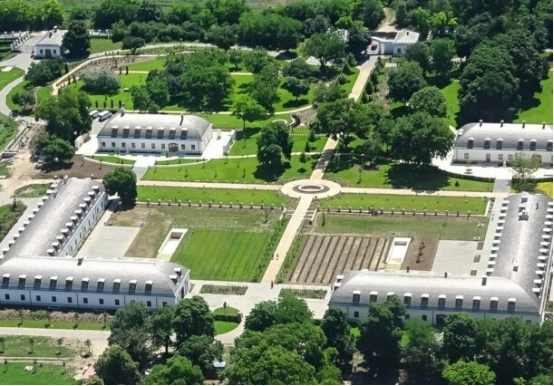
It’s an interesting theory. But what is for sure, and what I suspect was a surprise for Orbán, per the article, is that if Ukraine had been careful not to tread too heavily on ethnic minority rights before 2014, since then Kyiv has become increasingly unwilling to risk national security for fear of offending someone.
So, at some point after 2014, the Ukrainians seem to have taken the gloves off in the Transcarpathian Secret Spy War (copyright), and now it is the Hungarians who are struggling to deal with Ukrainian secret services that originally weren’t targeting Hungary, but now they are, with every tool in the dirty trick kit – and the Ukrainians have been practicing clandestine full on war against the Russians secret services for more than a decade.
As far as the SBU is concerned, Hungary isn’t really a NATO member, but a hostile state. As we can see with the drone strikes and unexplained explosions in Russia, there are real downsides to becoming a designated enemy of the Ukrainian SBU.
(This all begs the question of how NATO can just sit and pretend nothing is going on when a NATO member state is not only actively undermining NATO security policy but spying on behalf of, and, if you ask the Ukrainians, passing clandestine intelligence to NATO’s main adversary, Russia. By any measure, this is not the behavior of an ally, and Hungary still is a signed member of NATO.)
Five days ago, President Zelensky attacked Orbán for blocking Ukraine’s attempt to get an accession path agreement with the EU. Orbán fired back three days later and accused Kyiv and Zelensky of attempting to invoke regime change in Hungary.
Morning of Friday, May 9, Hungary announced it was kicking two Ukrainian “spies” out of the Ukrainian legation in Budapest. In the evening, Ukraine announced it was kicking two Hungarian “diplomats” out of Kyiv, on grounds of reciprocity.
Late Friday evening, based on reporting by independent Hungarian press, it turns out the Orbán regime kicked off active intelligence operations in Ukraine in 2023, and was – now it’s being printed – passing intelligence to Russia since then. Again, the claim is that this is a NATO member collecting military intelligence on Ukraine and turning it over to Russia.
Source of the claim is a Hungarian journalist named Szabolcs Panyi, who is linked to the Direkt36 group. Personally, I believe it, but what’s important is what they’ll do in Brussels.
I think the only possible way to close this section is with a Spy vs. Spy image.

The nation needs Patriots
News out of Washington is the Americans have convinced the Israelis to cough up a Patriot system to Ukraine.
It needs “maintenance.”
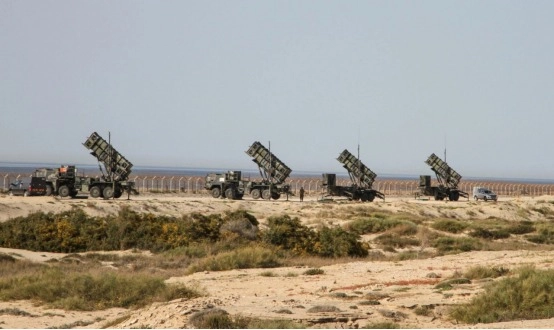
Once delivered it will be Ukraine’s 7th Patriot system. I read in the Israeli press that, far from reducing air defense capacity, they are creating a new air defense division (the 946th). Without wading into the Gaza discussion, my view is that as long as Israel perceives it is under a missile threat, the Israeli government will drag its feet on handing over Patriot interceptors to anyone, even if the Americans “ask.” Image of a few systems the Israelis might, or might not, part with.
This is bad news for Ukraine because one night before all the Ukrainian drones were buzzing eastward, over May 6-7 (Tuesday-Wednesday), the Russians decided to bombard Kyiv and Zaporizhzhia, mostly.
The count was five Iskander-M/KN-23 ballistic missiles, launched separately from the Kursk, Taganrog, and Bryansk oblasts, and at least three of them converging on Kyiv. I am a witness to Ukrainian air defenses engaging something and not hitting it. I don’t know the means, but once it was over, two Kyivites were killed and four were injured.
Ukrainian air force counters decided the Russians had sent along with the missiles 187 strike unmanned aerial vehicles (UAVs) and simulator drones. As with the ballistic missiles, the idea was to launch from lots of places and converge on a few places – launch sites included Bryansk, Kursk, Orel, Millerovo/Rostov, Primorsko-Akhtarsk/Krasnodar and Hvardiiske airfield in Crimea.
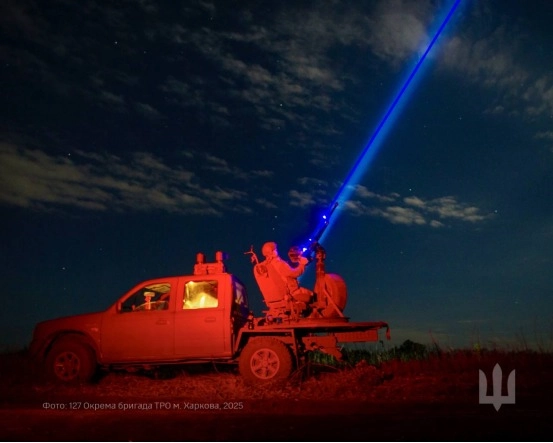
At one point there was a Shahed buzzing around over my neighborhood, which is uncommon, and if the Ukrainians got it, I didn’t notice. Outstanding image of Rat Patrol team, 127th Territorial Brigade.
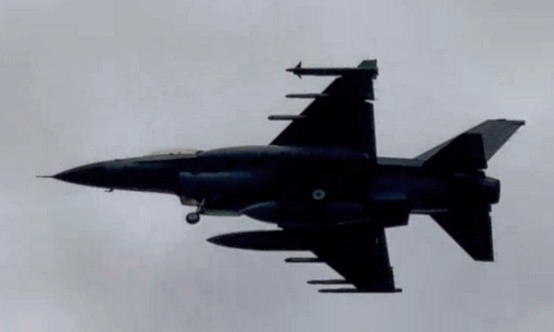
The Ukrainian Air Force claimed it shot down two of the ballistic missiles and 81 of the Shahed drones at multiple sites across the country, and another 64 decoy drones were tracked and ignored. Social media image of a Ukrainian F-16 taken that day, apparently, all but one of its Sidewinders got shot at something.
I get the impression the Ukrainians either have less to shoot with or are more careful about opening fire, at least where I am.
The news from DC is that Ukraine wants badly to buy more Patriot missiles and has finally penetrated into the Trump White House consciousness – they clearly now understand that’s what Ukraine wants, so now, obviously, they are ignoring US tradition and history and not thinking about defending democracy, but how best to take advantage of a weaker state in need.
Although they might eventually calculate they could burnish their image by selling high-cost weaponry to Kyiv, I think it would be foolish for the Ukrainians to hope the Americans would suddenly decide to help the Ukrainians protect their cities, even for money, any time soon.
And speaking of the US government, late Friday evening, the US Embassy issued a warning to US citizens and dependents in Ukraine that it had received “information concerning a potentially significant air attack that may occur..over the next several days.”
We know what this is. This is code for: the Russians have told the Americans they are going to launch a big space-capable missile, it’s not aimed at America, so don’t start World War III.
This happens from time to time. The last time this happened, the Russians shot one of those Oreshnik MIRV (Multiple Independently Targetable Reentry Vehicle) missiles at the Pivdenmash (formerly Yuzhnmash) factory in Zaporizhzhia.
HIMARS is back?
This week saw evidence the Armed Forces of Ukraine (ZSU) has maybe decided to employ HIMARS (High Mobility Artillery Rocket System) more, possibly because ammo they didn’t have (most recent American arms embargo) may have freed up, because the Ukrainians and the Americans last week signed an agreement to organize a joint venture company, which after some more agreements, would allow US capital to mine rare earth minerals in Ukraine (but things like cost split and profit-sharing are still to be negotiated).
On Sunday, reports showed that in the Bryansk sector, the ZSU had worked a HIMARS close enough to the line to fire ten rockets into a defense plant in the town of Suzemka. Fairly large fire, two security guards injured, also a warehouse, production workshop, and administrative building were damaged. I read the company is located about 10 kilometers (6.2 miles) from the border and specializes in the production of radar equipment, transformers, chokes, coils, filters and other electronics.
On Tuesday, the Russians claimed and posted video attesting to a strike by a Lancet drone which they say blew up a HIMARS system, in the vicinity of Rusian Yar, Kostyantynivka. Ukrainian milbloggers confirmed the hits, they said the problem was the unit didn’t have good jamming.
On Wednesday, reports surfaced via Ukrainian milblogger media first that a powerful North Korean 240mm launch system called an M-1991 had been spotted somewhere behind the front, then, via Russian media, and about the same time, drone video appeared showing what looks like an M-1991 getting pasted by what clearly was a HIMARS air burst.
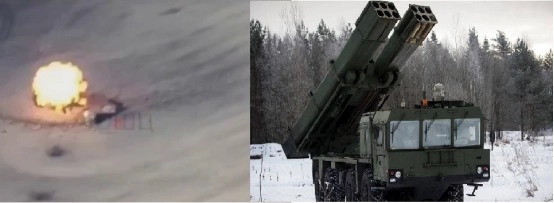
Early reports incorrectly identified it as an Uragan 1-M. Geo-located to Kulemzino village, Kursk region. The drone unit controlling fires was the 4th Regiment SSO (Special Operations Forces) Rangers. Image of a Ranger from their Instagram, because the drone video is grainy.
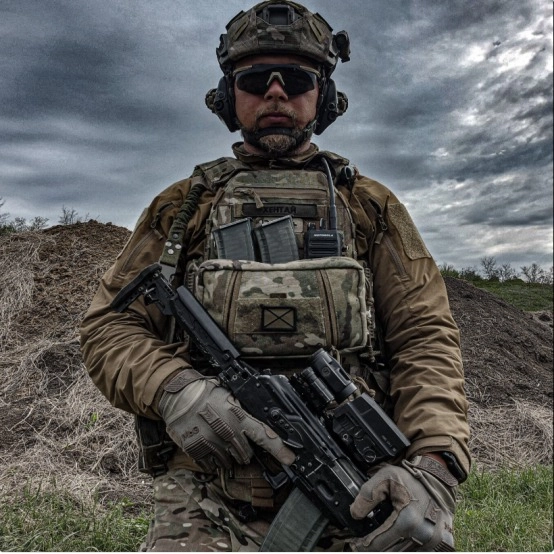
Some reports associated with the 4th Rangers said a GMLRS (Guided Multi Launch Rocket System) munition was used.
This is also an interesting data point if true, as not only is GMLRS one of those high-tech munitions that got tried out in the war and after a while didn’t work so well (Russian jamming), but it also was one of those high-tech American weapons the Ukrainians can live without but would definitely prefer not to. Have the Americans released functional GMLRS to the Ukrainians? It’s not impossible, but that’s two positives that would have to go green for it to have happened.
I can’t say for sure the strike took place, but the accounts and images check out as far as they go. Something able to hit accurately at ranges beyond artillery took out that M-1991.
There is also an unconfirmed report, Monday evening/night, that a HIMARS strike hit a company position from the 70th motorized rifle regiment, 42nd motorized rifle division, Zaporizhzhia sector, in the village of Mirne. Supposedly, 22 service members were killed, among them three officers. I’m fairly confident the 70th Regiment is in that general area, but I wouldn’t want to go beyond that.
Still, overall, this is an uptick in reports about HIMARS in action. Over time, why we’re seeing it should become clearer.
Ukrainian felon army stats and recruiting
The Ministry of Justice came out with some numbers about felons recruited to serve in the ZSU.
According to a statement by Deputy Minister Evhen Pikalov on Wednesday, more than 8,300 convicts have joined the ZSU already, and another 1,000 applications are under consideration.
This is, supposedly, about 20-30% of all the convicts in the country, the total number of which is about 37,000.
Where these men are going, is not fully clear to me. Although I suppose there are outliers, the high-performing brigades aren’t getting these guys – one doesn’t hear of it, but the very best brigades can pick and choose, and even the bit-better-than-average ones say “no felons” in their recruiting messages.
However, it’s interesting that the government is willing to put out a number on convicts it’s supposedly convinced to join up, while on the program to attract 18-24 cohort volunteers by offering pretty juicy contracts, not a lot of information on that.
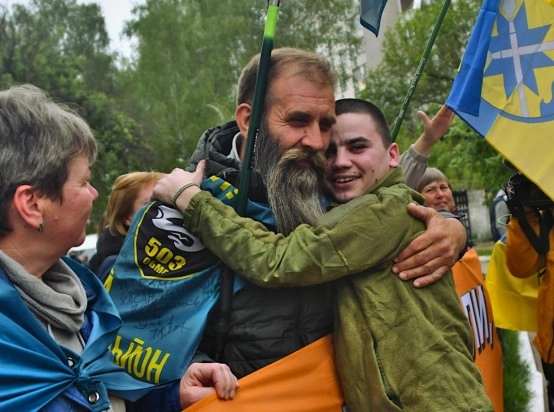
The last official information on that was from late April, Commander-in-Chief Oleksandr Syrsky, in a general update on his and his headquarters’ doings, said that the ZSU was prioritizing recruiting via this approach and that 24 brigades – effectively, the top 20-25 best brigades in the army – were participating in the project. Image of new recruits joining the 92nd Brigade, who don’t take felons.
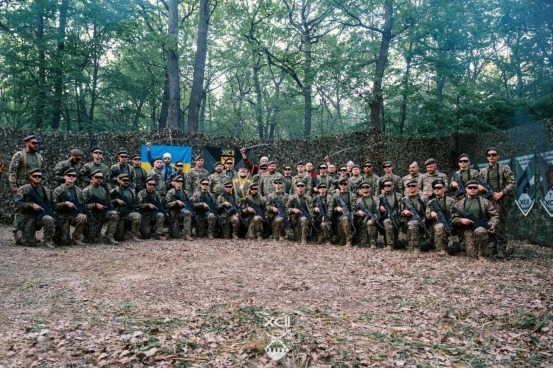
Of the 10,000 applications reported in late February, I hear about 1,000 actually had signed up by early April, so it’s not like people are standing in line.
Late addition: Friday evening report says that the fine for not registering with the local military recruiting committee will go up from Hr.17,000 to Hr.25,000. $1000 = Hr.42,000 these days.
Reprinted from Kyiv Post’s Special Military Correspondent Stefan Korshak’s blog. You can read his blog here.
The views expressed in this opinion article are the author’s and not necessarily those of Kyiv Post.
You can also highlight the text and press Ctrl + Enter