Budapest’s national military intelligence agency operated a clandestine spy network in west Ukraine with the mission of determining the level of local support to a possible invasion by Hungarian troops, the Security Service of Ukraine (Служба безпеки України – SBU) said in a Friday statement.
SBU counter-intelligence operators in Ukraine’s far-western Zakarpattia (old name: Transcarpathia) region arrested two Ukrainian citizens secretly recruited to determine whether or not people living there would approve of a Hungarian “peacekeeping contingent” sent to the province, among other hostile spy missions ordered by Hungary and targeting Ukrainian national security, SBU spokesman Artem Dekhtaryenko said in the video announcement.
The arrests, he said, marked the first time ever Ukrainian counterintelligence had broken up a spy ring from a NATO state. The pair also was tasked to collect sensitive information about the Armed Forces of Ukraine (AFU) installations and units, to track local officials, and to construct and expand a local agent network, Dekhtaryenko said.
The SBU said one suspect is a former Ukrainian military man, aged 40, from the western Beregov district who was recruited by Hungarian military intelligence in 2021 as a sleeper agent “in stand-by mode.”
The SBU statement identified his handler as a member of Hungarian military intelligence who, in September 2024, ordered the Ukrainian agent to begin active spy work against Ukrainian targets. The Hungarian spymaster’s identity and location are known to Ukrainian secret services, Dekhtaryarenko said.
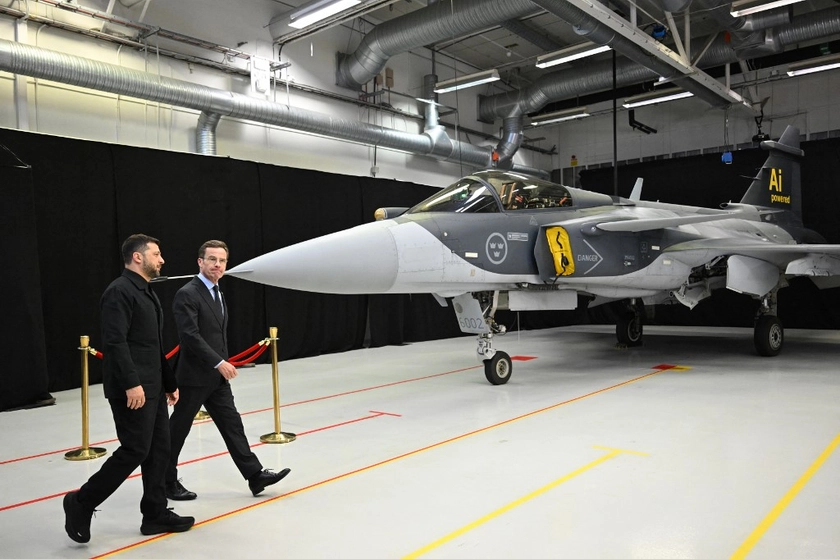
Ukraine Signs Deal to Buy 16 Gripen E Jets From Sweden
The Ukrainian agent, shown in the video with pixel-screened face, tells an interviewer he was recruited after applying for Hungarian citizenship at a Hungarian consulate office in Ukraine. He was paid money to collect protected Ukrainian “military information,” the man said, speaking in good Ukrainian.
Another section of the SBU video was a recording of an intercepted telephone conversations, purportedly between the Ukrainian agent and his Hungarian handler, discussing an upcoming meeting. They speak Hungarian and the Ukrainian agent uses the honorific “Dr.” to his Hungarian boss.
Other content, apparently recorded clandestinely by the Ukrainian SBU via a camera inside a late-model SUV, showed the Ukrainian suspect sitting next to a Hungarian man, and the seeming handover of an envelope of cash from the Hungarian to the Ukrainian. Later on, during the same or possibly another meeting inside the car, the Hungarian handler appears to turn over a new smart phone to the Ukrainian and instructs his agent on how to secure communications using the app Signal.
Dekhtaryenko said the two Ukrainian agents transmitted data to Hungary’s government about Armed Forces of Ukraine (AFU) air defense installations and ground units, and losses suffered by local units in combat against the Russian military. Information about the locations and combat capacity of S-300 air defense systems deployed to the region was an alleged priority.
The SBU said the male agent personally scouted the location of AFU anti-aircraft missile systems in the region and passed on the grid coordinates of those systems to handlers. Prior to arrest the man attempted, unsuccessfully, to recruit two Ukrainian citizens, the statement said.
The second alleged Hungarian agent was a Ukrainian woman and Zakarpattia region resident who was a former AFU service member with access to a local military air base. Her tasks were informing the Hungarian intelligence about the presence of AFU aircraft and helicopters in the Zakarpattia region, as well as about the defense systems of the military unit where she had served. In a short statement the woman appears to admit she spied for Hungary. Her face was pixelated.
The SBU statement said that Ukrainian secret services had known “for years” the pair might be activated by Hungarian handlers and that once they got to clandestine work their activities were tracked closely.
“The SBU counterintelligence documented every step of the Hungarian agents and detained the suspects at their places of residence. During the search, phones and other material evidence of subversive activity were seized from them,” the statement said.
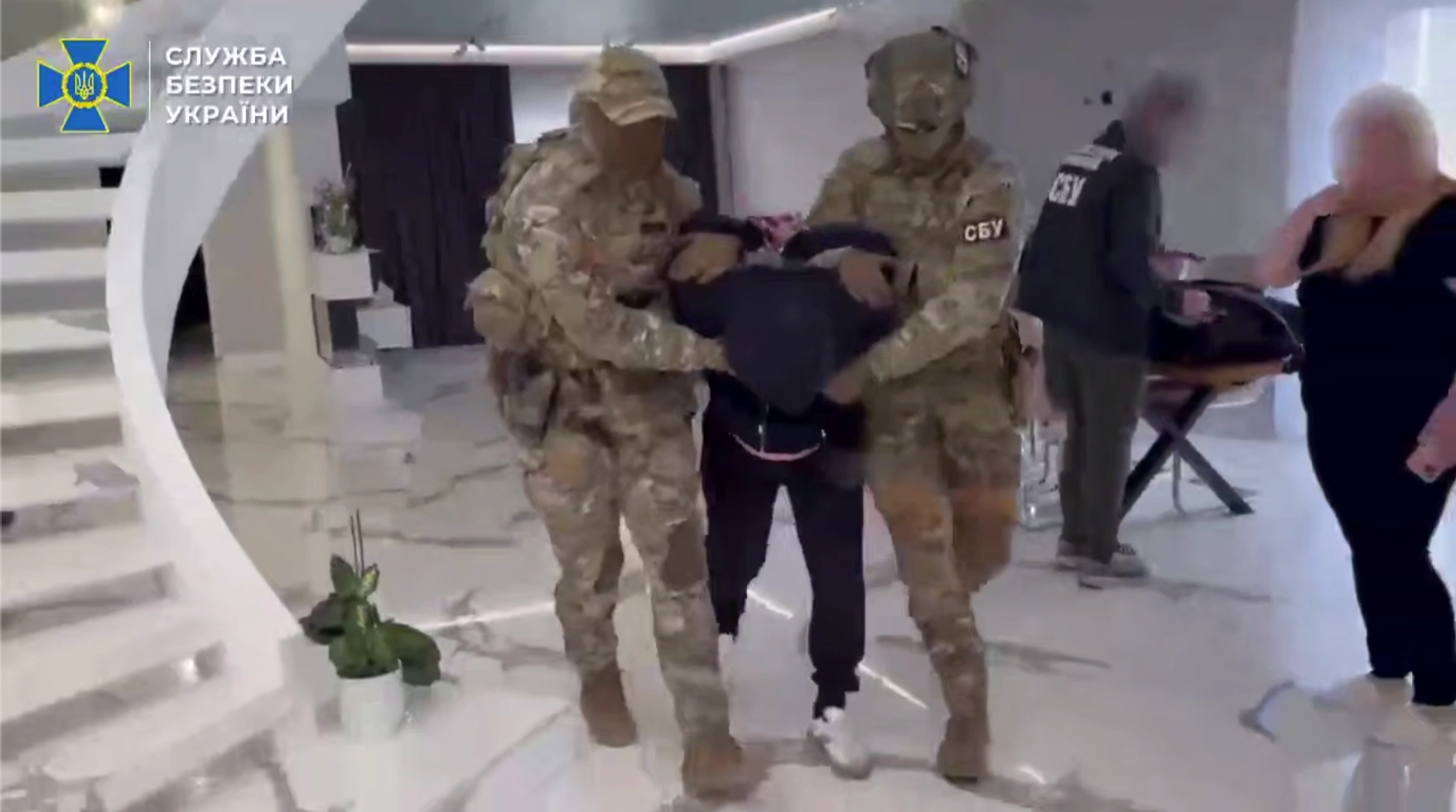
SBU video showed a hooded, handcuffed man being led through an upper-class residence and being placed in a service vehicle. His outward appearance was similar to the man later making a statement and the man video-recorded in the car. He was not visibly resisting.
The pair faces potential charges of high treason committed under martial law. If convicted the maximum sentence would be life imprisonment with confiscation of all property.
Ukrainian national security was not harmed by the two agents’ spy work and no state secrets were compromised, the SBU statement said.
According to the SBU the man traveled to Hungary at least twice, the first time in early 2025, for face-to-face meetings with handlers. He used a certificate attesting that he was a caregiver for a sick father being treated in a medical institution outside Ukraine to cross the Ukraine-Hungary frontier, the statement said. Per Ukrainian wartime conscription law, men aged 18-60 may not exit Ukraine. Rare exceptions are possible in case of personal need, usually related to a man’s health or the health of relatives.
According to the SBU statement, both agents, aside from finding out information about military installations, the movements of Ukrainian officials and recruiting more spies, were instructed to develop information about the potential for a Hungarian military takeover of Zakarpattia region.
Specific orders to agents included, per the SBU, finding out “(W)hat will be the reaction of the military and civilian population of Zakarpattia if a peacekeeping contingent, in particular the Hungarian army, enters the region; what military equipment and weapons can be purchased on the black market of Zakarpattia; what is the situation with the migration of the Hungarian population in the region; what military forces are located in Zakarpattia, are there a lot of transport and combat vehicles; how well equipped are law enforcement agencies and what is their number, etc.”
Ethnic Hungarians are the biggest ethnic minority in Ukraine’s Zakarpattia region, with about 120,000 native Hungarian-speakers making up about 12-13% of the region’s 1.1 million total population. The highest concentrations of ethnic Hungarians live in the Tysa (Hungarian: Tisza) River valley along the Ukraine-Hungary frontier.
Most political observers in Ukraine say loyalty among ethnic Hungarians to the Ukrainian government is generally strong. One of the AFU’s oldest and hardest-fighting units, 128th Mountain Assault Brigade, was raised in Zakarpattia region. About one of four officers and men in the 128th call themselves ethnic Hungarians.
Ukrainian public opinion is generally friendly towards Hungarians but hostile towards the government of Hungarian Prime Minister Viktor Orbán, an outspoken supporter of Russia and closer relations between Budapest and the Kremlin. Orbán has called on Kyiv to stop fighting Russia’s invasion and to hand over about 20% of Ukraine’s territory to Moscow. His government has repeatedly accused Ukraine’s leadership of discriminating against ethnic Hungarians living in Ukraine.
Hungarian Foreign Minister Péter Szijjártó in Friday comment to Budapest media said the SBU claims very likely were groundless, but, he did not deny them: “It is clear that anti-Hungarian propaganda is often used in Ukraine. Anti-Hungarian propaganda that in many cases has turned out to have no basis whatsoever.”
Independent Hungarian and Ukrainian media on Friday were widely reporting the SBU report was probably accurate.
On Thursday, in Hungarian social media, a video surfaced showing Hungarian Defense Minister Kristóf Szalay-Bobrovniczky, apparently in a 2023 speech to troops, declaring his country’s military would stop “peace-related” activities, shift national defense policy from NATO alignment to nationalist, and “prepare for war.”
The top ranks of Hungary’s military would be purged of pro-NATO officers so that Hungary’s army would be combat-ready and able to defend Hungarian sovereignty on its own, Szalay-Bobrovniczky is shown to say.
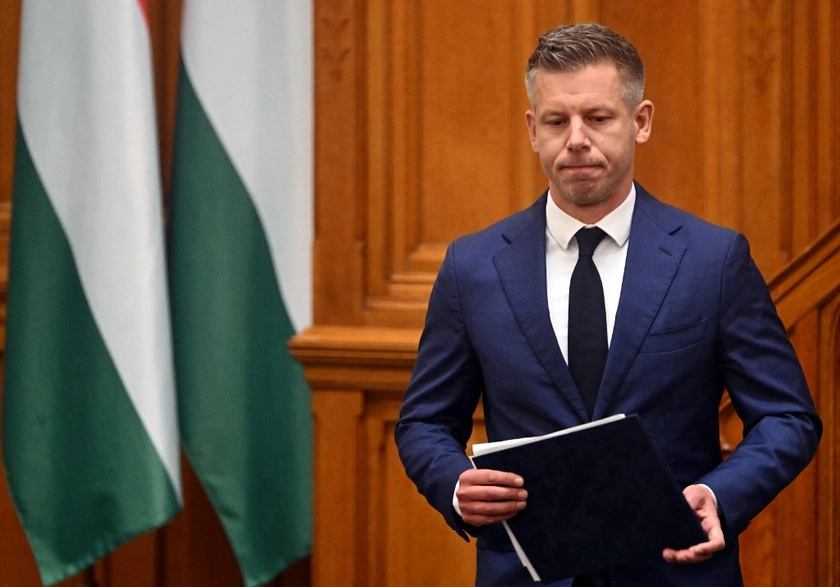
Peter Madyar, the pro-NATO leader of the Hungarian opposition, made the Szalay-Bobrovniczky video public and authenticated it. Madyar has accused the Orbán regime of hostility to NATO and overly close friendship with the Kremlin.
You can also highlight the text and press Ctrl + Enter