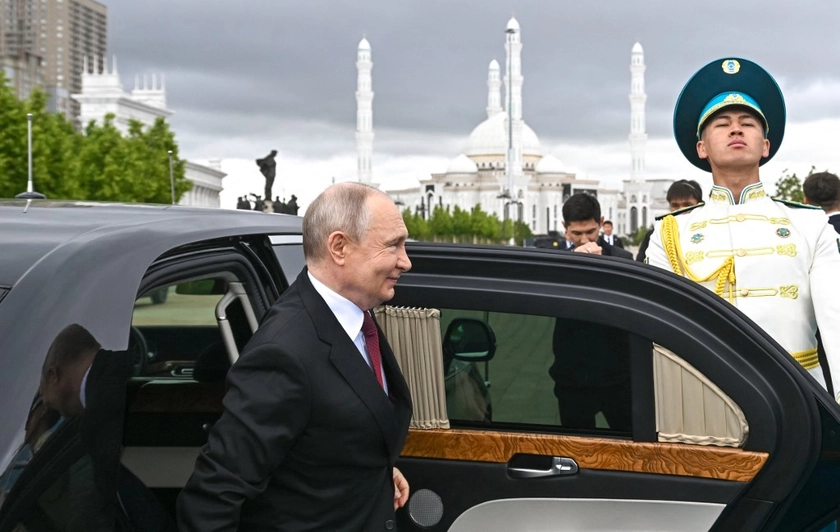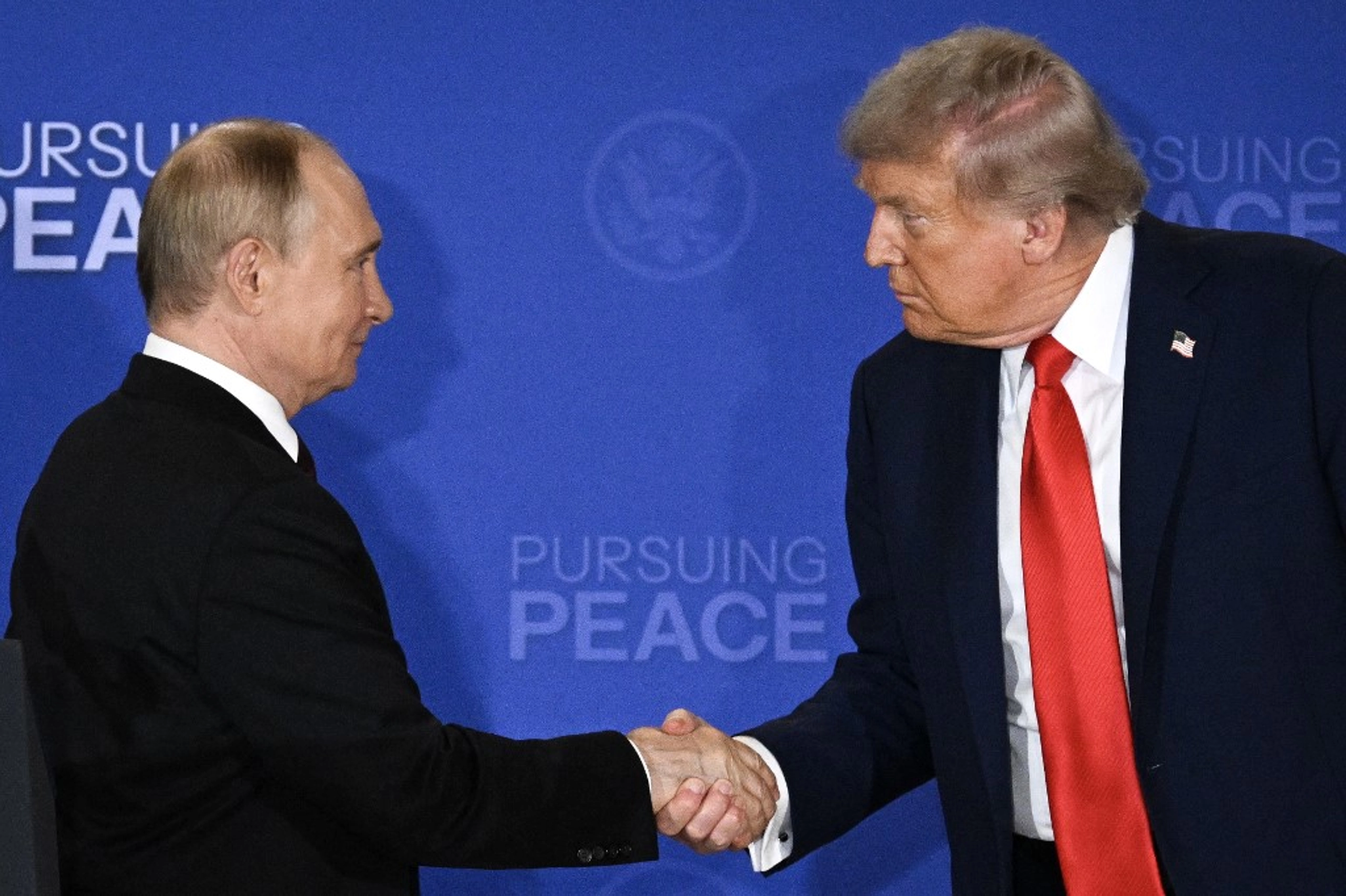
It is no small irony that the Trump/Putin 28-point “peace deal” for the Russo-Ukrainian War landed in Kyiv just as Ukraine was marking the anniversary of the Holodomor, Stalin’s genocidal famine that starved millions of Ukrainians to death in the 1930s. This is because the proposed plan, if adopted, is a likely death knell for Ukraine as a sovereign, democratic nation and part of Europe. And, relatedly, such a “deal” should also make Australia think about implications for its own regional security.
There are several reasons why the plan represents an existential threat to Ukraine. The first aspect that raises concern is the way in which the plan has been developed: i.e., in a behind-closed-doors, bilateral discussion between Trump envoy and ally Steve Witkoff and Kremlin officials, to the full exclusion of Ukraine. President Zelensky was subsequently presented with a fait accompli. It is difficult to foresee a situation where an independent country with a duly elected government could accept an agreement to whose development it was not a party.
JOIN US ON TELEGRAM
Follow our coverage of the war on the @Kyivpost_official.
Secondly, Ukraine would also be rightly concerned about the track-record of the United States and Russia in agreements involving or about Ukraine. Since Ukraine’s independence in 1991, dozens have been forged and virtually none have been implemented. This has usually been the case because Russia – and to a lesser degree the US – have either ignored or reneged on assurances given. The most significant of these agreements, of course, is the Budapest Memorandum of 1994, whereby Ukraine sacrificed all its nuclear weapons in exchange for, inter alia, security guarantees by the US which have very obviously never been met. More recently, Russia has consistently rejected every ceasefire proposal, as unequivocally agreed to Ukraine, that has been put to it. As a result, Ukrainians might rightly be of the belief that any promises made to it are more than likely to be broken.
G7 Summit to Address ‘Five-Point’ Peace Plan as Trump and Zelensky Join European Leaders
Then, there is the content of the plan itself which, in parts, is hard to believe, if not for the fact that it was written by New York City property developer spivs and real estate moguls rather than statesmen. The most contentious of its points are: a) Ukraine ceding territory in addition to parts of the country currently occupied by Russia; b) Ukraine essentially halving the size of its current armed forces, and; c) Ukraine giving up on proposals to join NATO.
If adopted, such measures would have the effect of essentially rewarding Putin for conducting more than 10 years of unilateral invasions and, most recently, undertaking a murderous missile campaign of bombing Ukraine’s civilians in their apartments and houses. This would establish a new low and departure from the established international rules-based order by acknowledging that aggression is acceptable and tyranny is tolerable. Considerations of illegality and immorality would be suspended as part of a new order of authoritarian advantage.
Putin would be further rewarded materially by the lifting of sanctions from his near-crippled economy, the return of the majority of the $300 billion in frozen Russian assets, and not needing to pay any reparations to Ukraine, whose energy grid, as one example, is nearly fully destroyed. That is the sound of ka-ching at the Kremlin.
At this point, it’s difficult to fathom how American negotiators adopted all these commitments that are completely in Russia’s favor and completely detrimental to Ukraine’s future. Naivete, lack of historical understanding of Russian imperialism, an “all deals are good deals” mentality, or even more sinister explanations about Trump’s motives are all possible explanations.
What Australia needs to do
As Ukraine’s Ambassador to Australia, Vasyl Myroshnychenko, pointed out last week, in Australian equivalent terms, the “deal” is similar to the notion that Australia would sacrifice, say, Queensland to appease a foreign threat. Nonsensical in extremis – but that’s what has put on the table for Kyiv to ostensibly consider.
Very importantly, even if adopted, the “deal” will not secure the peace which is conceptually its objective. Rather, a weakened Ukrainian military and the presence of no international peacekeepers in Ukraine opens the gate to more war by Putin, who has consistently shown that he is not satisfied by the territory taken to date and has talked about fulfilling Russian tsars’ imperial ambitions. The “deal” only buys Putin time to rebuild his decimated army and his increasingly depleted war materiel. Europe, with its history of failed appeasement, will be nervously watching events and discussions in the next few weeks.
For all these reasons, the Albanese Government should also be concerned about the “deal” and its implications for the Indo-Pacific region that it is part of. The precedent of ceding territory and accepting forcible incursions would no doubt emboldened an ambitious and authoritarian China. It would also undermine all of the Albanese Government’s recent and largely successful activism in building stronger ties in Asia and Oceania in the name of regional security and democratic values. Let’s not forget that North Korea continues to send troops to fight on the Russian side in the Donbas.
Indeed, Deputy Prime Minister Richard Marles has rightly said the Russo-Ukrainian war has real regional impact. He is right, but his government has been wrong to only “stand with Ukraine” rhetorically while not providing any substantive aid in the last 12 months. Indeed, the threat to Ukraine of this “deal” – now de facto rejected by our allies in the UK, Germany, France, Japan and Canada – should be a driver for reversing that sorry trend. Contrary to a plan for capitulation and collapse of the rules-based order, it is now poignant and timely to provide Ukraine with, perhaps, Tiger helicopters that will soon go out of service or humanitarian support in the form of energy infrastructure. It is equally important to continue the current effort to shore up the region based on democratic principles – an effort Foreign Minister Penny Wong should be commended for.
Finally, President Trump is famous for “art of the deal.” Alas, the package on the table now is not art – or statecraft – in any way. It is a surrender of all the things we in the West have previously believed in.
Originally appeared in Australian Financial Review.
The views expressed in this opinion article are the author’s and not necessarily those of Kyiv Post.
You can also highlight the text and press Ctrl + Enter

Putin’s Worst Nightmare