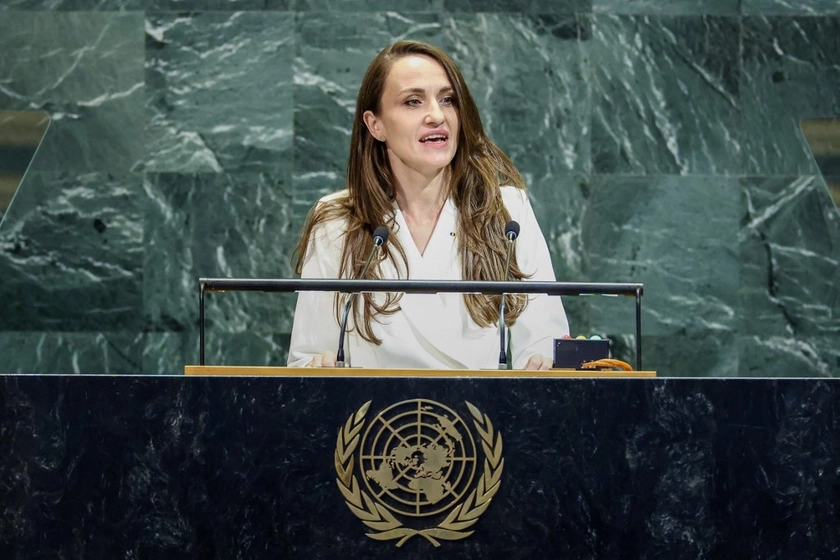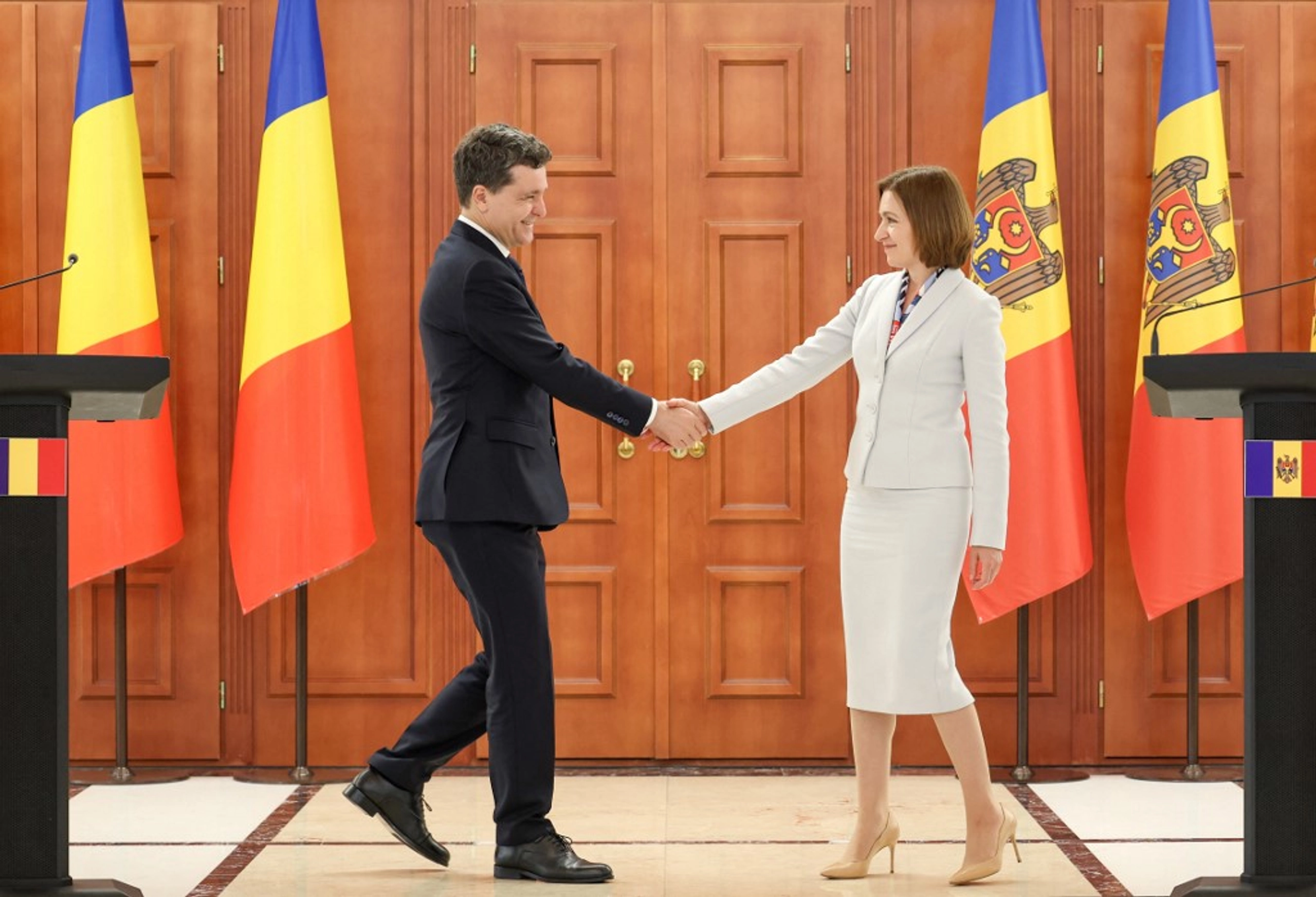
A recent statement by Moldovan President Maia Sandu, made during her appearance on “The Rest Is Politics: Leading” with Alastair Campbell and Rory Stewart, has generated waves well beyond Moldova and Romania. A quick scan of international media shows that the remark resonated regionally and globally – no small feat at a moment when much of the world’s attention is focused elsewhere, from Venezuela and Iran to Greenland.
In essence, President Sandu said something straightforward but politically charged: if a referendum on reunification with Romania were held, she would vote in favor. While the statement itself was not entirely new – Sandu has expressed similar views before – it was the context that made it particularly significant.
She raised the issue of reunification while discussing Moldova’s broader geopolitical situation: Russia’s war against Ukraine, Moscow’s imperial ambitions, and the resulting pressure on Moldova’s sovereignty and democratic institutions. Sandu was notably realistic. She acknowledged that public opinion polls do not currently show a majority in favor of reunification, while pointing out that there is a clear majority – confirmed in the 2024 referendum and the 2025 legislative elections – in favor of European integration.
This raises a broader question: How should we interpret Sandu’s statement, and how should we understand the reunification debate today?
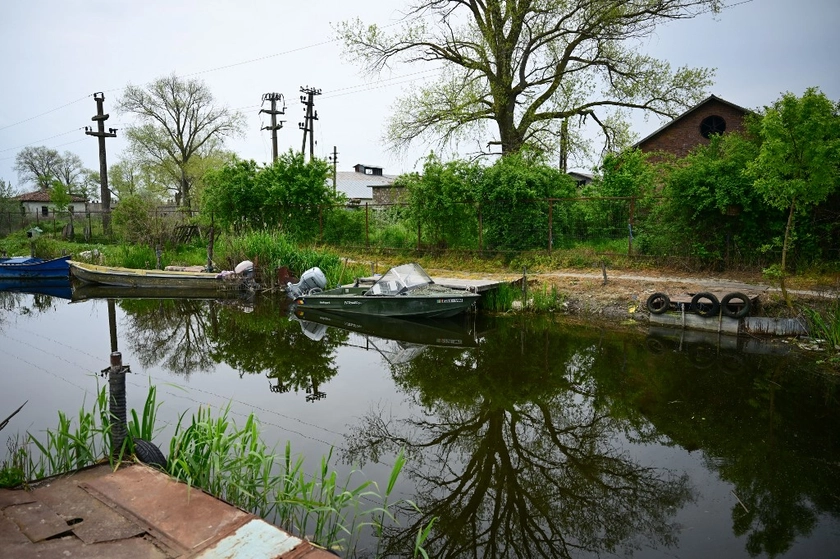
At Romania’s Edge, Quiet Life Meets Threat of War
My argument is simple: reunification has already begun. But unlike past historical moments, it is unfolding not through a single dramatic political act, but through many incremental steps. To understand it, we need to look less at the grand picture and more at its individual components.
Diplomatically, Moldova and Romania have been increasingly aligned since Maia Sandu came to power in December 2020. Moldova has clearly chosen the European path and has accelerated reforms since the start of Russia’s full-scale invasion of Ukraine. Romania, in turn, has become Moldova’s strongest and most consistent advocate within the European Union. As the regional security environment deteriorated, Bucharest also sought to project greater security assurances toward Moldova, including through public statements by former President Klaus Iohannis. The shared official narrative is now straightforward: Moldova’s future lies in Europe, and Romania sees reunification ultimately happening within the European Union.
Reunification has already begun. But unlike past historical moments, it is unfolding not through a single dramatic political act, but through many incremental steps.
Beyond diplomacy, two concrete dimensions of integration stand out.
First, there is a profound people-to-people reunification. By some estimates, around half of Moldova’s population now holds Romanian citizenship. This process – one Romanian passport at a time – has been remarkably effective. President Sandu herself, like many Moldovan politicians, holds Romanian citizenship and votes in Romanian elections. The policy of restoring citizenship to descendants of those who lost it after Moldova’s incorporation into the USSR gained momentum under President Traian Băsescu and continued under President Iohannis.
Despite recent concerns about abuse of this channel by Russian citizens seeking EU passports, the system has largely worked as intended. It has allowed Moldovans to live, work, and travel freely within the EU. Their commitment to European values was clearly demonstrated during the 2024 European integration referendum, where Moldovans abroad – many of them Romanian citizens – played a decisive role in securing a narrow pro-EU victory. In strictly legal terms, Moldova today is already almost half Romanian. Historically, culturally, and linguistically, the connection runs much deeper, but the legal reality matters and should not be ignored.
Second, reunification is taking place on the ground, project by project. Romania is Moldova’s most important economic partner and a key export market. Romanian companies – especially in banking and energy – are increasingly present in Moldova. Romania is close to taking over Moldova’s strategic Giurgiulesti port. Through energy interconnections with Romania and the European market, Moldova has significantly reduced its dependence on Russian gas and electricity, surviving – at high social and economic cost – Russia’s energy blackmail.
Infrastructure ties are also deepening. New bridges over the Prut River are under construction, and Moldova’s first kilometers of highway will be built by Romania, connecting Iași and Ungheni. Romania has financed the renovation of kindergartens and cultural institutions, provided school buses, and supported Moldova’s emergency medical system. These are not symbolic gestures. They are tangible investments that have shaped Romania’s image in Moldova as a country that delivers, not just promises.
Taken together, these developments form a solid foundation for deeper integration – economic, social, cultural, and potentially political. President Sandu’s statement matters because it explicitly links European integration with the possibility of reunification. For Moldova, EU membership remains the primary goal. But there are two conceivable paths: the standard accession route, decisively pursued since 2022, and an extraordinary route – reunification with Romania and automatic EU membership.
The seeds of political imagination have been planted, but much remains to be built. The groundwork – through citizenship, infrastructure, energy security, and everyday cooperation – is increasingly visible, yet incomplete and uneven across sectors and society. What remains essential is political context, timing, and sustained effort to translate practical integration into durable public support. Rather than a historical inevitability, reunification – if it is ever to occur – would depend on incremental choices and democratic legitimacy.
This also explains Romania’s public restraint. Bucharest will continue to place agency on the Moldovan side, allowing Chişinău to lead. Public ambiguity will coexist with accelerated practical cooperation, designed to demonstrate that closer integration brings concrete benefits for everyone.
Rather than obsessing over the legal and geopolitical mechanics of reunification, we should pay closer attention to how Moldova and Romania are already moving closer together. That process is real, ongoing, and largely irreversible. President Sandu’s statement did not start it – it simply acknowledged a reality that has been quietly taking shape for years.
The views expressed in this opinion article are the author’s and not necessarily those of Kyiv Post.
You can also highlight the text and press Ctrl + Enter