The Ukrainian Navy has successfully destroyed three Russian anti-aircraft missile systems in southern Ukraine within the past 24 hours, including a Pantsir-S1 and an Osa, as reported by the Ukrainian Naval Forces on Telegram.
“The Naval Forces of the Armed Forces of Ukraine (AFU), together with other Defense Forces units, continue to destroy the enemy on land, at sea, and in the air,” the report read.
JOIN US ON TELEGRAM
Follow our coverage of the war on the @Kyivpost_official.
Earlier on Monday, Jan. 6, the Navy reported the destruction of two Pantsir-S1 anti-aircraft missile complexes in the Kherson region.
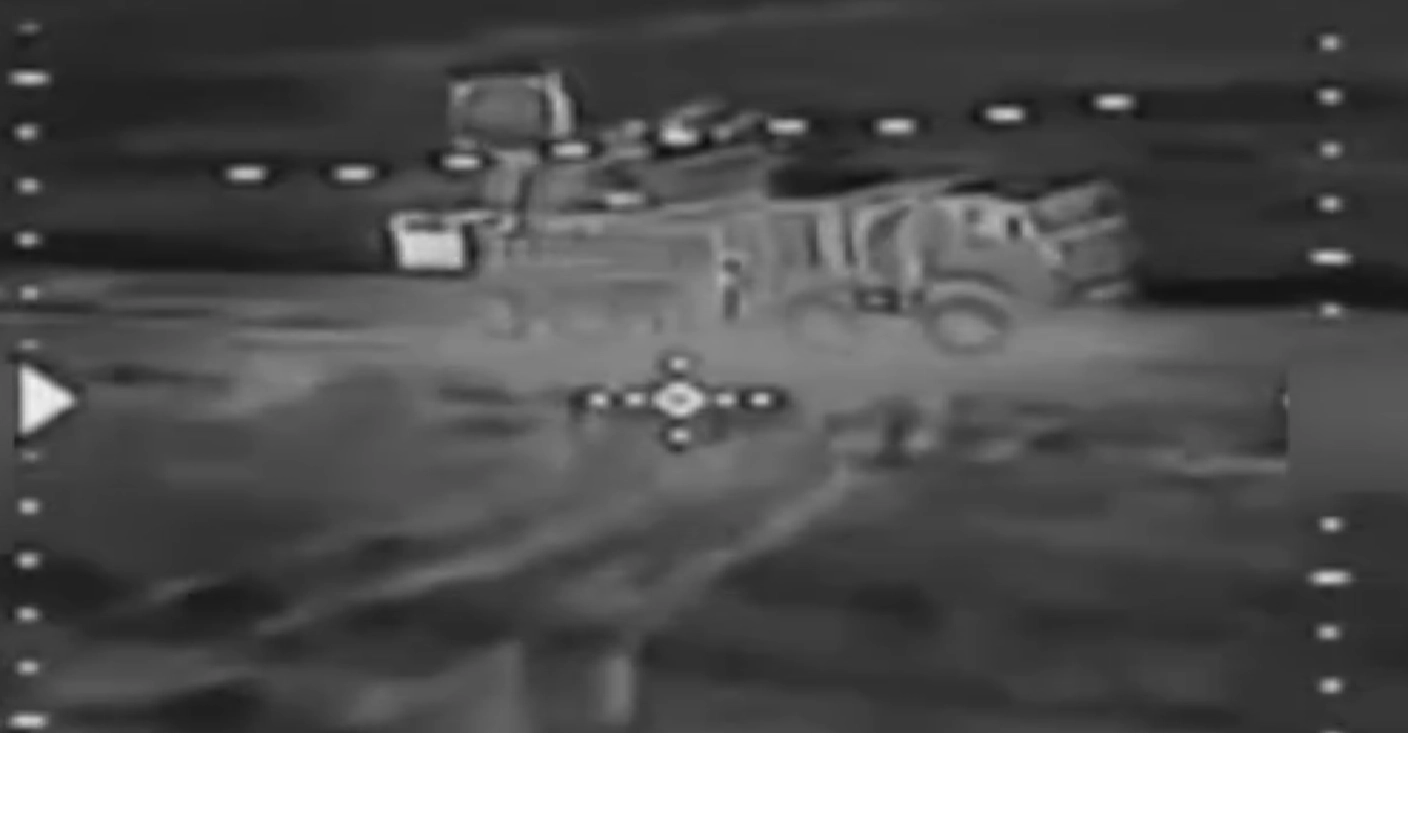
A video, likely recorded by drones, was released showing the destruction of Russian military equipment. Kyiv Post could not independently verify the time or location of the filming. The video shows a drone targeting a Russian Pantsir-S1.
“Our soldiers continue to turn Russian equipment into scrap metal,” the video caption said.
A video, likely recorded by drones, was released showing the destruction of Russian military equipment. Kyiv Post could not independently verify the time or location of the filming. The video shows a drone targeting a Russian Pantsir-S1.
“Our soldiers continue to turn Russian equipment into scrap metal,” the video caption said.
The Pantsir-S1 (NATO: SA-22 “Greyhound”) is a self-propelled surface-to-air missile and anti-aircraft artillery system designed to safeguard military, industrial, and administrative sites from a variety of airborne threats.

Trump Downplays Russian Drone Incursion into Poland as ‘Mistake,’ Drawing Sharp Rebuke From Allies
This system provides defense against aircraft, helicopters, precision-guided munitions, cruise missiles, and UAVs, particularly at low altitudes. According to open sources, the export cost of a single Pantsir-S1 unit ranges from $13.15 million to $14.67 million.
Reports from last year indicated that Russia had increasingly deployed the Pantsir-S1 air defense system in both its cities and occupied Crimea, likely in response to Ukrainian long-range drone attacks.
The Osa, a Soviet-era, all-weather automated air defense system, was designed to protect motorized rifle and tank divisions in various combat scenarios. Developed in 1960, it was the Soviet Union’s first fully mobile air defense system.
In 1977, the Osa-AKM variant was introduced, equipped with six upgraded 9M33M3 missiles. Production continued until 1989, making it the most widely produced anti-aircraft missile system in the USSR.
The Osa-AKM carries six 9M33M3 missiles, each weighing 128 kilograms and equipped with a 15-kilogram warhead. The system has an engagement range of 1.5 to 10 kilometers and can engage targets at altitudes between 10 and 5,000 meters. The probability of hitting a fighter-type target with one missile ranges from 50% to 85%.
Estimates of the total cost of the Osa system vary between $1 million and $10 million, depending on its configuration and any upgrades.
Late last year, the Atesh partisans reported heavy Russian losses during assaults on the right bank of the Kherson region, yet Russian forces continued attempts to break through.
According to the partisans, these losses have put significant strain on the 70th Motorized Rifle Brigade, stationed on the left bank of Kherson.
“A recent assault on the right bank ended in disaster: entire platoons failed to return, severely damaging morale,” Atesh reported.
Despite this, the Russian military command persists in sending soldiers on further assaults, aiming to “find a more advantageous spot for the next landing.”
Moreover, Russian command in the Kherson region has been leaving the bodies of fallen soldiers on the islands, officially listing them as “missing” to avoid paying compensation to their families, the Atesh reported on Dec. 25, 2024.
According to Atesh agents within the Russian military, the 61st Naval Infantry Brigade has been sending soldiers on dangerous assaults and refusing to retrieve the bodies of the deceased. One survivor revealed that after a deadly assault, the command refused to collect the bodies to avoid compensating the families, listing those killed as “missing in action.”
Surviving soldiers are outraged that commanders aren’t recovering the bodies of fallen comrades, despite unused boats. One commander reportedly said, “Until I decorate my chest with medals — f*ck you, no medals for you.”
You can also highlight the text and press Ctrl + Enter