Inside the country more than a few in the White House love to hate, Ukraine, social and mainstream media alike have taken a look at America’s ongoing Signal messaging scandal and are having a field day.
Updates on the public relations disaster caused by inadvertent inclusion of an independent reporter into an elite chat group, including most of President Donald J. Trump’s senior foreign-policy advisors, have surfaced in the Ukrainian internet at close to real-time speed, and most every new report of the expanding scandal has been accompanied by Ukrainian snark.
JOIN US ON TELEGRAM
Follow our coverage of the war on the @Kyivpost_official.
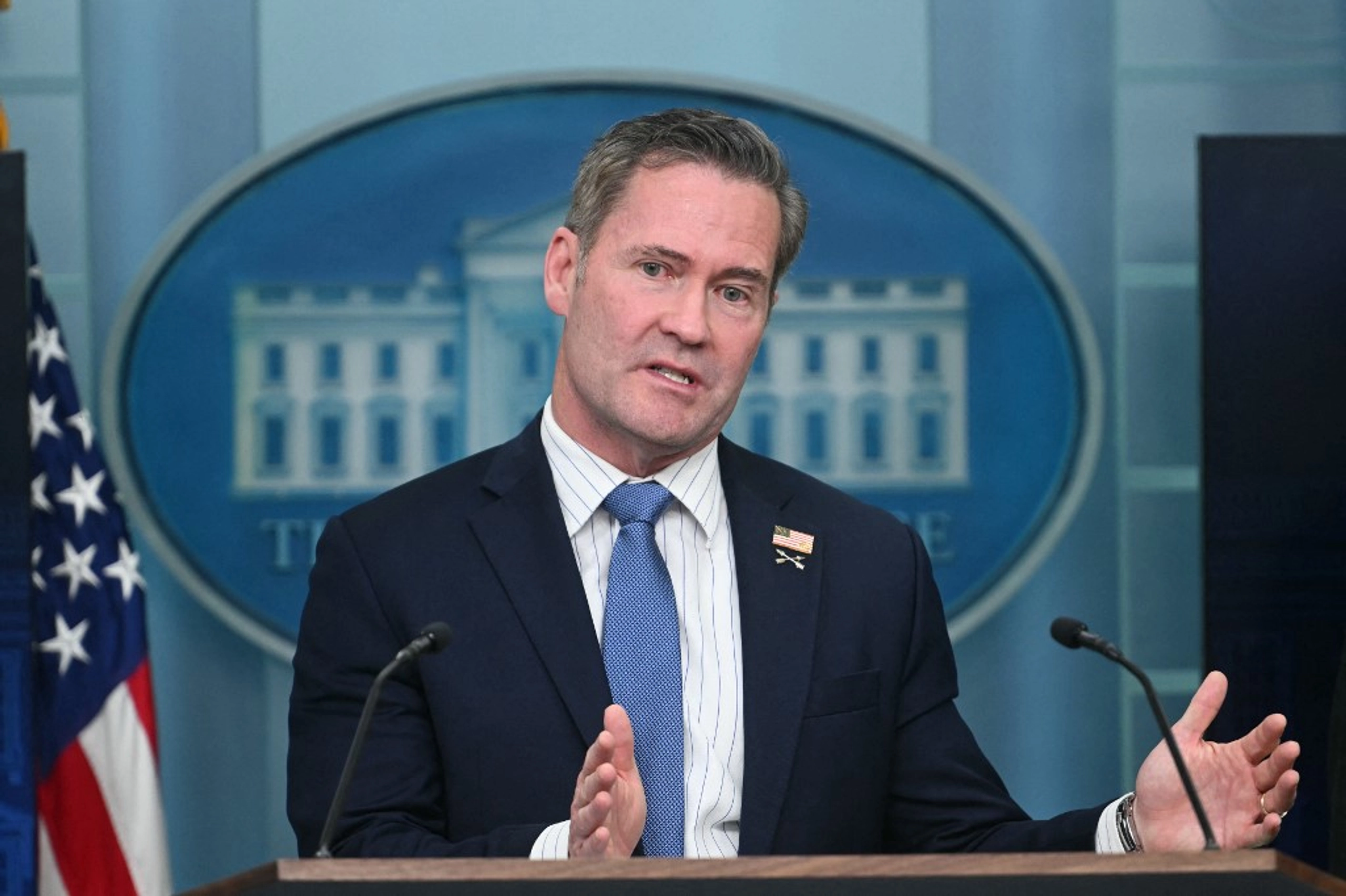
From the point of view of Ukrainian communicators and sensitive military information, US National Security Advisor Mike Waltz’s failure to realize the chief editor of Atlantic magazine should not be part of a government chat group discussing American air strikes was a textbook noobie error.
Professional soldiers, actually fighting real wars, don’t make mistakes like that, was an almost universal conclusion by Ukrainians commenting on the American goof-up.”Oh cr*p, I didn’t link it right, that wasn’t the right messaging group!” snickered Operativny ZSU, a Ukrainian army Telegram channel with half a million followers, in one of the earliest reports of the, by Ukrainian standards, appalling American military security gaffe.
“Oops, wrong chat,” sniped political and military commentator Andriy Tsaplienko to a half million followers on “X” and Telegram. Tsaplienko punctuated his observation with a face-palm emoji.
Syrsky: Russian Maps Show False Advances to Please Top Command
The messaging app Signal has been used for years by Ukrainian military members as the effective default platform for routine text communications since its launch in 2013, because of the platform’s reputation for strong encryption compared to competing Telegram, WhatsApp, and Skype.
In modern Ukraine, now at war with Russia for a decade, Signal is (exclusive of life-threatening emergencies, and still, advice is probably to avoid it even then) never used to transmit mission-critical information like timings of attacks, units involved in an operation, weapons to be employed, and locations of strikes.
The perception that Russian intelligence, provided it devotes the resources to the effort, could break into any Signal discussion is, in Ukraine, effectively universal.
Users police each other for possible leaks of operational information. Outsiders (like invited journalists) must respect chat rules. In Ukraine, a single violation of a military Signal group’s Operational Security (OPSEC) rules typically earns the violator a lifetime ban.
Ukrainian comment on the US security failure has run from the polite to the poisonous. The major Ukrainian news magazine Bukvi, a publication targeting professionals and with a 14 million readership, led its Tuesday story on the American Houthi-Signal chat scandal with a reprint of comment by Signal founder Moxie Marlinspike suggesting, with irony, that people ought to consider using Signal to be better informed about secret US military planning.
“Signal users can now get a ‘unique opportunity’ to be randomly added to a group chat for sensitive military discussions from the US Vice President,” the normally staid Bukvi reported, adding a bit of its own acid.
By the standards of Ukrainian wartime security, the granular detail typed by US Defense Secretary Pete Hegseth into the Signal chat attended by Atlantic magazine editor in chief Jeffery Goldberg was sheer lunacy: primary weapons (F-18 strike aircraft, MQ-9 drones and Tomahawk missiles) were identified by type, the times targets to be hit were specific down to the minute, and the primary target (a Houthi leader and his house) was named, and intent of follow-up attacks was announced.
The US chat group exchanged digital high-fives and fire and prayer emojis once news arrived that the attacks had blown up buildings and killed people in Yemen, and that no US service personnel were hurt. The Ukrainian practice is to keep the Signal chat to a minimum volume and to end the chat as quickly as possible.
Andrei Nikulin, a Russian political scientist popular on the Ukrainian internet for his Kremlin-critical views, on Tuesday posted to Telegram a February video of Hegseth shortly after taking over the US Defense Department stating: “The previous (Biden) administration made us (the United States) look like idiots. That’s going to stop right now!”
“This sound bite (from Hegseth) is pretty funny considering the incipient scandal with the ‘secret’ chat that’s going on right now,” Nikulin said.
Ukrainian military writer Petro Andriushchenko quoted the US publication Politico calling for Waltz to be sacked and opined: “It was reckless not to check who was in the chat. It was reckless to have that conversation on Signal. You can’t have that kind of recklessness as national security adviser…Mike Waltz is a complete idiot.”
Volodymyr Styran, a Ukrainian cyber-security expert, said that all the American officials in the chat, starting with Vice President JD Vance, weren’t being smart about communications security and that based on their behavior, every one of them are now logical targets for a hostile intelligence agency. ”The technical (security) problem is not with Signal, but with the owner of the phone on which it is installed. All members of this group, including the journalist, deserve to be targeted in a well-funded cyber intelligence operation,” Syran said in a March 25 “X” comment.
White House attempts this week at political damage control of the Signal security failure, by, on Tuesday, denying that sensitive military information was even discussed and hoping the news media wouldn’t challenge the government narrative, is being criticized in Ukraine as a greenhorn mistake.
“After Trump administration officials said the information in Signal is not classified, The Atlantic magazine published several more screenshots contradicting that,” military observer Anton Gerashchenko said in a Wednesday post. “This was predictable.”
On Thursday, mainstream Ukrainian information platforms were offering news consumers thorough reporting on the American Signal scandal and the Trump administration’s seeming inability, thus far, to control it.
The national UNIAN news agency led off with news from Germany, where the major magazine Der Spiegel had learned Waltz had, until Wednesday, aside from Signal, operated personal social media open to the public and made available to internet users private data and passwords of dozens of senior US government officials.
Waltz had deleted the pages by Thursday, but the damage allowing potential adversaries to break into accounts of those officials via Signal, Dropbox, LinkedIn and WhatsApp already was done, UNIAN reported.
Zerkalo Tizhden, Ukraine’s oldest and probably most authoritative news magazine, said of US senior official messaging security discipline:
“Hostile intelligence agencies could use this publicly available data to hack into the communications of victims by installing spyware on their devices…foreign agents had access to [Waltz’s] Signal chat group in which [Director of National Intelligence Tulsi] Gabbard, Waltz, and Hegseth discussed a military strike against the Houthis…Spiegel’s investigation has shown that the private and public phone numbers belonging to Gabbard and Waltz are, in fact, linked to Signal accounts.”
Krymsky Veter, an outspokenly pro-Ukraine Telegram channel mostly reporting on Black Sea security issues, offered a pithier evaluation of White House OPSEC: “This is what usually happens when incompetent people are in power.”
You can also highlight the text and press Ctrl + Enter