Operators from Ukraine’s Unmanned Systems Forces (UUSF) tasked with detecting and intercepting Russian unmanned aerial vehicles (UAV) reported via the WU Samurai Telegram channel that they had discovered a weakness in the way Russian Molniya drones operated. This allowed them to direct attacks against the enemy operators of the drones on the ground at the same time as they were destroying the UAVs.
The story was reported in the Ukrainian Militarniy website, which said the UUSF team only shared it after their Russian counterparts worked out how the Ukrainians were doing it. Even so, they didn’t divulge the technical details of the tactic other than to say it involved bringing a “small radio reconnaissance device” close to the enemy drone, carried on their own interceptor, as it homed in on the Molniya.
JOIN US ON TELEGRAM
Follow our coverage of the war on the @Kyivpost_official.
Once the “data” had been extracted, this provided the coordinates of the Russian drone operators control post, by which a Ukrainian first-person view (FPV) kamikaze drone was tasked to take them out.
According to the Ukrainian fighters, each time the destruction of a Molniya UAV was reported, the Russian pilots had also invariably been eliminated – or as they put it: “lightning struck twice.”
What is the Molniya drone?
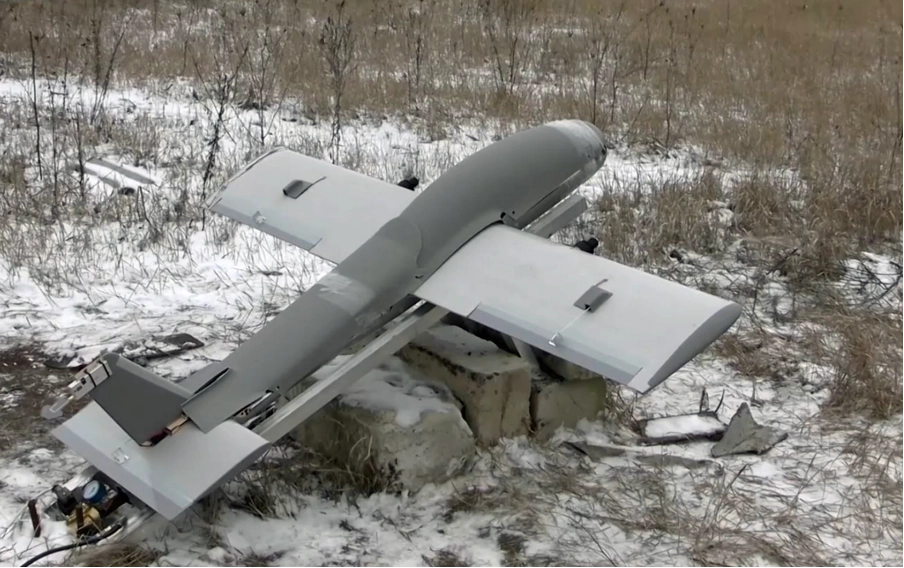
It is a fixed-wing kamikaze drone of which two types have been encountered to date; the “Molniya-1” has a single electric motor fitted at the nose, while the “Molniya-2” has two fitted under the wings.
Russia Turns to Sea Imports as Drone Strikes Trigger Fuel Shortages
They are described as pretty primitive and cheap, constructed from plywood, plastic, polyethylene, and sometimes even cardboard, which can make them difficult to detect at a distance. The first reports of their use appeared in early 2024, where they were initially used as decoys against Ukrainian air defenses.
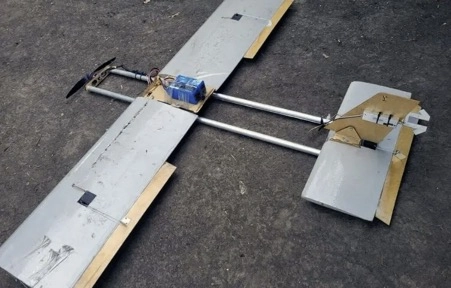
The original Molniya-1 decoy drone. Photo: Russian social media
They are first-person view (FPV) drones guided to the target and controlled directly by their operator for the duration of their flight with a claimed range of up to 40 kilometers (25 miles).
Towards the end of last year, it was reported that they began to appear carrying improvised warheads made from hand grenades, rocket-propelled grenades (RPG) or 3-5 kilogram (6-10 pound) improvised explosive charges and used as kamikaze drones.
In November, several of the drones were used to attack civilian targets in the city of Kharkiv, according to Dmytro Chubenko, a spokesman for the Regional Prosecutor’s Office.
Combating Shahed UAVs
Operators from the Ukrainian Security Services (SBU) Darknode unit of the 412th NEMESIS brigade that works within the UUSF, said on Telegram that it had developed a new technology capable of bringing down Iranian Shahed and its analog, the Russian Geran 2 suicide drones.
Without specifying the methodology used, they claim to have destroyed more than 10 of the drones using a device that costs around $5,000, compared with the cost of the enemy’s drones at over $150,000 a unit.
An SBU spokesperson said that the UUSF was continuing to develop and employ new and innovative technologies and techniques to combat Russian drones and to protect the lives of Ukraine’s defense forces and citizens.
You can also highlight the text and press Ctrl + Enter

Putin’s Worst Nightmare