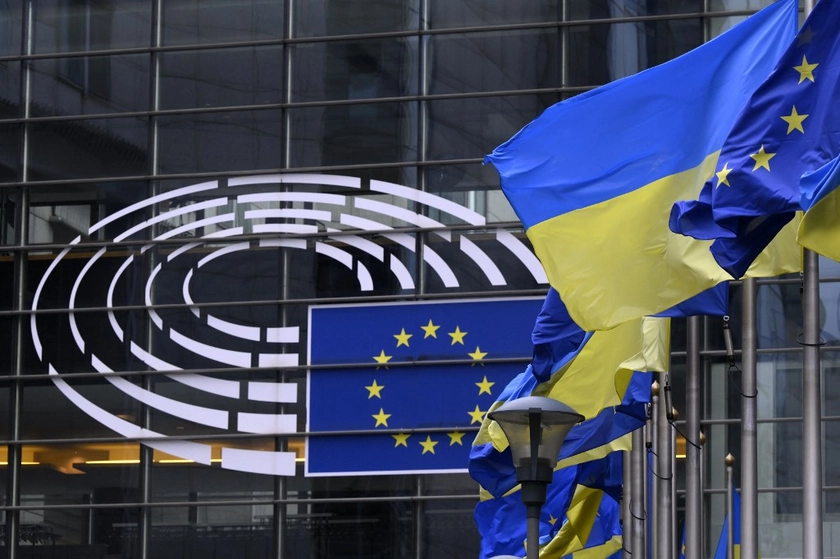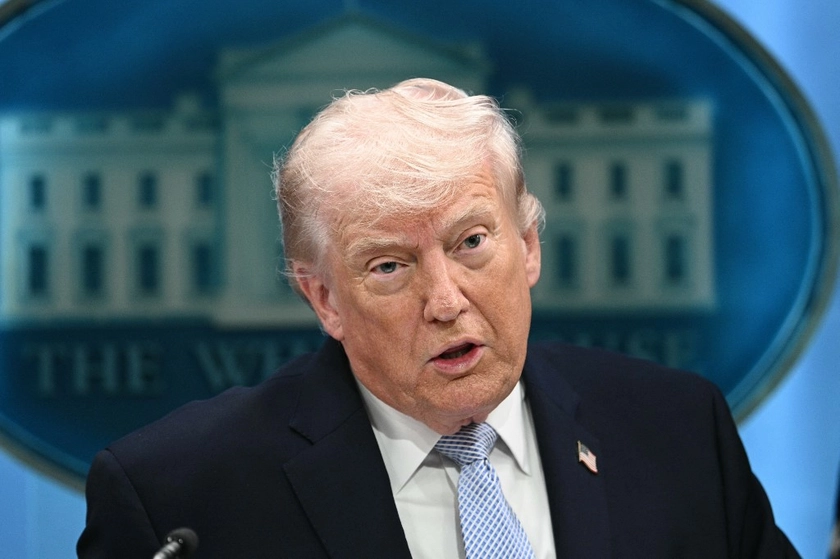
The European Union stated it does not support US President Donald Trump’s tariffs on steel and aluminum and is ready for discussions. However, the EU is also considering countermeasures if dialogue brings no result, The European Council reported.
EU Ministers discussed how to move forward with trade relations with the US in the wake of the 20% tariffs announced against it by Trump on April 2.
JOIN US ON TELEGRAM
Follow our coverage of the war on the @Kyivpost_official.
The EU is going to assess the impact of the US tariffs on the EU and explore “mutually acceptable solutions” to them, the European Council press release says.
“The EU deeply regrets the new US tariffs and remains committed to dialogue, seeking a negotiated solution acceptable for both sides,” Michał Baranowski, Undersecretary of State at the Ministry of Economic Development and Technology of Poland, responsible for Trade, said.
According to Baranowski, the EU’s position is based on “patience and firmness” and it’s considering all possible options.
On April 2, Trump levied tariffs on almost every country on the globe, with a few exceptions – including Russia and Belarus.
A universal tariff of 10% was imposed on all imported goods and each nation faced what Trump called “reciprocal tariffs,” meant to punish those nations that exported too much to the US.
The US imposed 20% tariffs on general EU imports, also imposing 25% import tariffs on steel, aluminium and cars, Reuters wrote.

Montenegro to Introduce Visas for Russians Ahead of EU Accession
The tariffs are a “major blow to the world economy,” EU chief Ursula von der Leyen previously said in her statement the day after Trump announced the tariffs. “We are already finalizing a first package of countermeasures in response to tariffs on steel.”
The US tariffs on imports from the European Union are set to take effect on April 9.
Von der Leyen said Brussels was “preparing for further countermeasures” but added it was “not too late to address concerns through negotiations.”
The European Commission said on Monday it was also open to a “zero-for-zero” tariffs deal, Reuters reported.
According to the EU data, together, the European Union and the US represent almost 30% of global trade in goods and services and 43% of global GDP (expressed in USD). The EU had a trade surplus with the US of €48 billion ($52.3 billion)in 2023, taking into account both goods and services.
How does the EU see trade relations with China?
EU Commissioner Maroš Šefčovič reported on his visit to Beijing and talks with the vice-premier and ministers about ways to restore balance in trade and investment, the European Council reported.
The EU is recording a record trade deficit with China – €304.5 billion ($333.7 billion) in 2024.
Although this is lower than in 2022, the imbalance remains significant.
In 2024, China’s direct investment in the EU grew to €185 billion ($202.8 billion) – the highest level in five years. Meanwhile, EU investment in China remained unchanged at €184 billion ($201.6 billion).
According to the EU, China is the EU’s third-largest trading partner overall and the second in goods traded.
You can also highlight the text and press Ctrl + Enter