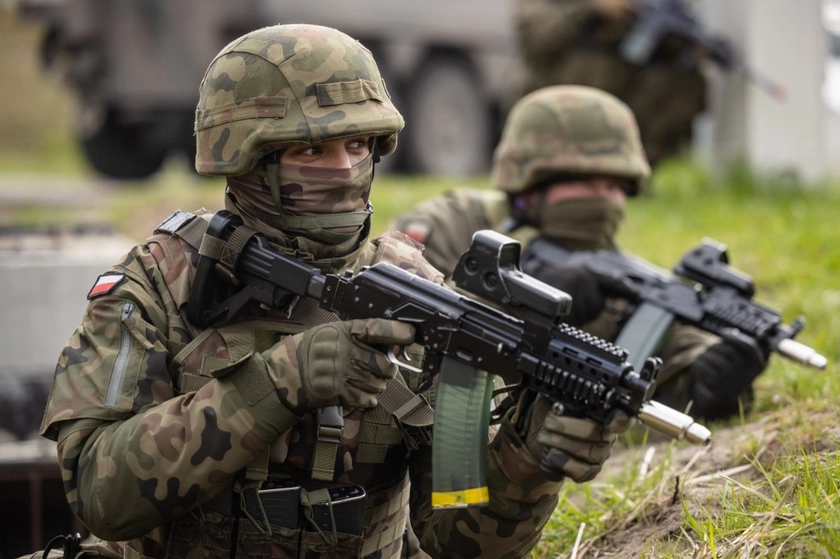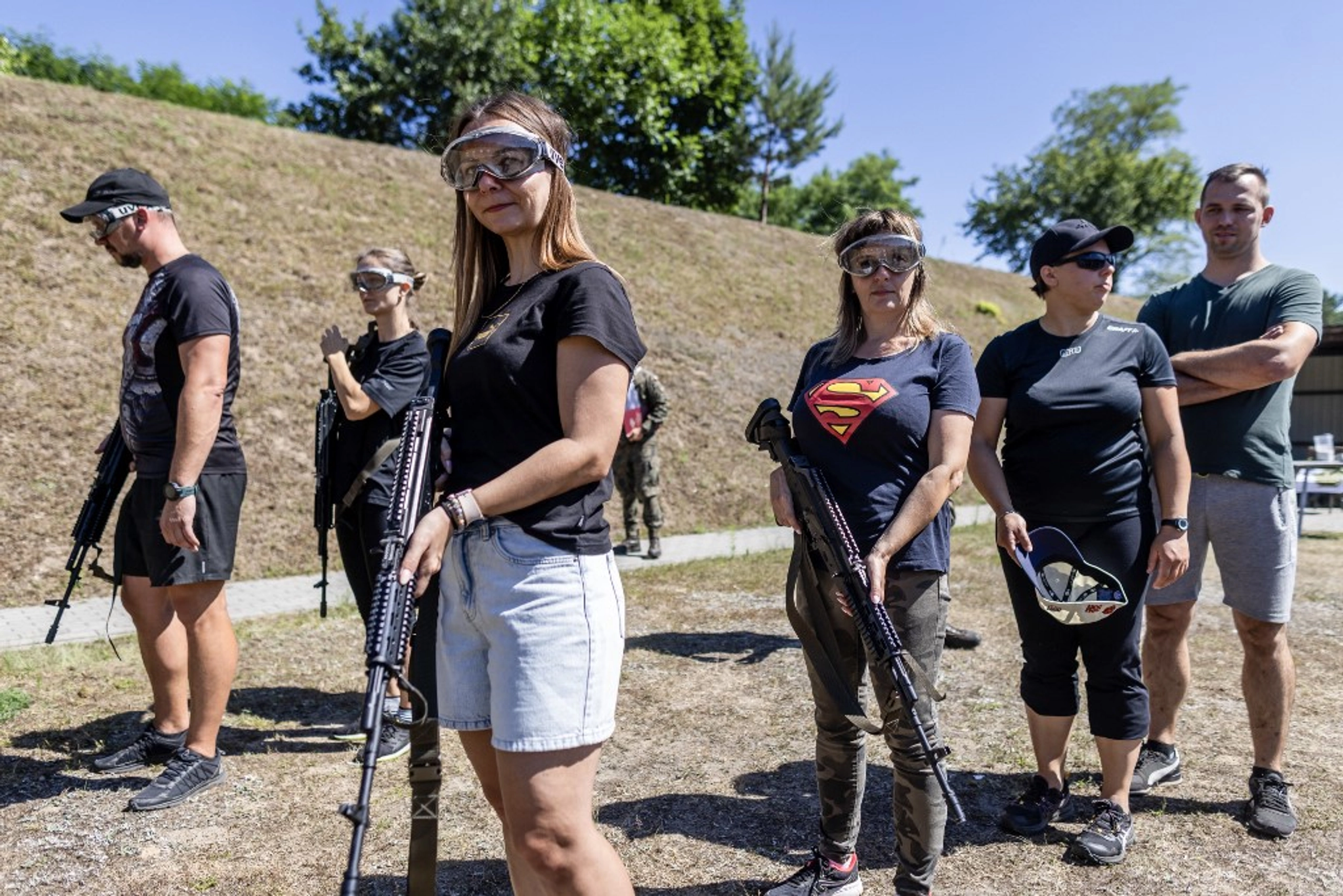
Militarization is creeping into Polish society. It’s not so much about seeing more tanks or military planes. That’s obvious. Rather, it’s about the psychological shift.
The mental militarization of Polish society is visible on all levels. Discussions around bringing back the draft. Generals as experts on Polish television no longer surprise anyone. Military exercise programs for men and some women (with degrees in psychology and medicine) based on the Swiss model, where every man must go through military training.
JOIN US ON TELEGRAM
Follow our coverage of the war on the @Kyivpost_official.
In the case of Poland, the purpose of the training is to ensure that the aggressor – Russia – is faced with millions of trained Polish citizens, and not defenseless civilians without any idea how to use a gun.
Such a mindset shift would have been unthinkable before the outbreak of war in Ukraine. All that changed on Feb. 24, 2022. Poles who were vehemently opposed to military service before the war in Ukraine started signing up for military training.
“Train with the military” program
Many Poles now choose an eight-hour military training called “Train with the military” where they learn the basics of how to use a gun, self-defense and training to save lives. This is obviously a mere simulacrum of real military service and many Poles question the logic behind one-day training sessions. Some cynics even go as far as to claim it’s a money-making scheme and nothing more.
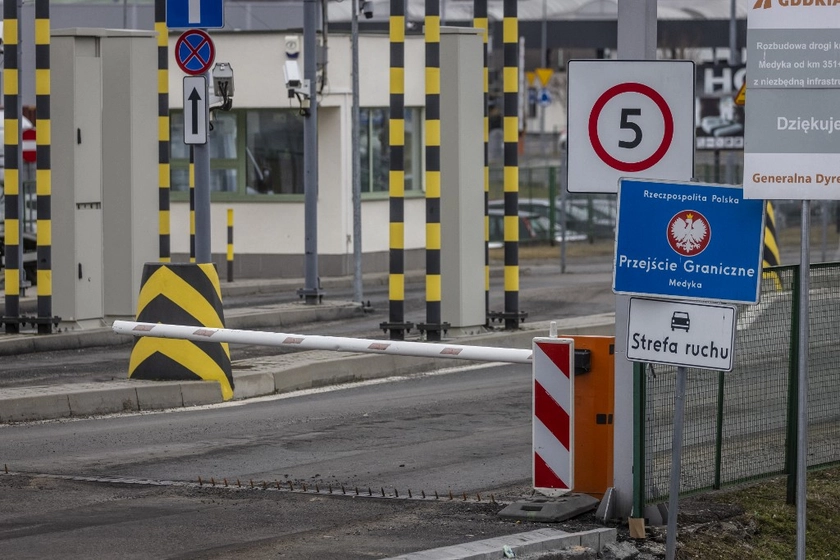
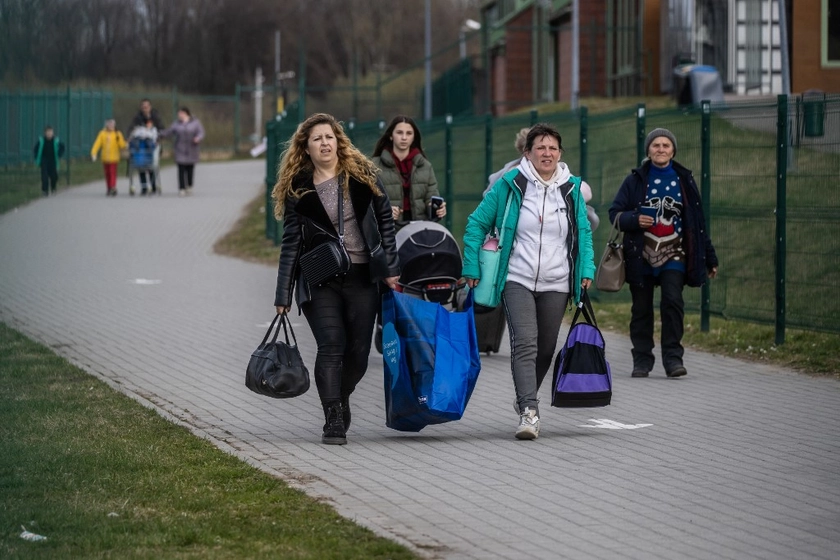
Bus Traffic at Medyka Checkpoint Continues Despite Repairs, Minister Says
Survival manual for each household in Poland
The Polish government is going to be sending out survival manuals to every Polish household. Sweden sent out similar manuals last year. It’s vital to point out that not just citizens, but everyone living in Poland will get the manual – and it will be available in Ukrainian and several other languages. The manual will cover a broad spectrum of threats and crises, and not just foreign military aggression. Natural disasters and how to take care of animals in an emergency are two of many topics to be covered in the manual. The government also advises Polish citizens to have bug-out bags ready.
That kind of advice was already in place during the Covid pandemic, but the outbreak of war in Ukraine has only made the issue of bug-out bags more urgent. Poles are encouraged to have several bug-out bags ready. For example: one in a car, one in the workplace, and one at home to be grabbed quickly in case one needs to evacuate.
Channeling the inner hussar
As the war in Ukraine continues, Poles reminisce about the years 1610-1612 more than ever before (when the Kremlin was occupied by the Polish forces for two years). The jokes about “everything being calm” on the Polish-Chinese border are making a comeback since the start of the war in Ukraine as well. Channeling our inner hussar is a favorite Polish pastime.
During a BBC broadcast, Russian territory was labeled as Poland. The BBC sure knows how to stroke the collective Polish ego.
Zapad 2025 military exercises of Belarus and Russia – real danger or war paranoia?
One group of Poles says it’s time to prepare for the worst and a potential Russian attack soon. “Zapad 2025” are the Russian-Belarusian military exercises in mid-September of 2025. Thirteen thousand soldiers are to take part in the exercises. The official purpose of the exercises is to test the readiness of Russia and Belarus to counter an attack from the West. Weary Poles remember that similar exercises took place in 2021 before the Russian invasion of Ukraine. Will there be some kind of a provocation, maybe even an attack, during Zapad 2025 exercises? The debate in Poland rages on.
The Baltics, Finland, and the Suwałki Gap as potential flashpoints
Some Polish military experts point to 2025 as the year when Russians might test NATO either by staging an incursion into the Baltics or the Suwałki Gap – if the Russians took control of the Suwałki Gap, they would have a corridor linking Belarus with the Russian region of Kaliningrad and the Baltics would be cut off from the rest of NATO completely. A terrible scenario for the Baltics and a dangerous scenario for Poland.
As Poles, we are leery of alliances. We were betrayed by Britain, France and the US in World War II. We ended up in the Soviet sphere of influence against our will. As much as we’d like to believe NATO has our back, we try to rely on ourselves as much as possible. We admire Finland – with their civil defense infrastructure (bunkers) and the military preparedness of every citizen.
Not tanks, but drones and missile barrages
Others point to the fact that modern warfare isn’t about tanks anymore and Poland shouldn’t be investing in tanks, that the war in Ukraine has shown it’s about missile barrages, cyberattacks, the “little green men” wearing unmarked uniforms, and, perhaps most importantly – drone swarms controlled from far behind the frontlines.
Polish military experts point to the fact that Polish military thinking must adjust to new realities of war as seen in Ukraine – and fast. Ukrainians, being world experts on drones, are likely already helping Poles master the art of drone warfare.
Polish National Security Bureau Chief paints a grim picture
Recently, the Chief of the Polish National Security Bureau (BBN), General Dariusz Łukowski, painted a grim picture of Polish defense capabilities. “If a war breaks out, we have ammunition for five days and Poland holds out for two weeks,” he said. His comment caused a firestorm of accusations across the Polish political spectrum. The BBN Chief defended his comments and said that it’s not about incompetence by the past PiS government; rather, the demand for ammo and weapons has risen dramatically because of the war in Ukraine.
The question of Donald Trump pulling US military out of Poland to appease the Russian President is discussed a lot as well, particularly in the context of Russia’s December 2021 Russian ultimatum that demanded the dismantling of NATO infrastructure in the CEE region. These discussions are heating up in light of rumors swirling around that the White House may pull 10,000 troops from Eastern Europe.
Can the Ribbentrop-Molotov pact really happen again?
And then, there are the words “Putin’s philosopher,” Alexandr Dugin, who talked about reviving the Ribbentrop-Molotov pact to get rid of nations in the CEE region once and for all.
The Ribbentrop-Molotov pact between Nazi Germany and the Soviet Union was signed secretly a week before the outbreak of the Second World War. The pact erased Poland off the map at the beginning of that war. The tragedy of the pact is exemplified by a story of a Polish intellectual and artist – Stanisław Ignacy Witkiewicz (Witkacy) who was fleeing the Nazis invading Poland from the West. As he fled east, he learned on Sept. 17, 1939, that the Red Army had invaded Poland. Feeling like it was the end of the world, the Polish intellectual killed himself on Sept. 18, 1939, in what is today Velyki Ozera, a village in the Polissya region of Ukraine.
Some Poles say Ukraine is the biggest threat and not Russia
Finally, there are Poles who casually dismiss the Russian threat. They say that Ukraine is a de facto failed state and Poles ought to be more concerned about the stream of Ukrainian refugees, particularly of Ukrainian veterans. These people claim that the risk of country’s collapse poses a much greater threat to the stability of Poland than Russia ever will.
There already is an issue with Ukrainian and Georgian gangs in Poland. These gangs are responsible for brutal home invasions. The victims sometimes say their attackers spoke “Polish with eastern accents” which points to Ukraine, Russia, even Georgia.
A complex matter with no easy answers
Overall, the prospect Polish militarization is a complex matter that affects every Pole differently, depending on their personal views and experiences.
The upcoming presidential elections in Poland (the first round of the presidential election will be held on May 18, 2025, and, if necessary, the second round will be held on June 1, 2025) will be the best way of gauging Polish attitudes about the war in Ukraine.
The views expressed in this opinion article are the author’s and not necessarily those of Kyiv Post.
You can also highlight the text and press Ctrl + Enter