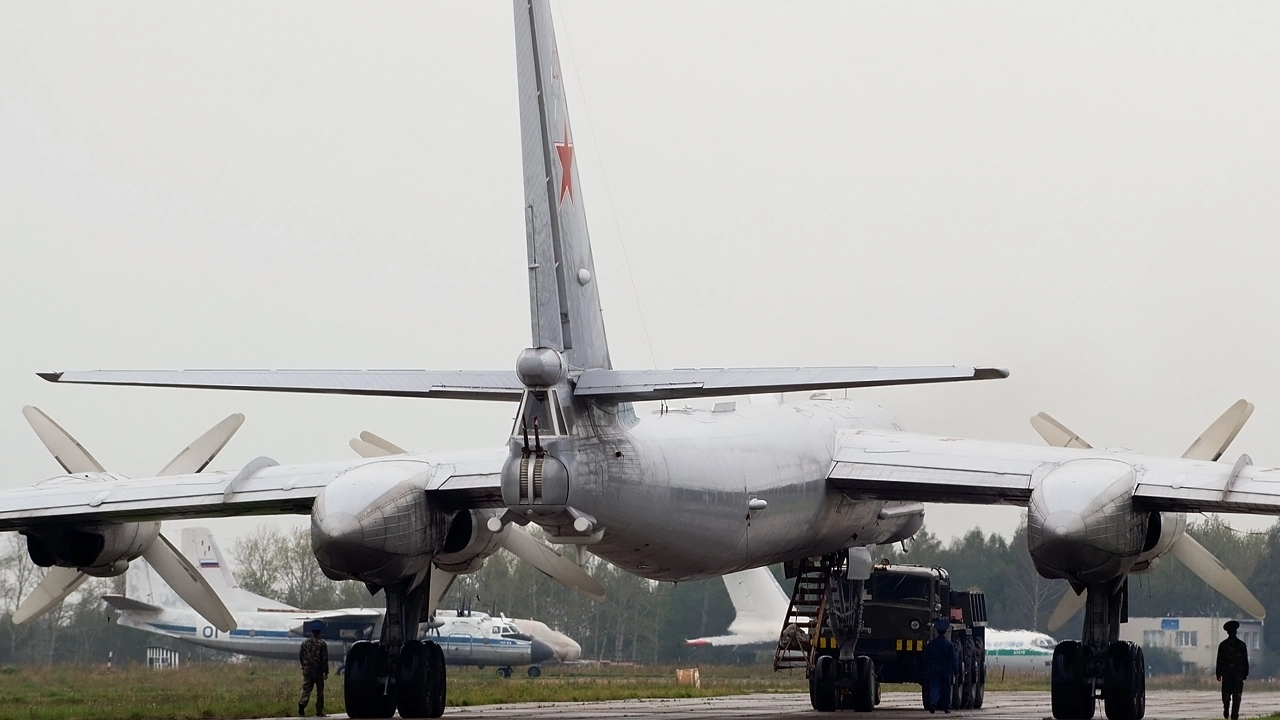
The open-source intelligence (OSINT) analyst MT Anderson posted commercial satellite images of the remote Russian armed forces air base located in eastern Siberia on X on Monday, May 5 that showed the presence of ten Tupolev Tu-95 (NATO: Bear). Also located in the base were several Ilyushin Il-76 and Antonov An-26 transport aircraft, along with large numbers of other aircraft including Tupolev Tu-22 supersonic bombers, Mikoyan-Gurevich MiG-31 Kinzhal capable aircraft and Sukhoi Su-27 fighter aircraft.
The Belaya base is located in Russia’s Irkutsk region around 85 kilometers (51 miles) northwest of Irkutsk city and more than 4,000 kilometers (2,500 miles) from Ukraine. During the Cold War it was an important location for some of the Soviet Union’s nuclear capable bombers.
Military analysts cited by the military issues website BulgarianMilitary.com suggest that concentrating this number of strategic assets in this isolated spot is a deliberate move on Moscow’s part.
Tu-95 bombers have played a key role in Russia’s attacks during the more than three years of Russian despot Vladimir Putin’s war against Ukraine, launching cruise missiles against energy infrastructure in Kyiv and other major cities.
In recent months the development of long-range attack drones from Ukraine have jeopardized the once secure bomber bases at Olenya, near Murmansk and Engels, in the Saratov region which have been targeted on several occasions with aircraft and missile stocks being damaged.
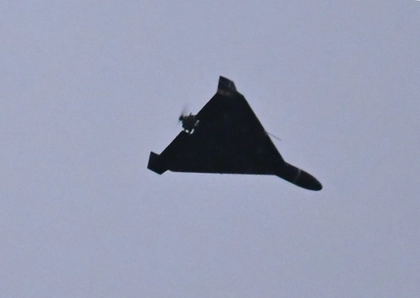
WATCH: Ukraine Destroys Shahed Launch Vehicle in Donetsk Airport
The Tu-95 that first appeared in 1952 has a range of 12,000 kilometers (7,500 miles) which with air-to-air refueling can be considerably extended. Its four Kuznetsov NK-12 turboprop engines enable a cruising speed of around 920 kph (575 mph). The move to Belaya not only moves the aircraft, which represent around a quarter of Russia’s total Tu-95 fleet, beyond Kyiv’s current reach, but also gives Russia the ability to vary the direction and timing of its attacks on Ukraine.
The Siberian location combined with the aircrafts’ range would allow the Tu-95s to adopt any number of roundabout routes to firing points capable of attacking Ukraine. The presence of Il-76 transport aircraft that have frequently been used to move Kh-101 and other cruise missiles suggests preparations for just such an eventuality – which was reinforced by a post on X by the blogger “bichik under fire” on May 1 who said that at least two Tu-95s had been moved to Belaya from Olenya and were being refueled and rearmed.
The BulgarianMilitary.com report speculates that the positioning of the bombers in Belaya may have wider implications for the West as it also gives Moscow the opportunity to use the location as yet another tool for power projection, capable of reaching NATO territory and brings them closer to its “allies” China and North Korea.
You can also highlight the text and press Ctrl + Enter

Attack on Moscow Oil Refinery: Putin Under Pressure?