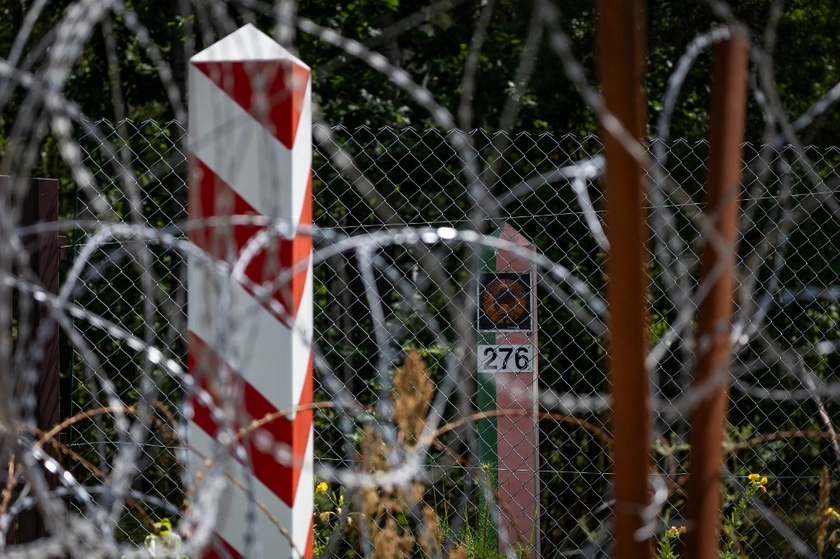
As concerns grow about the threat from Russia resulting from Moscow’s war on Ukraine, Lithuanian’s Ministry of Defense announced on Monday that it will spend €1.1 billion ($1.25 billion) over the next ten years to bolster its eastern border’s defenses.
Lithuania shares a border with Russia’s Kaliningrad exclave and north-west Belarus and along with Latvia and Estonia are preparing to resist any attempt by the Kremlin to invade.
JOIN US ON TELEGRAM
Follow our coverage of the war on the @Kyivpost_official.
This latest effort is intended to expand Lithuania’s “military counter-mobility” system, of which €800 million ($907 million) will be spent on the purchase, stockpiling, and installation of anti-tank landmines and mine-laying equipment.
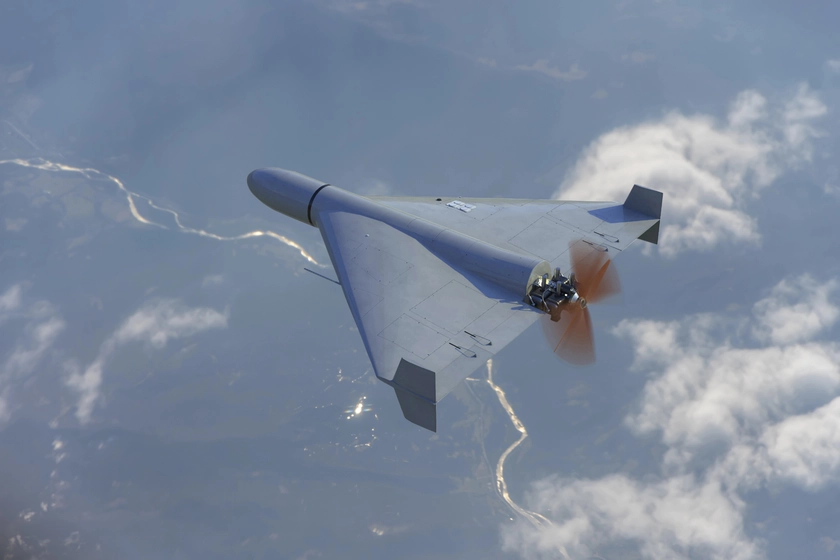
In addition to accelerating the purchase of engineering resources, the new defenses will also include electronic warfare capabilities, anti-drone systems, and strengthened surveillance and early warning infrastructure.
Tomas Godliauskas, Deputy Minister of National Defense, said: “It is important to note that we give great attention to cooperation with local authorities when implementing our counter-mobility measures. We must ensure not only counter-mobility on the border but also implement fortification and engineering within municipalities. We listen to their needs and discuss the best solutions.”
The statement continued that Lithuania, together with Latvia and Estonia, are together developing the “Baltic Line of Defense” project aimed at effectively disrupting and halting a potential enemy advance across the border.
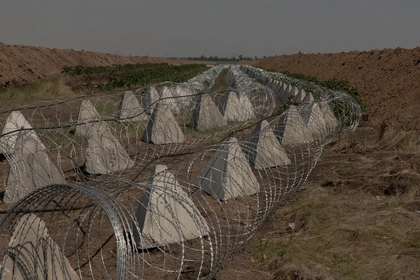
Ukraine Builds a Defense Line Against Belarus on Chernihiv Border
It said intensive work is currently underway, identifying key areas that would allow the three countries to best position and link up their engineering obstacles to ensure the integrity of the defensive barrier.
Godliauskas also highlighted cooperation with Poland as part of Warsaw’s “Eastern Shield” project. In particular, this focuses on the defense of the Suwalki Gap.
This 100-kilometer (63-mile) narrow stretch of forested plain, which links Poland, Lithuania, and Finland, with Belarus on one side and Kaliningrad on the other, is a vital land corridor to the Baltics. The resulting “choke point” is potentially one of NATO’s most vulnerable points. If seized, it could cut off military support in both directions: via sea routes in the north and by land from the south.
Moscow has repeatedly stated in the past that it would like to be granted (or to seize) access through the gap from Belarus to Kaliningrad. Currently north-south access is offered by only one highway, one minor road and one rail line.

Overview of the Via Baltic project produced by the “Three Seas Initiative (3SI)
As a result, in addition to bolstering defenses on the eastern borders, a program of improvements is underway to develop the current minor road from Poland into a highway, known as the “Via Baltica,” that would facilitate both military and civilian use.
In addition to expanding the road network, additional security measures will be included such as checkpoints and deployable barriers and other blocking systems.
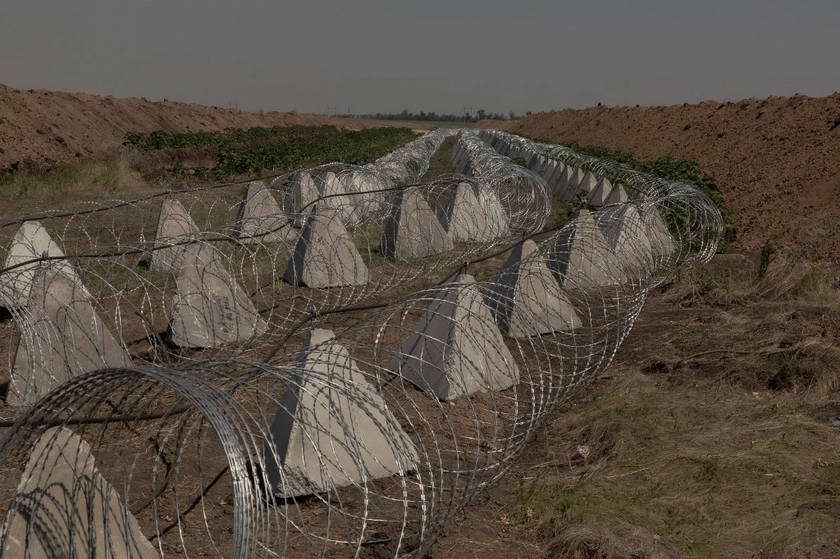
Overall, a total of 27 engineering depots will be established near the borders with Russia and Belarus in which “dragons’ teeth,” “hedgehogs,” “Spanish horse / Cheval de frise,” and solid concrete road barriers, along with concertina wire will be stored, Godliauskas said.
Other counter-mobility measures will include deepening land reclamation ditches, planting of tree alleys along roads, preservation of existing forested areas close to the border and around main and regional roads, and fortification of bridges and fords on the border with Russia.
The statement concluded by saying that “Counter-mobility measures are an important part of our country’s defense concept. Thanks to them, the deterrent and defensive potential of the state and the security of the state borders with Russia and Belarus will be increased. In the event of aggression, they would allow blocking and stopping the actions of hostile states directed against the Republic of Lithuania.”
You can also highlight the text and press Ctrl + Enter