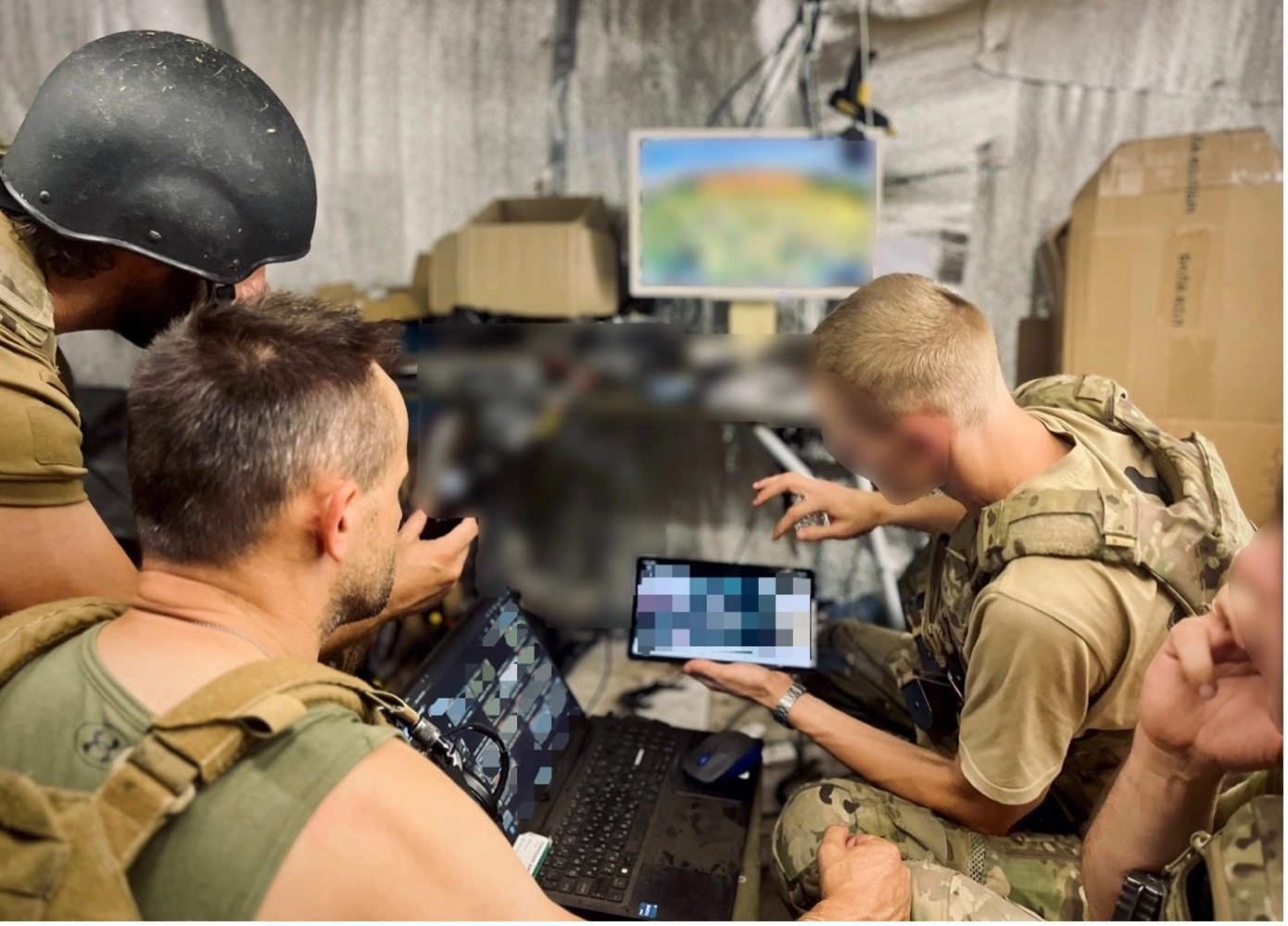
If necessity is the mother of invention, then innovation and adaptability are the elements required to keep that invention relevant on the modern battlefield. After Russia’s brutal full-scale war, this has been a lesson the Ukrainians have been forced to learn the hard way, and that is just what they have done. In three years, the Ukrainian army has become the world’s leading producer of drone combat capabilities and has rewritten the way the modern large scale battlefield functions.
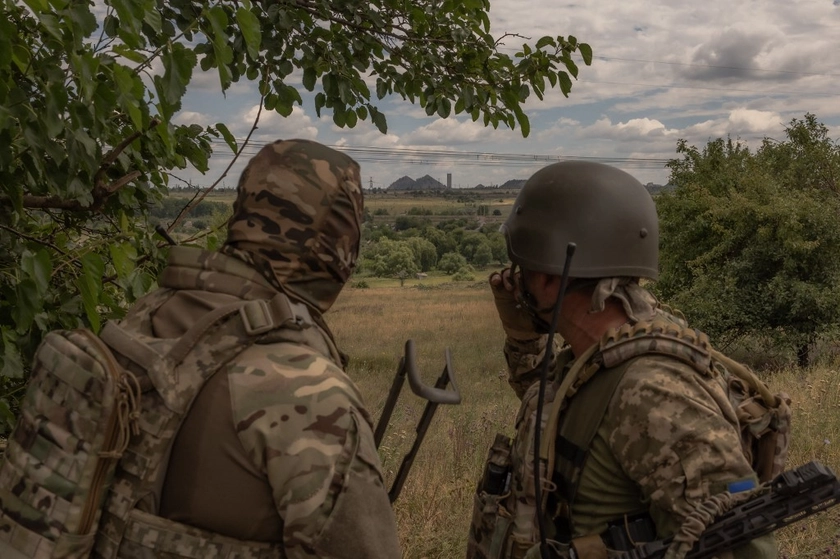
I saw this first hand as I stood in a bunker with Ukrainian frontline soldiers as they operated the vast web of drone defensive and offensive capabilities near the Pokrovsk sector of the front. I returned to eastern Ukraine with a Polish team of volunteers bringing aid and equipment to Ukrainian medics and frontline defenders.
JOIN US ON TELEGRAM
Follow our coverage of the war on the @Kyivpost_official.
Eight months ago, I stood with this same Ukrainian unit at the edge of a tree line on another sector of the front. Artillery fire rumbled through the countryside as they conducted a deep strike on Russian communications far behind the contact line. This particular unit – I’ll call them “Fox Battalion” – is a well-honed machine incorporating combat assault infantry, light artillery, and a robust, multifaceted drone team. The roughly four hundred person strong battalion might be on the smaller end when compared to other Ukrainian formations, but they pack a heavy punch thanks to the leadership of their commanding officers.
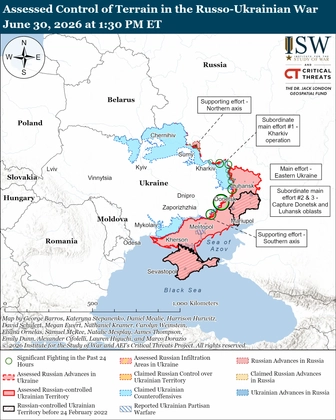
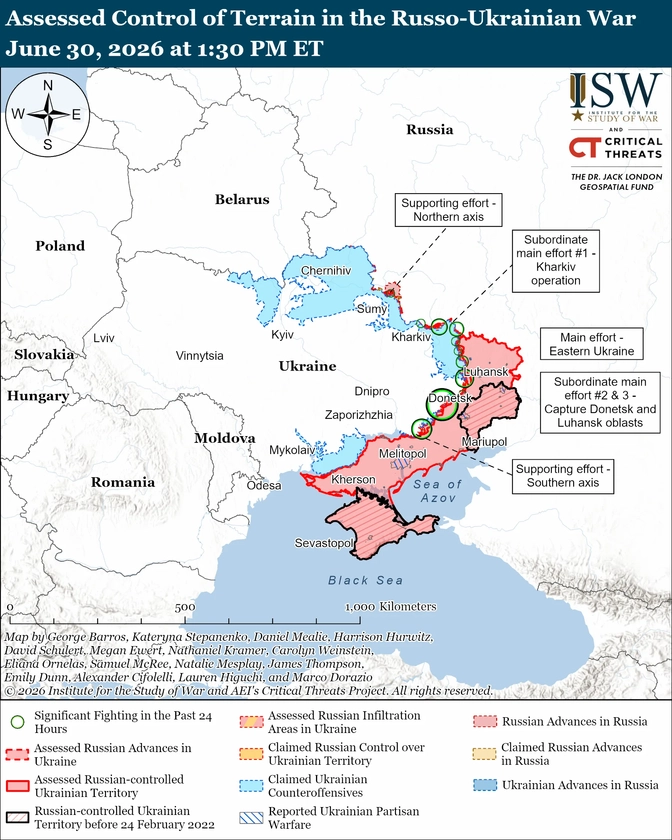
ISW Russian Offensive Campaign Assessment, June 30, 2026
For the last several days, our Polish-led international team of volunteers had been bringing humanitarian aid and equipment to Ukrainian medics, firefighters, and forward positioned brigades throughout eastern Ukraine. One of our main objectives was to bring a wide array of aid to “Fox Battalion,” including medical supplies, food, body armor, gas masks, and other bits of kit that are in high demand for frontline units.
The battalion’s well-fortified command post functions on a 24/7 circuit. Soldiers rotate to and from combat duties; while in the bunker some eat a meal, drink a cup of coffee, or catch a few moments rest. However, any sense of peaceful normalcy is fleeting as the dozens of drone feed monitors lining the walls show in real time the constant assessment of the battlefield and the reconnaissance and combat operations unfolding throughout their sector of the front.
One screen shows Ukrainian FPVs stalking Russian soldiers positioned in destroyed civilian homes; another provides information for Ukrainian infantry carefully maneuvering through clumps of trees on the outskirts of a village near Pokrovsk; and still another patrols a road strewn with destroyed Russian armored vehicles and their former occupants. Thermal drones show red and yellow heat signatures of soldiers on the ground. “Shark” drones surveil from high altitude and the feared Baba Yaga bombers fly to their next target. Each one of the dozens of feeds shows a single part of the intricate web of command, recon, and attack assets the Ukrainians operate.
After three years of war, most people in the West will have seen videos on social media showing the use of combat drones by both Ukrainian and Russian armies. Most often it is the FPV (First Person View) one-way attack drones flying into a target and then turning to static as the drone makes impact. The vast quantity of combat footage has normalized the relatively new innovation to observers of the war, as well as playing a part in the desensitization to the devastating violence these weapons inflict. However, what these drone recordings do not show is the mind boggling intricacy of the support and implementation networks that make these capabilities so effective, or the ever evolving nature of their use in this war.
Every few weeks bring changes to the capabilities employed as well as the counter measures required to deal with the evolving threat. One soldier described the speed of innovation and its effects on the battlefield as so rapid that if you get rotated off the line for even a few weeks, you have to learn to face a completely new set of threats upon returning to the front line.
“It is a f****ng complicated and dangerous war now.”
The Ukrainian army has been leading the curve with this, particularly as they seek to gain more strategic autonomy from the tightly managed traditional western equipment which often seems to be a tool of leverage over the desperate defenders by Western Allies. The reliance on long- and short-range drone technology, while being a relationship of necessity, has proved to be a unique strength across the civilian and military defense network in Ukraine. As of last year, it appears that the vast majority of battlefield casualties are caused by attack drones.

According to Ukraine’s president, over two million drone units were produced in 2024, and they are projected to double that in 2025.
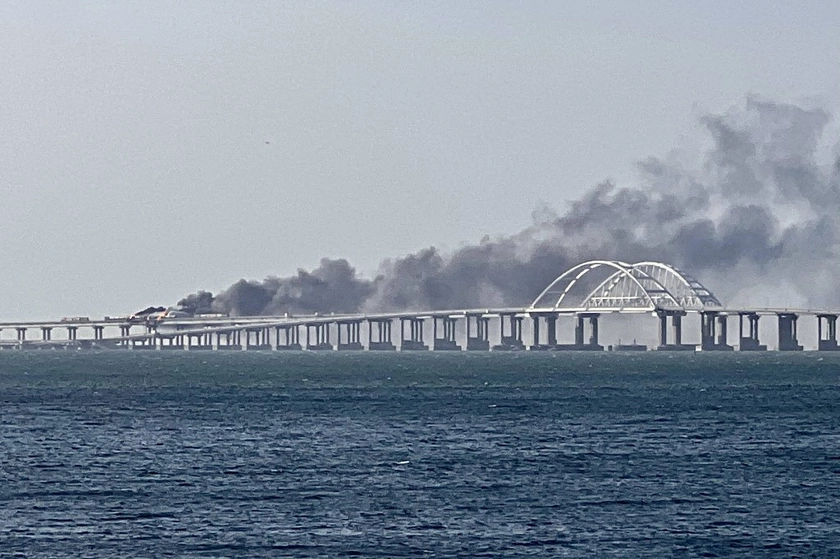
Let’s not forget that the once-touted Russian Black Sea Fleet has been run ragged by Ukrainian missiles and navel drones, which have sunk or damaged so many warships that the Russian navy had to relocate far away in an attempt to save what remaining vessels they had. The Russian flagship Moskva and many others now sit at the bottom of the ocean thanks to the Ukrainian military which has virtually no navy of its own.
That’s not to say it’s a one way street though. The Russians, while often fielding inferior drone capabilities, learn and innovate as well. The Ukrainians know better than anyone not to underestimate their attacker. The quick adoption of the jam-proof fiber optic attack drones by the Russian forces is one example of this. Expensive electronic jamming kits become useless when faced with one of these fiber optic drones which are controlled by a cable running from a spool attached directly to the drone.
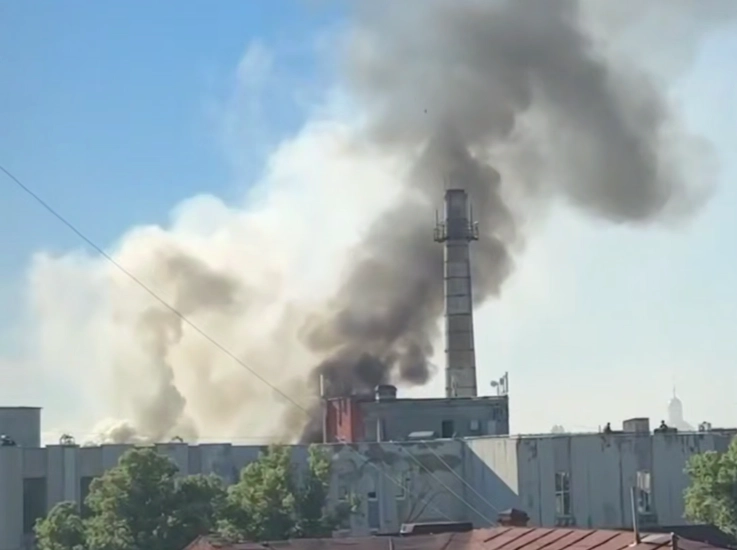
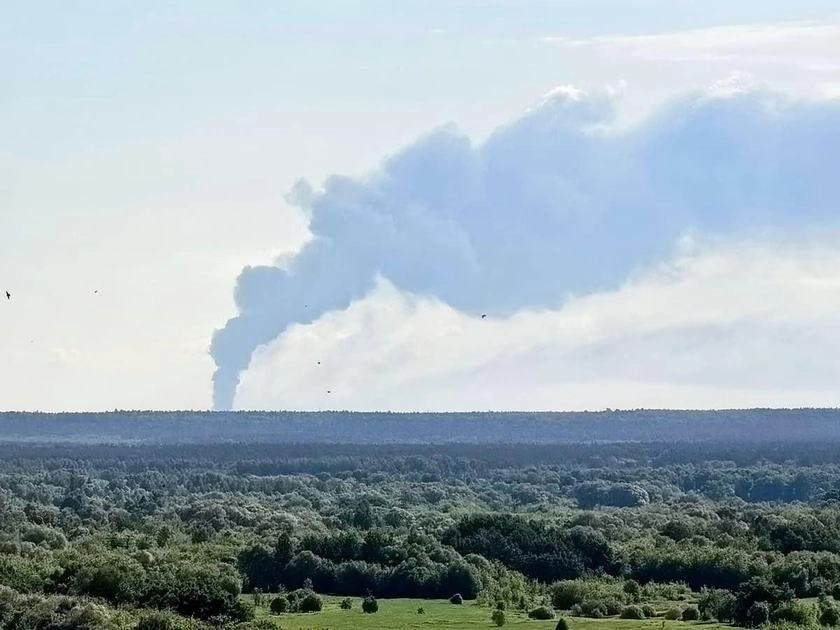
Ukraine’s vast drone capability has been adapted to meet a wide array of ever changing needs. While the FPV might be the first thing that comes to mind, in reality this is only one part of the massive web of assets employed by Ukrainian forces. While Western Allies debated and discussed the use of long- and medium-range missile systems to hit Russian manufacturing and military installations, the Ukrainians designed their own long-range drone deep-strike capabilities which in many cases far outstripped the more expensive Western kit. Every week deep within the Russian Federation, Russian arms depots, oil facilities, and military installations are exploding into mushroom clouds at distances that far exceed what most Western kit can hit. This is due to the Ukrainian Special Services and their long range drones.
This is not just happening deep within Russia either. Russian logistics, supply, and command posts in occupied Ukraine are regularly targeted by Ukrainian forces to devastating effect.
The defender understands that they do not have the resources or the manpower that Russia has, even with the titanic losses inflicted on invasion forces – Russian casualties have been hovering above 1,000 a day over the 700-plus mile front line for months now. So Ukrainians have chosen to fight in a different way altogether. They play to their strengths and to the Russians’ weaknesses.
One feature of this strategy is the emergence of the Ukrainian drone “defense in depth” on the front line. The Ukrainians have in many sectors of the front a 10- to 15-kilometer gray zone past the contact line where they can target and hit Russian forces. Infantry and armored units have to move on pins and needles, never exactly sure when and where they can be seen, targeted, and hit.
Ukrainian frontline brigades have created an intricate overlapping web of assets that coordinate with infantry, artillery, and intelligence to devastating effect. The time it takes to spot a target and neutralize them using these combined systems has shrunk drastically using assets that neither army even had the capability for in 2022.
I watched this happen in real time on drone monitors while standing beside Ukrainian officers as they countered a Russian assault. A T-72 tank and a squad-sized assault unit sped toward Ukrainian positions. Recon drones assessed the situation, orders were given, and in a few moments Ukrainian FPVs swarmed the tank. The first FPV made impact and the attacking forces scattered and fell from their positions on the tank, one narrowly missing getting crushed by his own vehicle. The T-72 fired wildly in panic while the dismounted Russian soldiers looked for cover. Then out of nowhere came the next wave of drones. The Russians fled to a nearby tree line.

Honor Philips (left) with advance team in eastern Ukraine
There were about a dozen people in the room with me watching the attack unfold. Each time there was a successful hit by one of the drone pilots, there was a “bravo” or “well done” from the soldiers assembled around the drone feeds. The Ukrainian drone pilots maneuvered their FPVs through the trees in a flurry of small-arms fire, and in minutes the assaulting troops and the Russian tank were eliminated. And without a javelin or anti-tank weapon in sight. It was quick work, and the enemy had no idea they had been outmatched by Ukrainian drone pilots a fraction of the size of the assaulting Russians.
“No one invited your army to Ukraine.”
One of our international volunteers, “Pawel,” is a combat instructor; he served three tours in Afghanistan fighting alongside US forces. After watching the drone feeds for what seemed like hours, he looked at me and said: “NATO armies are not ready for this kind of war. We don’t even have the capabilities these guys do. We need to learn from them fast.”
The need for traditional systems like tanks, APCs, IFVs, artillery, aircraft, and the munitions to back those up are as important as they have ever been, particularly as Russia continues its transition into a war time economy mobilizing its manufacturing and industry at scale. However for Western-allied nations to underestimate or discount the revolution in UAV technology being worked out by their Ukrainian partners would be a grave error.
Units like “Fox Battalion” through hard trial and error have learned to bring together the different components they possess to maximize their potential through the well-coordinated use of their UAV systems. All of these elements working in coordination make for an agile and effective fighting force. Ukraine is facing a reality where they do not have enough manpower or equipment, particularly as Russia is continuing to capitalize on its ability to recruit and industrialize its war effort. So with America shifting away from European Allies, the road ahead for Ukraine looks bloody and difficult. But by playing to their strengths and to the enemy’s weaknesses, the Ukrainians are constantly looking for creative solutions to the enormous battlefield challenges they are faced with. This philosophy is why Ukraine is leading the charge in battlefield UAV innovation
This article originally appeared in The Curious Case of Freedom substack.
The views expressed in this opinion article are the author’s and not necessarily those of Kyiv Post.
You can also highlight the text and press Ctrl + Enter

Russia Hit by 660-Drone Overnight Barrage Targeting Moscow, Crimea and Key Military Sites