Two weeks ago, for the sixth time since the start of Russia’s all-out war against Ukraine – a war of extermination, let us repeat this tirelessly – I traveled to Ukraine.
It is sometimes impossible to describe in a few words what one feels there, for fear of the inaccuracy that always lurks in an overall impression. Above all, as a Westerner living in safety in a Western European country, I cannot interpret the average feelings of people living in a country where death strikes blindly every day with no other purpose than to sow terror.
JOIN US ON TELEGRAM
Follow our coverage of the war on the @Kyivpost_official.
I am keen to express this personally perceived reality in two words. On the one hand, the situation seemed even more terrible to me: so many thousands more dead since my two trips in 2024, the ever more monstrous savagery of the Russians, with testimonies that defy belief, as if it were still possible to go further in sadism, the conditions of life, combat, and death on the front line of a harshness that few wars have witnessed.
The Russian war is the permanence of death striking blindly.
On the other hand, Ukraine is resisting, certainly with courage and determination, sacrifice and will, but this resistance is not desperate.
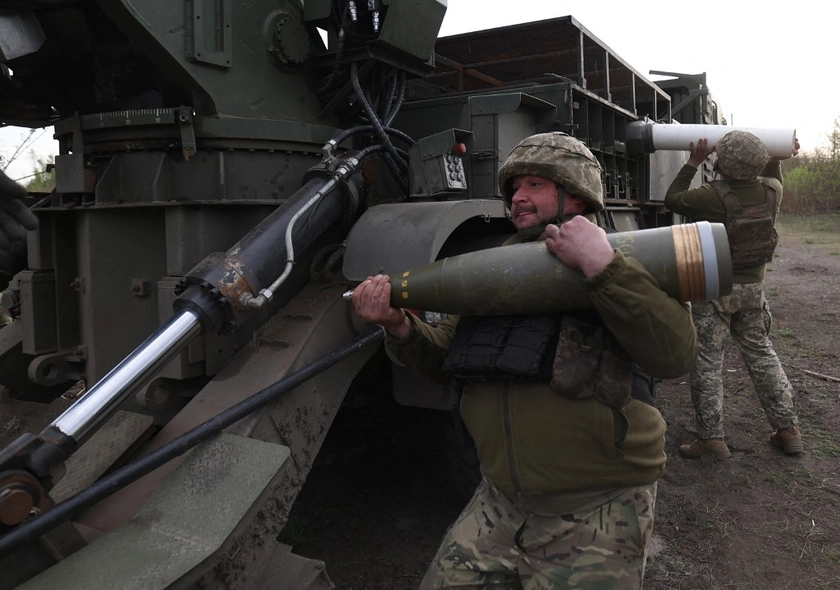
Day after day, it is bearing fruit, albeit too slowly due to the cowardice of the West, which is far from giving Kyiv all the weapons it needs. Russian forces are making little progress, despite the intensity of the fighting. They are sometimes gaining a few square kilometers of ground at the cost of appalling losses on their side, but ultimately very little.
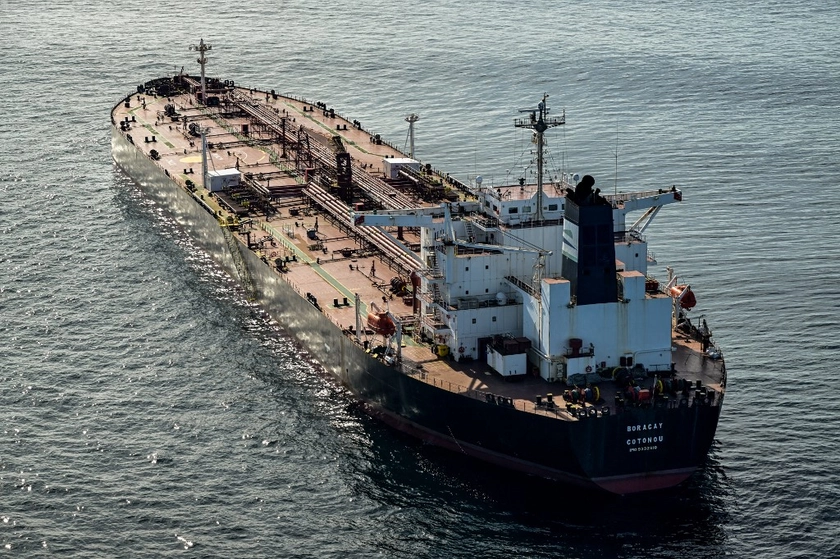
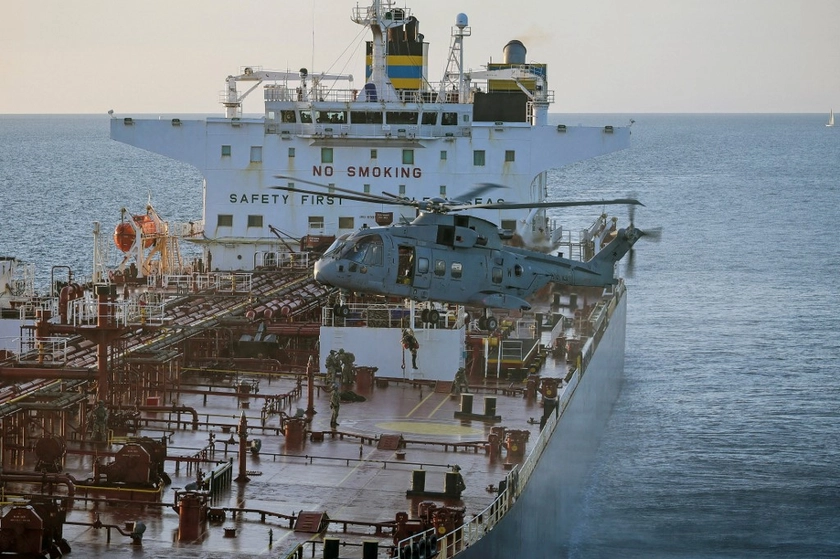
UK Seizure Reveals How Russia’s Shadow Fleet Evades Oil Sanctions
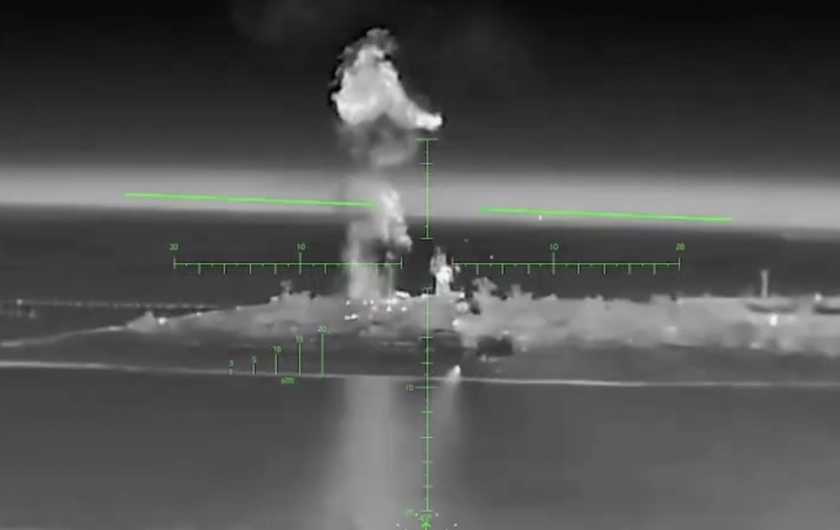
The Ukrainian armed forces are managing to inflict increasing damage on weapons and ammunition depots and oil infrastructure in Russian territory far from Ukraine’s borders.
There is no justification for the defeatism that is spreading in some quarters and which, as usual, is being used by paid propagandists to undermine morale and support.
But alongside the reality of life and death for Ukrainians, there is another scene, almost surreal and futile: that of fallacious diplomacy, with its masks and disguises, of which the episode in Istanbul is only the latest manifestation.
Commentators, in their reports and so-called analyses, have often lost all common sense and discernment. Not only do they often confuse the concepts of ceasefire or truce and peace agreement, but they are also fixated on a diplomatic ballet that is going nowhere.
While he knows full well that any negotiations with Moscow are impossible or would result in a fool’s game, he feels compelled by Trump and certain other allies to pretend otherwise and accept the principle.
There is even something indecent about this spectacle, which at times resembles a bad vaudeville show, given that hundreds of thousands of Ukrainian victims appear to have been silenced.
I certainly do not blame the Ukrainian side, which is perfectly aware of this. I can only welcome the agreement that will save a thousand more Ukrainian prisoners of war from torture and death, given the barbaric conditions in which they are being held, in total violation of the Geneva Conventions.
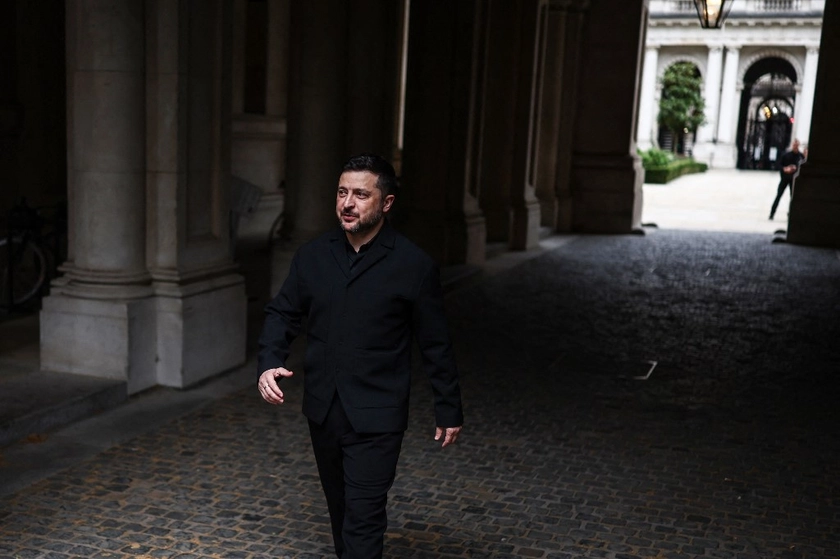
The reality is that President Zelensky was forced to endorse this charade against his will. On March 11, he agreed to an unconditional 30-day ceasefire, which was never approved by the Russians.
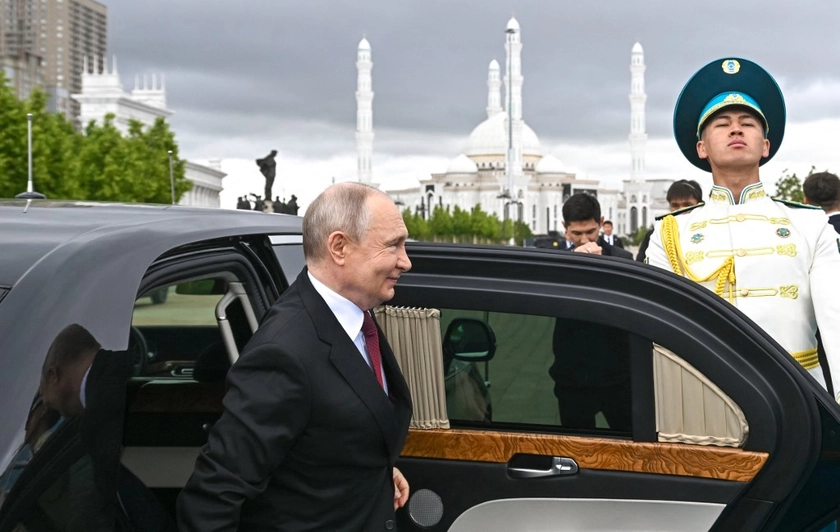
He said, thereby exposing the extreme spinelessness of the Russian dictator, that he was even ready to meet Putin in Istanbul.
While he knows full well that any negotiations with Moscow are impossible or would result in a fool’s game, he feels compelled by Trump and certain other allies to pretend otherwise and accept the principle.
This reminds me of the denials by the US administration under Joe Biden, reiterated on May 9, 2025, by Jake Sullivan at the Kyiv Security Forum, where I was also speaking, that they wanted to force Kyiv’s hand.
On Trump’s part, this pressure is even more blatant. I can only imagine the strength of character President Zelensky must have to agree, in the sole interest of his people, to play this humiliating game. He will not forget it, nor shall we.
In Ukraine, this grim theater is being watched from afar, because no one is really fooled by this duplicity. More than ever, and I have been repeating this here for two years, Ukraine’s victory will be first and foremost the achievement of the Ukrainian people.
How can we talk “properly” about trauma and crimes? This is the question I have been asking myself for more than three years now, and to which I still struggle to find a perfectly satisfactory answer.
These questions haunt some of us. I myself try to report on them as best I can, and there are many reports and articles that describe them in detail – reading them is often unbearable for any “normal” human being.
If there is an empire that Russia wants to rebuild, it is first and foremost the empire of death – let us also call it the empire of radical evil.
Not only does the scale of the crimes defy comprehension – well over a hundred thousand civilian victims, including many children, whose exact number we will only know once Ukraine is victorious (and for this reason too, it must be victorious, because otherwise the victims will have no name and often no grave) – but the absolute cruelty exposed by the details reveals the utter inhumanity of the Russians who perpetrated them.
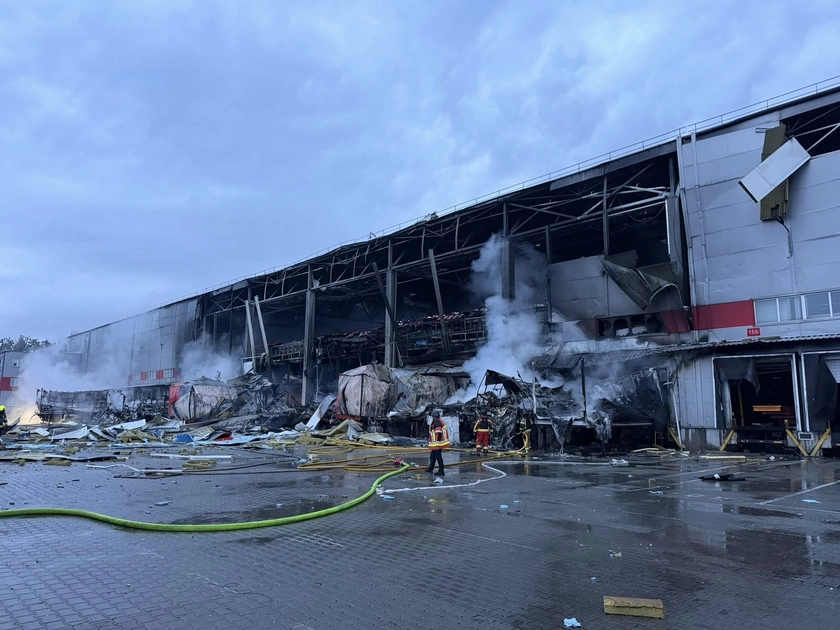
Senseless torture, such as that suffered by Vika Roshchyna, whose horribly mutilated body was then returned to Ukraine, has recently borne witness to this, along with summary executions, including of children, rape, deprivation of food and care, are compounded by the systematic and deliberate bombing of playgrounds, schools, hospitals, markets, restaurants, residential buildings, and the deportation of children, sometimes to force teenagers into the army.
The Russian state appears to be the barbaric state that Michel Seurat described when talking about Assad’s Syria. In Ukraine, death can strike anyone, as if by chance, in their sleep, on the road, during a walk. An entire people is threatened with annihilation in a gigantic extermination project that will only stop if it is stopped by force.
If there is an empire that Russia wants to rebuild, it is first and foremost the empire of death – let us also call it the empire of radical evil.
The Ukrainian population has suffered countless traumas: those of the soldiers, whose combat conditions are harsher than those of most previous wars; those of the population, the majority of whom has a loved one who has been killed or severely disabled, the mothers and fathers who have lost their children in combat or in deadly strikes, the orphans, those caused by daily terror, especially among children, prematurely matured by the ever-present threat of death and robbed of their innocence forever.

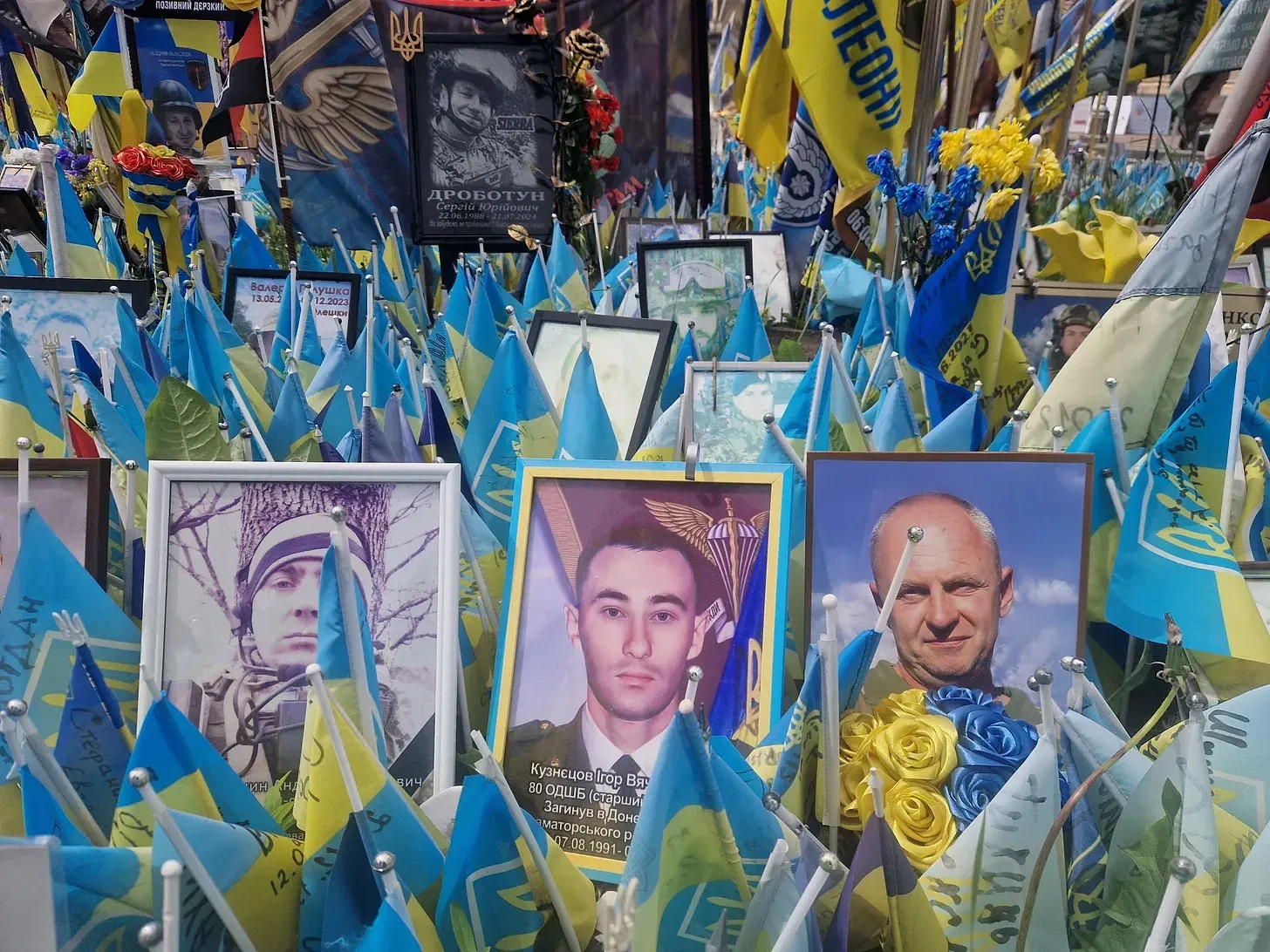
On the wall of those who fell along St. Michael’s Golden-Domed Monastery, Kyiv, May 7, 2025. (Photo by Nicolas Tenzer)
These traumas sometimes resurface, but they have also been largely silenced, because people must survive, fight, and hold on – and the Ukrainian people are standing strong, more than ever, as evidenced by polls showing that the vast majority do not intend to give in to false peace agreements that would lead to their enslavement and, let us be clear, to even more murders.
Many of these traumas will resurface later and remain etched in the souls of Ukrainians for decades to come. I know how much work it will take to heal them, if not cure them.
These traumas, in any case, will remain forever if Russian crimes are not tried and punished and if the Russian threat remains.
Admittedly, some European leaders are talking about these crimes, although still too few. Most have made progress in establishing an international tribunal to try the perpetrators of the crime of aggression, as defined in Nuremberg, which will complement the work of the International Criminal Court, which has jurisdiction over war crimes, crimes against humanity, and crimes of aggression.
Yet there remains the logical inconsistency I have often mentioned: How can we simultaneously recognize the existence of imprescriptible crimes committed by Russia and imagine a so-called peace agreement that would, in effect, whitewash them and prevent any real possibility of justice?
How can we convince public opinion of the ultimate significance of the crimes committed, beyond the outrage and horror aroused by Bucha, Izyum, Irpin, Sumy, Mariupol and what has happened in so many other places, and indeed on an almost daily basis in the bombing of civilians?
How can we make the crime, in its permanence and its equivalence with Russian reality, present and lasting in people’s minds?
Reprinted with the author’s permission from his Substack blog Tenzer Strategics. See the original here.
The views expressed in this opinion article are the author’s and not necessarily those of Kyiv Post.
You can also highlight the text and press Ctrl + Enter