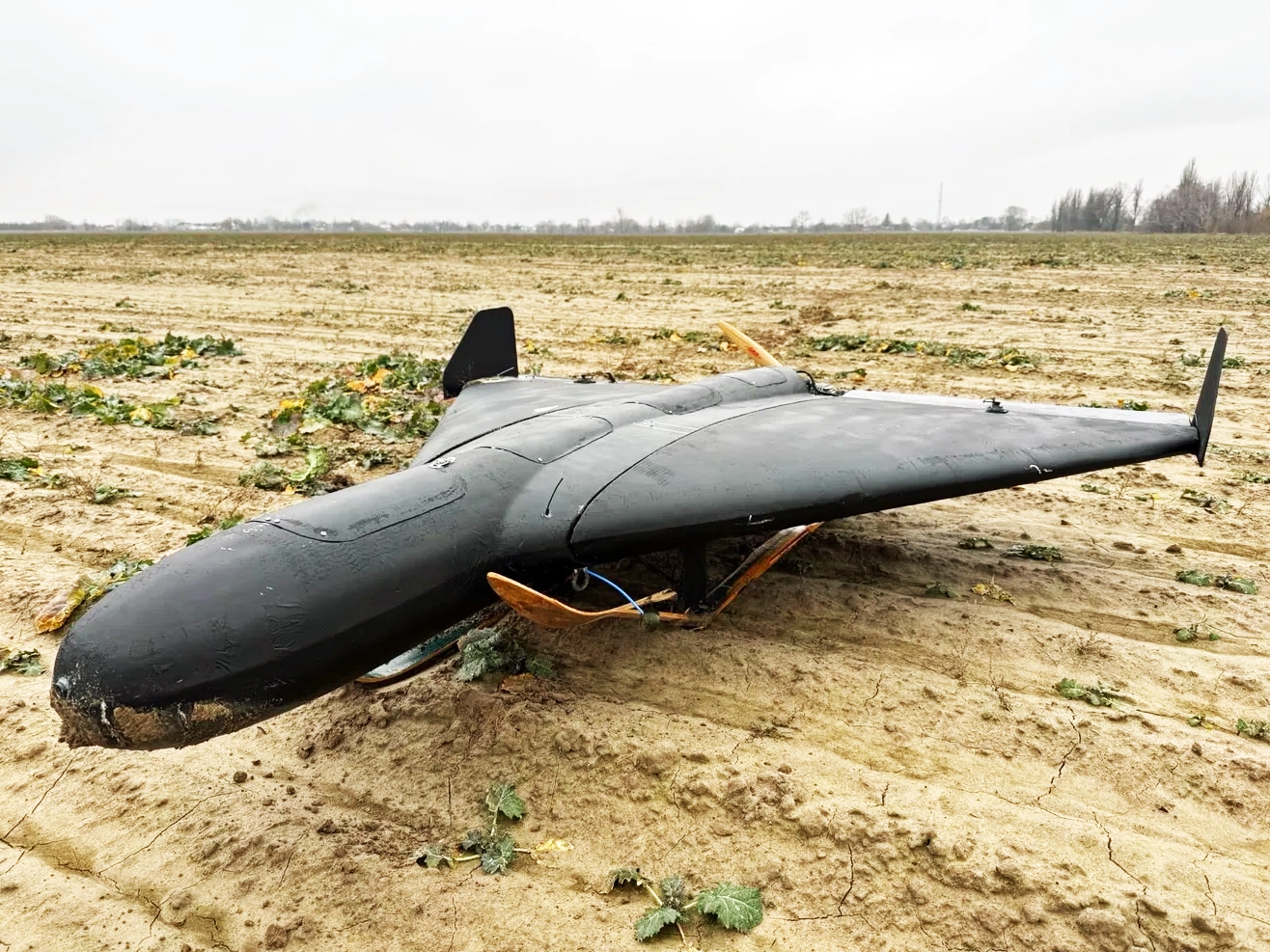
In the fall of 2024, a group of Ukrainian engineers decided to pool their expertise and develop a new type of drone to support their country’s fight against Russia’s full-scale invasion. The initial concept was to build a long-range strike drone modeled on Moscow’s Shahed/Geran kamikaze drones, which partially explains its passing resemblance to the infamous Iranian designed weapon.
However, as the engineers embarked on the development and construction cycle, they realized that, with minor modifications, the drone had the potential to carry out a range of tasks. The military issues website Militarni cites a spokesperson for DeepStrikeTech, who said: “We can use the same airframe as a decoy, a bomber, or a frontline kamikaze drone. It all depends on the payload and software.”
JOIN US ON TELEGRAM
Follow our coverage of the war on the @Kyivpost_official.
According to the information published on its fund-raising website, the Batyar went through several iterations – each based on different weights, launch methods and payload size – designed to test the aerodynamic in-flight stability and software. A video of flight testing can be seen on the DeepStrikeTech website here or via YouTube video here:
Iterations of the Batyar
The Batyar’s flexible design allows it to be adapted for various mission types with minimal adjustments. This adaptability has been a key selling point as the Ukrainian military seeks versatile and cost-effective solutions for its defense needs.

Zelensky Confirms Deep Strikes on Russian ‘Temp’ Fuel Reserve and ‘Azot’ Chemical Plant
The initial October 2024 prototype weighed around 21 kilograms (46 pounds), was launched from a catapult and was powered by two electric motors mounted on the ends of its wings.
By January, a larger 32-kilogram (70-pound) version launched from the back of a truck had a single gasoline powered rear mounted engine. Various other versions were then trialed in March and April, which also included mounting the engine at the front end.
The current model weighs in at 32 kilograms, has a maximum payload capability of six kilograms (13.2 pounds) and a cruising speed of 155 kph (96 mph) and a range of around 450 kilometers (280 miles). The range can be doubled if a one-kilogram (2.2 pound) payload is used to convert it into a decoy drone.
DeepStrikeTech aims to achieve a production model weighing around 60 kilograms (132 pounds) and capable of carrying a 16-kilogram (35-pound) warhead to a range of more than 800 kilometers (500 miles) at a cruising speed of 190 kph (118 mph). However, the Batyar could also be used as an operator-controlled, battlefield first-person view (FPV) attack drone by installing a camera, reducing its fuel load and range but increasing the size of its warhead.
The spokesperson said they have purposely tried to go for a lightweight, cost-effective UAV that can easily be transported and launched in the field from a catapult or truck without the need for extensive infrastructure.
The company estimates the cost of the final production model at approximately $25,000 – a quarter of the cost of comparable drones such as Ukraine’s Liutyi. The main cost item is the electronic warfare (EW) resistant communications and navigation package which combines machine learning optical and inertial navigation along with satellite correction via a controlled reception pattern antenna (CRPA).
The antenna is locally manufactured, although its design was based on similar antennae salvaged from downed Russian drones. This reduced both the cost and development time for the domestic system.
DeepStrikeTech says the drone will be combat tested in the next few weeks before moving into final production for which the company is seeking further funding.
You can also highlight the text and press Ctrl + Enter

Putin’s Worst Nightmare