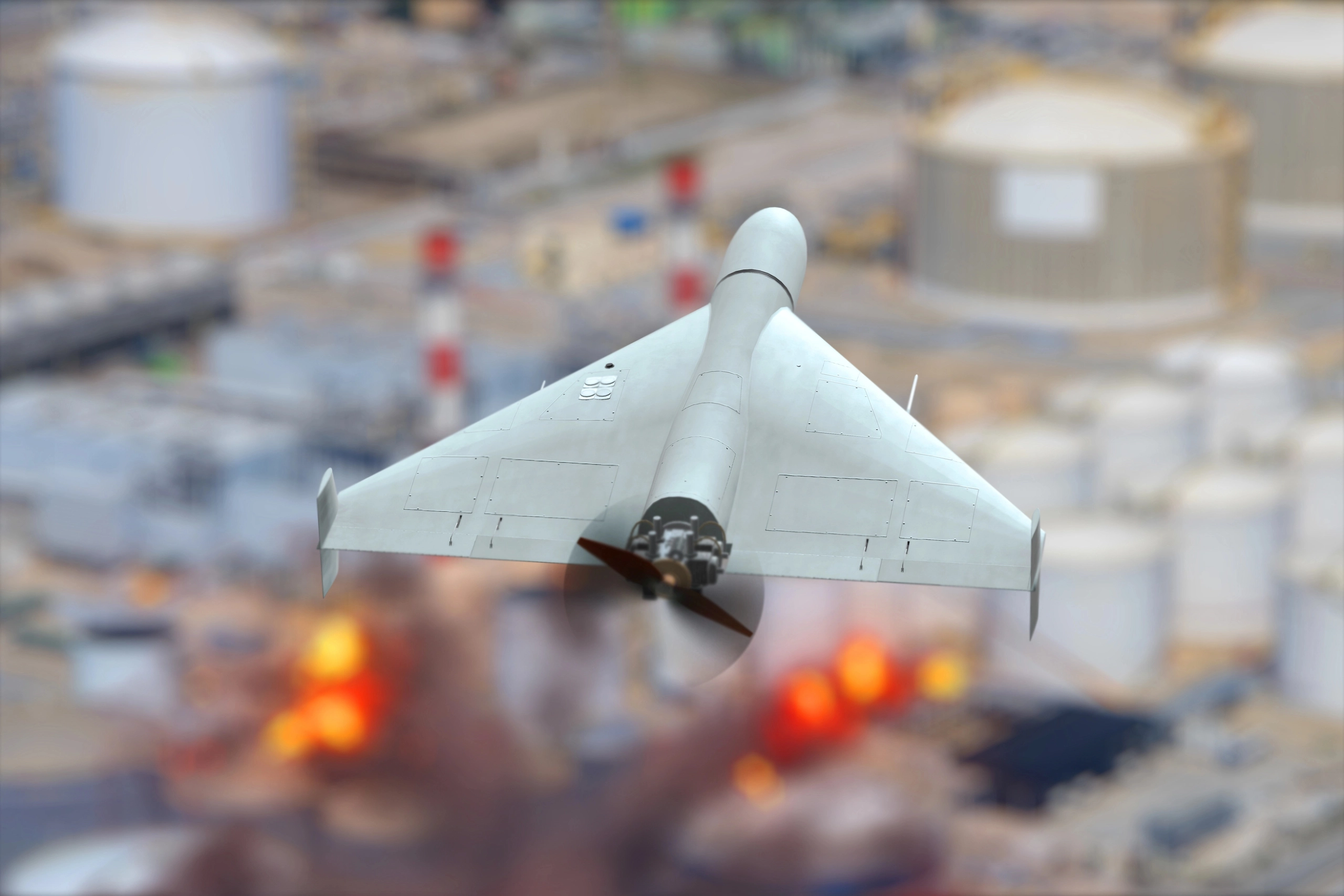
Russia is intensifying its aerial war against Ukraine with increasingly sophisticated drones and a massive stockpile of ballistic missiles.
On May 25, Russia launched what analysts say may be its largest single-day strike since the beginning of the full-scale war: 298 drones and 69 missiles targeted Ukrainian cities in what the Kremlin labeled a “massive strike.” Ukrainian officials described it as the most intense attack since February 2022.
JOIN US ON TELEGRAM
Follow our coverage of the war on the @Kyivpost_official.
According to the Economist report, the Kremlin has an estimated 500 ballistic missiles in reserve, while its attack drones – primarily Iranian-designed Shaheds – are now reportedly operating with a new AI-driven control algorithm managed via Telegram bots, Ukrainian engineers have discovered.
“Russia is raining hellfire on Ukraine,” The Economist wrote, describing how Ukraine’s air defenses are being overwhelmed by the sheer volume and technological evolution of Russian projectiles.
The upgraded Shahed drones now evade jamming by abandoning traditional GPS navigation in favor of machine-learning-guided systems that can tap into Ukraine’s own internet and mobile networks, as per the report.
Engineers dismantling recovered drones recently found a note left by a Russian technician revealing that Telegram bots are being used to transmit flight data and live video back to Russian operators in real time, as outlined by The Economist.
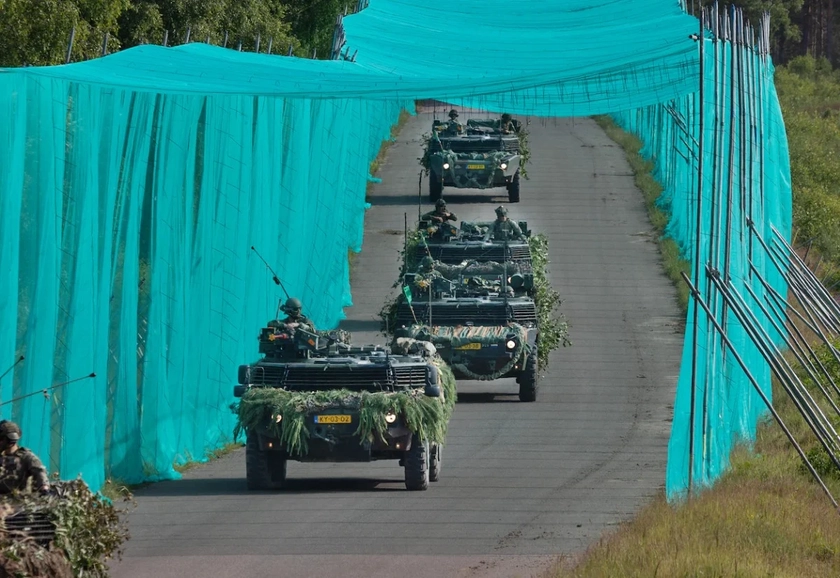
Dutch Troops Prepare for Russian-Style NATO Invasion in Germany
However, the head of the Center for Countering Disinformation under Ukraine’s National Security and Defense Council, Andriy Kovalenko, dismissed the claim about Telegram-controlled drones with sarcasm, writing on Telegram:
“The story about ‘notes in Shaheeds’ and control via Telegram bots is certainly something.”
Addressing the issue of remote control more broadly, he noted that some Shahed drones have indeed been remotely operated since last year:
“They had cameras installed on them and were controlled remotely. No sensation – they are being shot down.”
Junior Sergeant Stanislav Bunyatov of the 24th Aidar Assault Battalion also mocked the claim via Telegram, writing:
“A fairy tale from the series: This is all because of your computers and video games.”
The challenge is escalating as Russian production rates skyrocket. According to Ukrainian military intelligence, Russia is producing Shahed drones at such a pace that the same number previously made in a month – 300 – now roll out in under three days.
Documents suggest an ambition to scale that up to 500 drones per day, raising fears of future drone swarms numbering in the thousands.
Despite the pressure, air-defense forces around Kyiv continue to intercept around 95% of incoming drones, a senior official told The Economist. Still, the 5% that break through inflict serious damage, especially as Ukraine runs low on key interceptors.
The situation is particularly dire when it comes to ballistic missile defense. Only the US-made Patriot system offers effective protection, and Ukraine’s current inventory of at least eight Patriot batteries is heavily strained. Experts estimate that two PAC-3 missiles are required to stop a single ballistic missile, putting enormous demand on a system already short on supply.
“Lockheed Martin, which builds the Patriot systems and their PAC-3s, is increasing its output to 650 missiles per year. But this is about 100 fewer than projected Russian production of ballistic missiles, with a Ukraine government source estimating the Kremlin has a 500-missile stockpile,” the report reads.
President Volodymyr Zelensky has stated that Ukraine needs at least ten more Patriot systems, with sufficient ammunition, to make cities secure again.
“There is no illusion,” said Ukrainian aviation commentator and former aircraft test engineer Kostiantyn Kryvolap. “We will have to destroy Russian launch complexes, the factories, and the stores.”
According to a new Financial Times (FT) report, some Ukrainian officials and Western analysts believe Russia may be preparing to launch a renewed large-scale aerial campaign, potentially in tandem with a future ground offensive. The recent surge in Russian missile and drone strikes over the weekend could mark the beginning of that wider strategy, the report suggests.
“Russia is now producing missiles and drones faster than it uses, stockpiling reserves and ratcheting up pressure on Ukraine’s stretched defences,” the FT wrote.
You can also highlight the text and press Ctrl + Enter