Vladimir Putin’s game of nuclear blackjack has gone bust, and the world is waking up to the Kremlin’s paper tiger routine. The Russian strongman’s latest attempt to flex his nuclear muscle – a desperate bid to intimidate both the West and Ukraine – has been exposed as a catastrophic misfire, both literally and figuratively.
Recent reports of failed intercontinental ballistic missile (ICBM) tests, including a spectacular flop just days after the much-hyped phone call with Trump, reveal the crumbling state of Russia’s nuclear arsenal and the hollowness of Putin’s nuclear blackmail campaign. The score? A humiliating string of duds, explosions, and wayward missiles that threaten Russia’s own cities more than anyone else’s.
Let’s talk numbers
Since June 2023, at least six Russian ICBM tests have ended in disaster, with missiles either failing to launch, exploding in their silos, or veering so far off course they had to be self-destroyed to avoid crashing into Russian territory.
The Yars, Sarmat, Bulava, and Poseidon systems – touted by Putin as the backbone of Russia’s “invincible” nuclear might – have racked up an abysmal failure rate. Sources indicate that for every successful test, there are multiple failures, with some estimates suggesting a 3:1 ratio of flops to successes.
The most recent embarrassment, a Yars ICBM test on or around May 18, 2025, never even left the launch tube. Monitored closely by radars and space-based platforms NATO caught every second of the Kremlin’s latest faceplant.
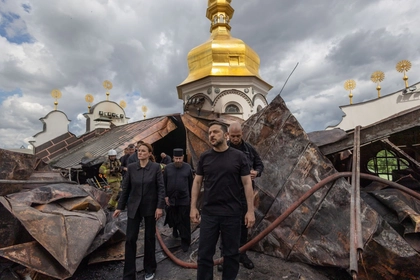
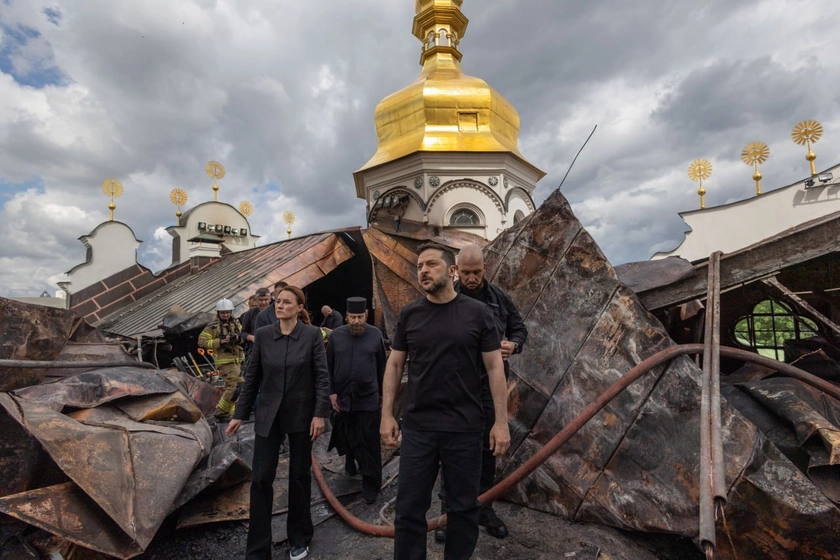
Zelensky Visits Kyiv Lavra After Russian Drone Strike
This disaster came hot on the heels of a recent phone call between Putin and Trump, where the Russian leader reportedly tried to leverage his nuclear arsenal to strong-arm the US administration. The timing couldn’t be worse for Putin.
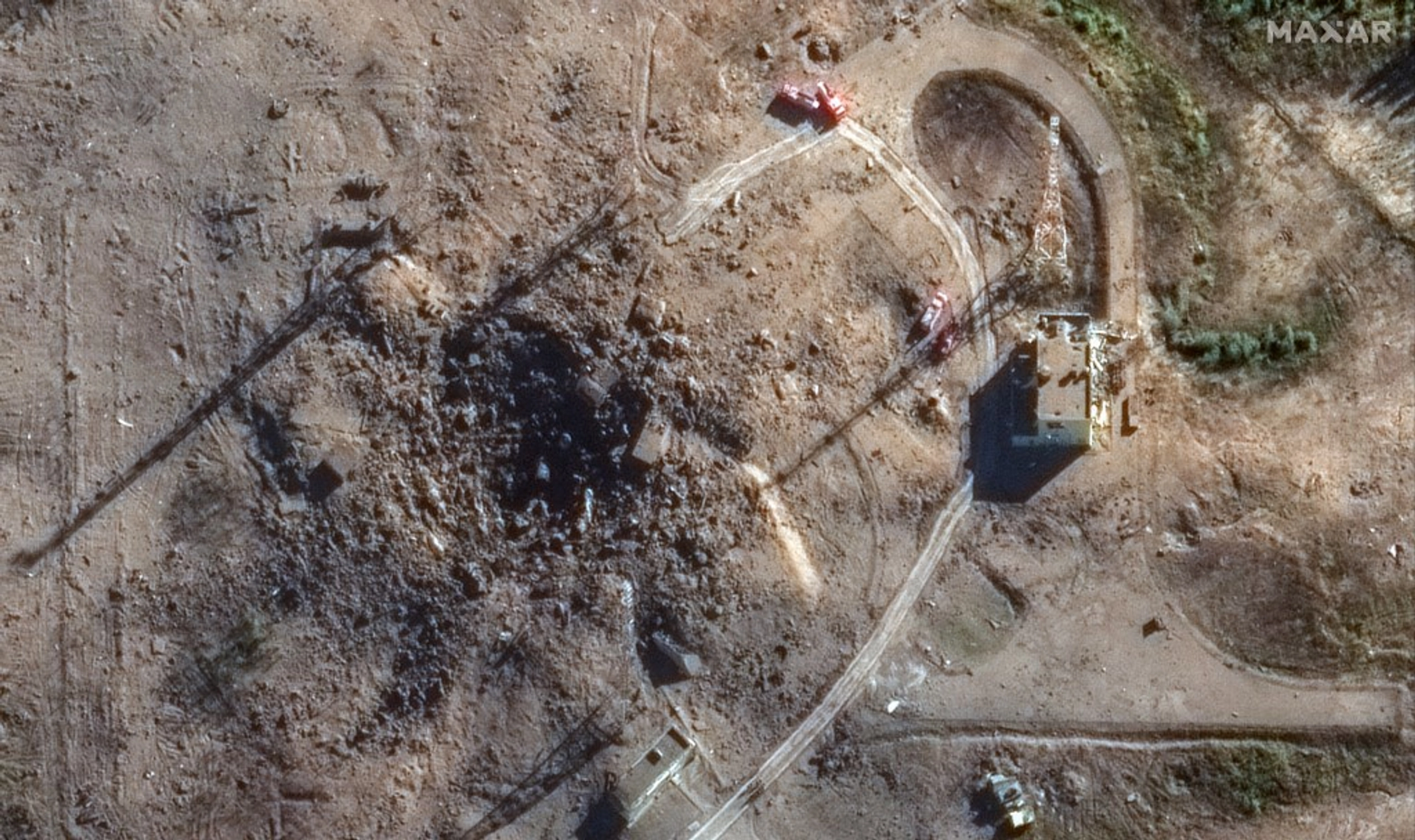
Just as he was attempting to project strength, his prized Yars missile fizzled and failed to launch, joining a growing list of Russian ICBMs that have either blown up on the launchpad, like the Sarmat test in September 2024 that left a 60-meter (200-feet) crater at the Plesetsk Cosmodrome.
The Sarmat, dubbed “Satan II” by Western media, is a particularly sore spot. This liquid-fueled behemoth, hyped by Putin as a world-ender capable of carrying 10 tons of nuclear warheads, has consistently underperformed.
Since its first test in 2017, the Sarmat has stumbled through a series of failures, with the September 2024 explosion being the most dramatic. Experts suggest the liquid fuel, notoriously sensitive to mishandling, more than likely triggered the silo-shattering blast. Meanwhile, the solid-fueled Yars and Bulava missiles haven’t fared much better, with multiple tests since 2023 either canceled or ending in catastrophe.
Putin’s nuclear saber-rattling, a cornerstone of his strategy to cow Ukraine and its Western backers, is falling apart faster than a Soviet-era T-72 tank. His threats, like those issued during a September 2024 Security Council meeting, rely on the perception of a robust and terrifying nuclear arsenal – the reality is far less menacing.
Old, aging technology doesn’t cut the mustard
Russia’s ICBMs, many designed in Ukraine before 2014, are now aging relics dependent on dwindling spare parts and shoddy maintenance. Roscosmos head Yuri Borisov boasted in September 2023 that the Sarmat was fully operational. The lengthening documented string of failures renders the Kremlin’s claims of “combat-ready” systems laughable.
This isn’t just a technical problem – it’s a strategic collapse. Putin’s nuclear blackmail, meant to bully the West into abandoning Ukraine, is losing its edge. Even the November 2024 strike on Dnipro with the Oreshnik missile, initially mistaken for an ICBM but later confirmed as an experimental intermediate-range ballistic missile, was less about military impact and more about theatrical posturing.
Ukrainian President Volodymyr Zelensky called the Dnipro strike a “cynical violation” but pointed out the world seemed to shrug off the strike, suggesting Putin’s bluster is failing to intimidate.
The strike, which caused minimal damage, was a clear attempt to intimidate Europe and test the resolve of the incoming Trump administration. But with the repeated failures of Putin’s ICBMs, NATO weapons experts are now even questioning the functionality of Putin’s under maintained Soviet-era warheads. With misfiring missiles, and warheads that could just as easily be duds, Putin’s threats are increasingly ringing hollow.
US officials, briefed on Russia’s failures, have consistently downplayed the threat, noting no changes in Moscow’s nuclear posture.
Putin’s nuclear playbook, as described by former US government arms control official Chris Ford, is a twisted innovation: using nuclear threats not for defense but to enable aggression against smaller neighbors like Ukraine. Yet, with each failed test, the world sees through the facade.
Russia’s nuclear arsenal, like its conventional forces bogged down in Ukraine, is a shadow of its Soviet-era glory. Aging missiles, shoddy engineering, and a reliance on Ukrainian-designed components have left Putin with a nuclear deterrent that’s as likely to blow up in his face as it is to reach its target.
The irony is stark. Putin’s threats, meant to project power, only highlight Russia’s weaknesses. His ICBMs, far from striking fear, are becoming a global punchline. As Ukraine continues to defy Moscow with Western support, and as NATO watches Russia’s missiles crash and burn, Putin’s nuclear blackmail is exposed for what it is: a desperate bluff from a regime running out of cards to play.
Cold War Nuclear Tactics: Disciplined Deterrence
Compare Putin’s toothless threats with that employed by his predecessors during the Cold War (1947–1991). Then nuclear threats were a carefully choreographed dance between superpowers. The Soviet Union, with its vast arsenal of ICBMs, SLBMs, and strategic bombers, maintained a credible deterrent through rigorous testing, technological advancements, and a robust industrial base – by the 1980s, the USSR had over 40,000 viable nuclear warheads and the world trembled.
But now…
The world isn’t trembling anymore, Vladimir. It’s laughing.
The views expressed in this opinion article are the author’s and not necessarily those of Kyiv Post.
You can also highlight the text and press Ctrl + Enter