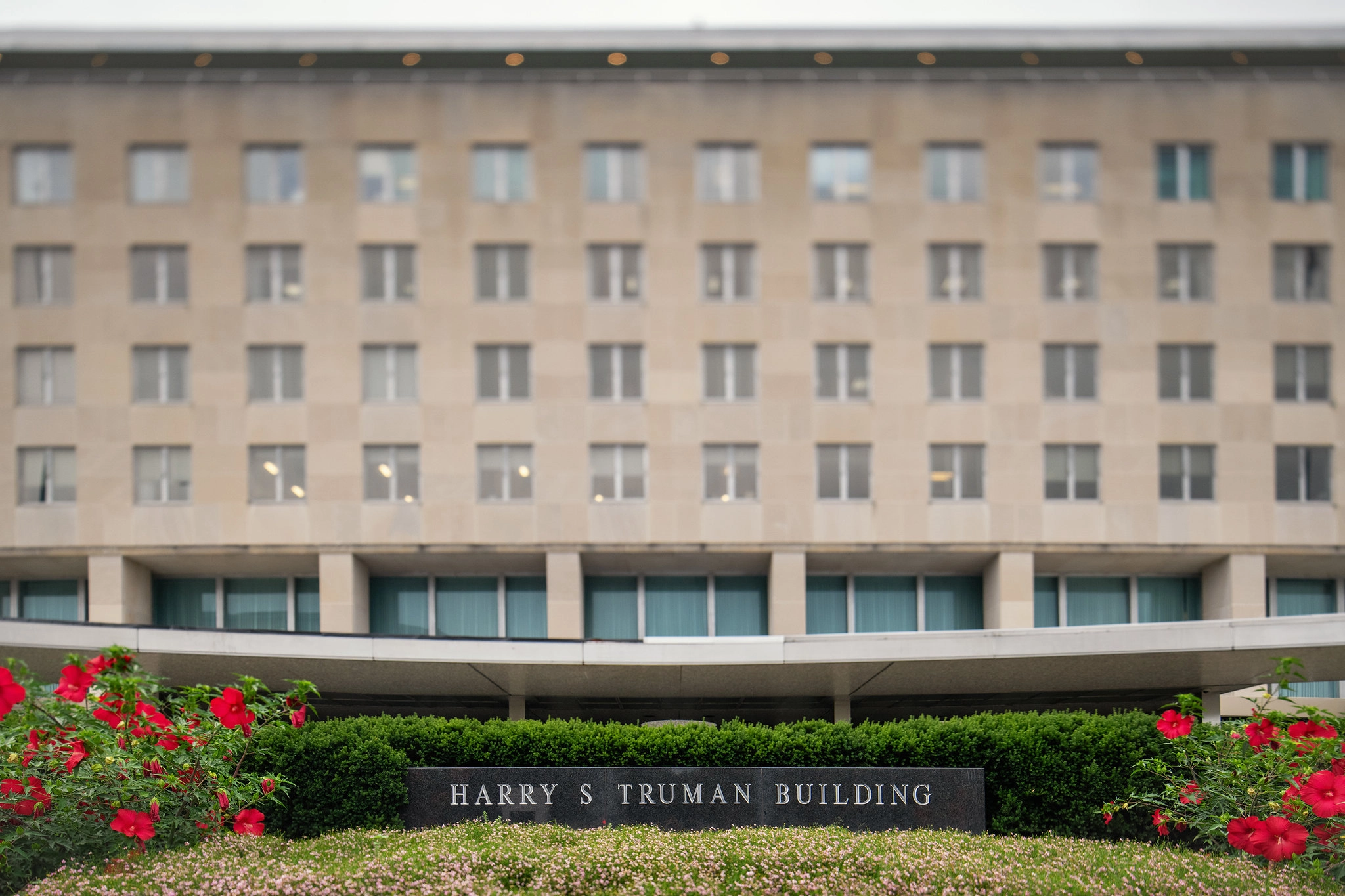
WASHINGTON DC – A top State Department official who oversaw recent widespread layoffs faced a contentious hearing before the House Foreign Affairs Committee Tuesday afternoon, presenting the Department’s fiscal year 2026 budget request amid a backdrop of significant internal turmoil.
The hearing was dominated by sharp criticism from lawmakers regarding recent layoffs, the controversial dismantling of the US aid agency USAID, and perceived weakening of vital diplomatic functions, particularly those related to accountability for Russian war crimes in Ukraine.
JOIN US ON TELEGRAM
Follow our coverage of the war on the @Kyivpost_official.
Democratic Congressmember Bill Keating (D-MS) led a fiery exchange, directly challenging Deputy Secretary of State Michael Rigas on the administration’s staffing and organizational changes.
Keating referenced a perceived shift in President Donald Trump’s stance on Russia, asking Rigas, “Then why did you fire the entire team investigating war crimes committed by Russia in Ukraine. Why were those people fired?”
Rigas responded by stating that the office in question had been “consolidated,” with its work to be “conducted by the Regional Bureau and by the staff at post overseas.” Keating, visibly unsatisfied, highlighted the gruesome nature of Russian atrocities, including “serial rapes of teenagers,” targeting of “maternity wards of hospitals” and emergency responders, torture, and the abduction of over 20,000 children.

US-Iran Peace Treaty Closes on ‘24-Hour’ Deadline, Mediator Pakistan Says
He argued that “making cuts in that area right now is critical in terms of helping Putin use terror against civilians to continue this. I just can’t see the priorities of whether you, however you call, cutting, reorganizing down. It’s the same thing.”
Keating further lambasted the elimination of two offices within the Bureau of Counterterrorism and Violent Extremism, especially “at a time when at home, you’re saying, These are the greatest threats we have.”
He accused the administration of jeopardizing national security and global alliances, asserting that reductions in areas dealing with NATO allies, counterterrorism, and war crimes investigations were not “being good stewards” of American safety or its position on the world stage, particularly in the context of Russia and China.
Rigas’s testimony came just days after the Trump regime initiated a plan to lay off 1,300 State Department employees as part of its ongoing reorganization.
The move has drawn widespread criticism from Democratic lawmakers and former diplomats, who contend it jeopardizes national security and undermines America’s diplomatic capabilities.
In his testimony, Rigas defended the administration’s actions, emphasizing the need for reform and streamlining. “For the State Department to become an effective instrument of American Foreign policy, we must reform and streamline our institution,” he said.
He claimed that despite the separation of qualified individuals, the employees retained were selected based on “merit systems principles,” emphasizing higher quality in terms of tenure, experience, and skills, in consultation with the Office of Personnel Management.
The intricate nature of the layoffs stemmed from the establishment of more than 700 competitive areas for civil service employees and nearly 800 for the Foreign Service.
This highly granular approach to competitive areas raised concerns from employee associations, including the American Foreign Service Association and the American Federation of Government Employees, who cited limited opportunities for feedback.
Rigas, however, asserted the department’s “personnel-agnostic” approach, explaining that the reorganization targeted functions and positions, not individuals, and aimed to eliminate offices and bureaus no longer relevant or aligned with current administration policy priorities.
These internal restructuring efforts coincide with the Trump administration’s call for a substantial reduction in the State Department’s funding.
While the administration requested a 48% decrease to $28.5 billion for fiscal year 2026, House appropriators are considering a 22% cut.
Rigas linked the budget request directly to the reorganization, asserting it would foster a more efficient and effective organization. Other Democrats in the Committee, including Rep. Madeleine Dean (D-PA) and Ranking Member Gregory Meeks (D-NY), voiced strong objections, expressing concerns that the personnel cuts have diminished the department’s capacity to execute critical national security functions, such as arms control and illicit drug interdiction.
Conversely, Committee Chair Brian Mast (R-FL) defended the overhaul, characterizing it as a necessary step to “rebuild” and strengthen the State Department for enhanced efficiency and accountability.
You can also highlight the text and press Ctrl + Enter