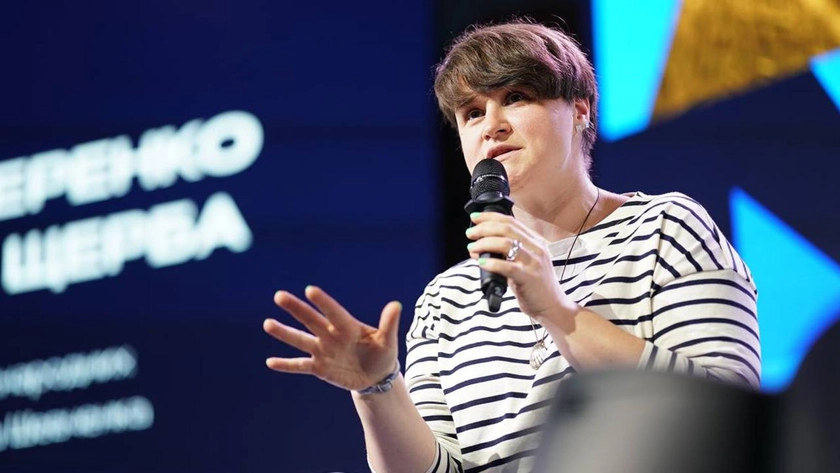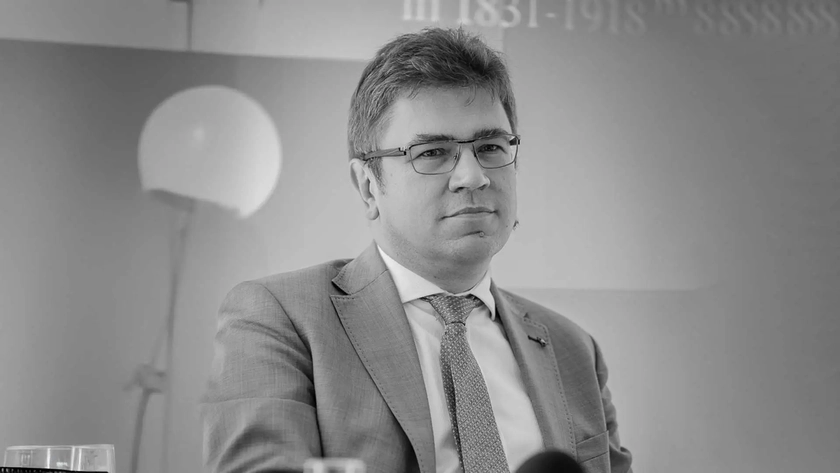
Hannah Wagner of the Berlin newspaper “Der Tagesspiegel” interviews Dr. Andreas Umland of the Stockholm Centre for Eastern European Studies (SCEEUS) at the Swedish Institute of International Affairs (UI)
Mr. Umland, US President Donald Trump has threatened Moscow’s trading partners with punitive tariffs if the Kremlin does not agree to a ceasefire in Ukraine soon. Is this a major U-turn in his policy toward Russia?
JOIN US ON TELEGRAM
Follow our coverage of the war on the @Kyivpost_official.
I wouldn’t call it a U-turn just yet. So far, it’s just an announcement – and with Trump, you have to take such oral statements with a grain of salt. Against this background, reactions in Ukraine are also mixed. On the one hand, people recognize that Trump is now striking a different tone after months of cozying up to Kremlin leader Vladimir Putin. On the other hand, they are skeptical about how sustainable this seeming change of policy will be.
After all, Trump has given Putin an ultimatum for the first time: if he does not agree to a peace deal within 50 days, the US will impose punitive tariffs of up to 100 percent on Russia’s trading partners.
Yes, but Washington is playing a complicated game here. The pressure Trump wants to build up would not come directly from the US, but from third countries such as China and India, which buy oil and other goods from Russia. At least, that is the plan. But it remains to be seen whether these countries will really bow to pressure and drop Russia as a trading partner. Furthermore, if the US imposes tariffs on certain countries, it would have to expect painful retaliatory tariffs. What will eventually come out of this approach remains thus to be seen.
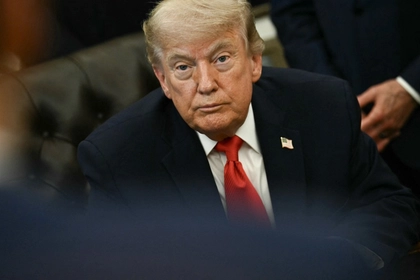
Trump Says US Has 'Ended War With Iran' After Deal Claims and Kharg Island Escalation
Assuming the plan works, how badly would a loss of trading partners hurt Putin’s war machine?
If China, India, and other countries actually turn away from Russia and toward the US under the pressure of sanctions, that would definitely be a problem for the Kremlin. After all, the greatest weakness of international sanctions to date has been that Russia has been able to turn to third countries, thereby reducing the impact of the punitive measures to a large extent. If Trump’s tariffs go into force and prove effective, this would no longer be so easy.
Could fear of sanctions force Putin, who has so far insisted on his maximum war aims, to make concessions?
I fear that, at least in the short term, the opposite is likely to be the case: Trump’s announcement could lead to an intensification of Russian attacks in Ukraine in the coming weeks. After all, the Kremlin has now been given a quasi-official deadline within which it can continue bombing without fear of larger consequences. And 50 days is a relatively long period of time. This raises the suspicion that Putin is being given another opportunity to gain territory and achieve other military successes before negotiations are possibly resumed.
At the same time, in addition to the tariff ultimatum, Washington also announced “massive” deliveries of US weapons to Ukraine. What do you expect to happen?
This is mainly, but not only, about Patriot air defense systems. Several European countries, including Germany, are supposed to buy them from the US and then pass them on to Ukraine. These Patriot systems have proven to be the most effective weapon against Russia’s various rockets and cruise missiles. So there is a high demand for them – and therefore also relief in Ukraine that it will hopefully soon have more of them at its disposal.
What other US weapons could be involved?
That will probably depend primarily on the European buyers. In theory, longer-range missiles could also be included, but it is questionable whether that would be announced publicly. The German government, for example, has decided not to provide detailed information on arms deliveries for strategic reasons.
In a sense, this is a betrayal of Ukraine.
And Trump?
Trump is interested in business. I therefore see the announcement of arms deliveries primarily as an expression of his America First policy and not as a real strategy. This approach is worthy of criticism.
In what way?
After the collapse of the Soviet Union in the early 1990s, the US contributed to the disarmament of Ukraine. It not only insisted that Ukraine surrender its nuclear warheads, but also its various delivery systems: bomber aircraft, cruise missiles, rockets. But that seems now to be water under the bridge, for the Trump administration, which is today trying to profit from Kyiv’s plight. In a sense, this is a betrayal of Ukraine.
And yet Trump, who just a few months ago threatened to completely cut off military aid to Ukraine, seems to have had a change of heart. How do you explain that?
Perhaps, the initial assumption in Washington was that pro-Russian rhetoric would provoke a reciprocal reaction in Moscow and bring an end to the war. Now, Trump and his assistants have had to realize that the opposite is true. In addition, many Americans –even Republicans and MAGA supporters – still favor supporting Ukraine. Trump has recognized this over time. His change of course is therefore probably also a reaction to the domestic political mood.
What was striking about Trump’s appearance on Monday was not least the harmonious atmosphere between him and his guest, NATO chief Mark Rutte. Has the arms deal repaired the damaged transatlantic relationship to some extent?
The fundamental, ideologically determined tensions between America and Europe will remain. But it is true that the break between the European members of the alliance and the US, which seemed possible six months ago, appears to have been averted for now. On Monday, there was a kind of new unity between the US and its European NATO partners concerning Russia. This is certainly due in no small part to Mark Rutte, who has somehow managed to establish a good relationship with Trump, at least on the surface.
The conversation took place on Tuesday, 15 July 2025.
The views expressed in this opinion article are the author’s and not necessarily those of Kyiv Post.
You can also highlight the text and press Ctrl + Enter