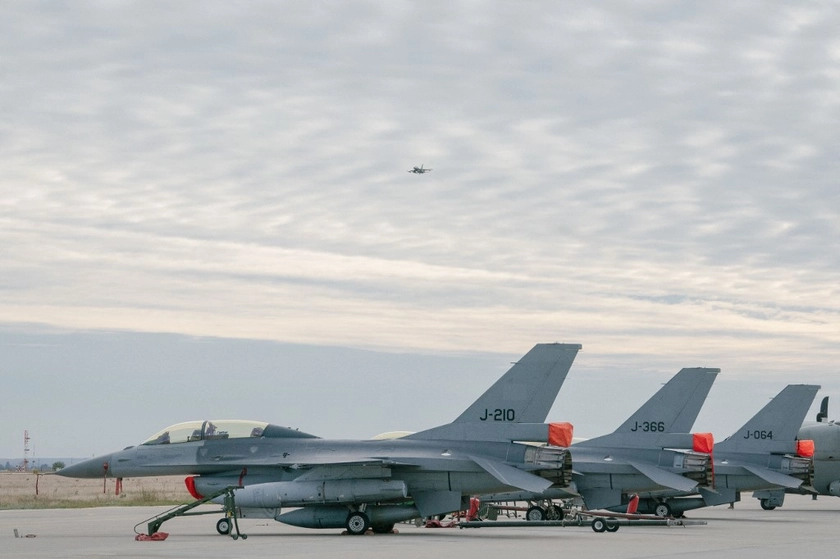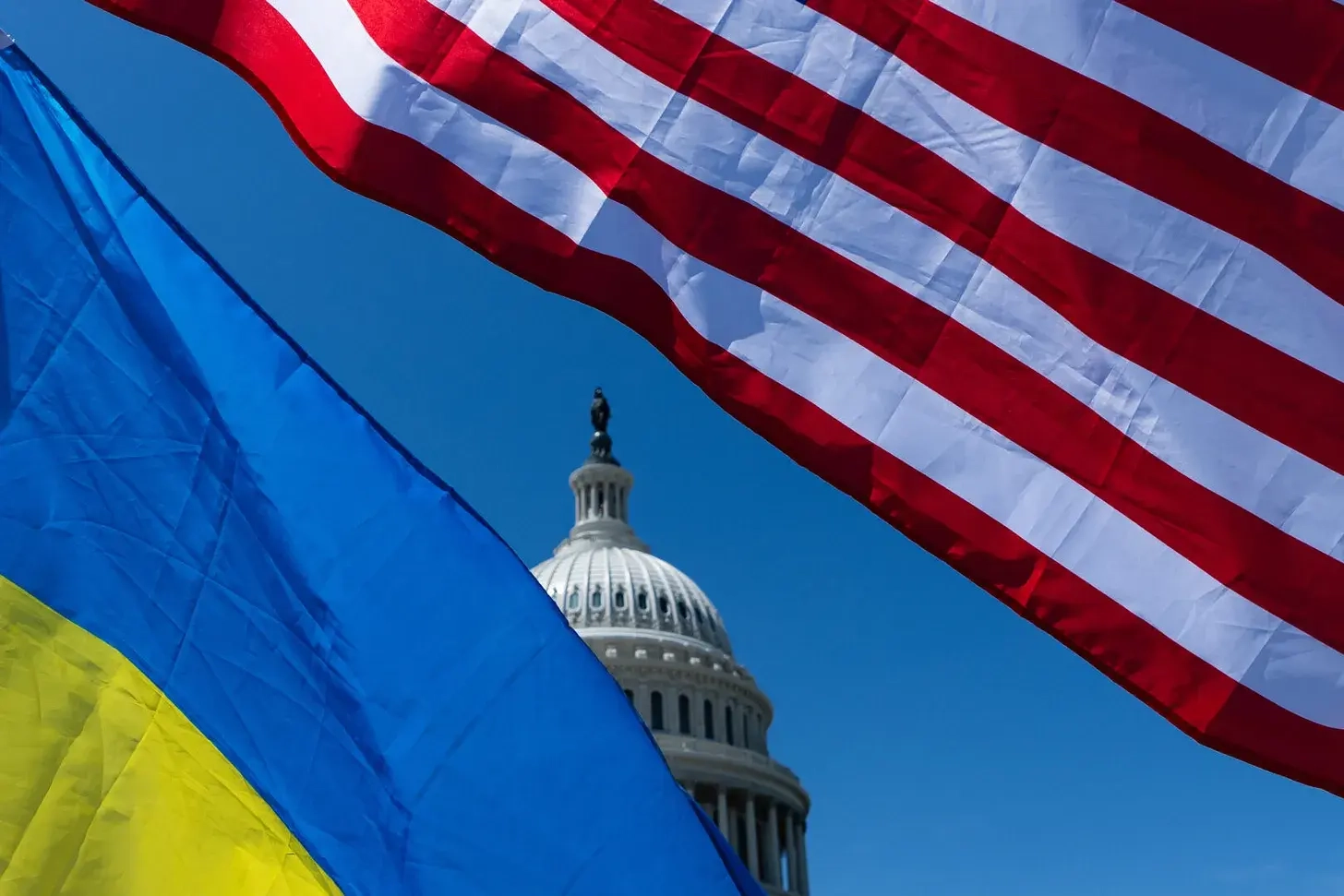
Earlier this week President Trump announced that the United States would expand its current portfolio of security aid to Ukraine. According to the initial description of this plan, the United States will increase the sale of arms to NATO members who will then transfer weapons and equipment to Ukraine.
Patriot anti-air systems, a crucial part of Ukraine’s air defense network that have been in short supply, are reportedly among the types of equipment that will be included in this plan. This strategy implies that Ukraine’s inventory of equipment used to defend against Russian aggression will expand as previously allocated security aid will be combined with additional rounds of arms sales.
JOIN US ON TELEGRAM
Follow our coverage of the war on the @Kyivpost_official.
Additionally, Trump announced that the Russian government has 50 days to end the war in Ukraine or else the United States will levy additional tariffs and sanctions.
I have always believed that it was in America’s best interest to support Ukraine against Russian aggression and that the United States should give Kyiv the tools it needs to achieve victory. My recent book The Folly of Realism: How the West Deceived Itself About Russia and Betrayed Ukraine, chronicles how six Republican and Democrat administrations attempted to accommodate and appease Russia, only to inadvertently embolden Moscow.
Despite his unwillingness to learn and his tendency to repeat the mistakes of the past, perhaps it was inevitable that Trump would realize that Putin was playing him. Trump’s decision to expand the delivery of arms and equipment is the right choice - especially given Russia’s increased targeting of Ukrainian cities and civilian targets in recent weeks.

US Threatens to Seize $24B in Frozen Iranian Assets for Ally Compensation
Despite his unwillingness to learn and his tendency to repeat the mistakes of the past, perhaps it was inevitable that Trump would realize that Putin was playing him.
However, I remain concerned that Trump’s pivot will take months to develop into anything resembling a coherent policy shift that supports Ukraine and puts pressure on Russia. Trump’s ability to see through Putin’s inevitable nuclear saber-rattling also remains a major open question.
Earlier this year, I published an article with Foreign Affairs titled “The Perils of Russia First” which provided a critical examination of Trump’s approach towards the Russia-Ukraine war. This piece argued that Trump’s strategy of pursuing diplomatic engagement with Russia was doomed from the start, as Russia has neither an incentive to pursue a diplomatic settlement (to the contrary, Putin uses negotiations as a means of extracting concessions from Trump) nor a reason to engage in good faith negotiations with Ukraine and the United States.
This approach was reminiscent of the “Russia First” elements of earlier administrations’ foreign policies, which inadvertently accommodated Moscow’s interests in Eastern Europe through the use of short-term transactional diplomacy. Any limited gains that came from this approach came at the cost of American interests in the region.
In this article I surmised that at some point, Trump will realize that Putin is manipulating him and that the excessive concessions that the United States has offered will not entice Putin to end the war. Ideally, what would follow this revelation would be the rejuvenation of the United States’ security partnership with Ukraine.
It’s unclear what finally changed Trump’s perception of Putin and the war. It’s possible that Zelensky and his diplomatic team have gone out of their way to work with Trump in the aftermath of the disastrous Oval Office meeting in February.
Trump and Zelensky have had a series of one-on-one meetings that appear to have been productive and cordial - perhaps the contrast between these meetings and the multiple failed bilateral meetings between American and Russian negotiators influenced Trump’s decision. Trump has also publicly acknowledged Melania’s role in reminding him of the human cost of Putin’s aggression as negotiations stalled between the United States and Russia.
It’s also possible that Trump feels personally slighted by Putin’s lack of interest in a peace deal and is increasing support to Ukraine as a punitive measure.
Unfortunately, instead of taking this approach from the beginning of his term and working with Zelensky, Trump insisted on pursuing a doomed policy of accommodation that used reduced security aid to Ukraine as a bargaining chip.
The decision to pause the delivery of ammunition and halt intelligence sharing in the spring contributed to Kyiv’s loss of territory in Kursk Oblast, Russia. The lack of full commitment towards supporting Ukrainian security has invited further aggression by Russia on Ukraine’s.
Trump’s willingness to introduce friction into America’s bilateral relationships with Ukraine, NATO, and the European Union was seen by Moscow as weakness and division within the transatlantic community that could be exploited.
The lack of full commitment towards supporting Ukrainian security has invited further aggression by Russia on Ukraine’s.
The decision to attach a 50-day deadline before implementing new sanctions and tariffs will be seen by the Kremlin as a sign of hesitancy towards addressing Russian aggression: recent reporting suggests that the Russian military is using this window of time to conduct a final offensive before coming to the negotiation table.
While this may be the turning point of Trump’s Ukraine policy, we should remember that talk is cheap. The decision to increase aid through sales of arms to Ukraine, facilitate the transfer of equipment through the EU, exchange drone technology, and authorize a $10 billion dollars of direct commercial sales between American defense firms and Ukrainian clients will significantly bolster Ukraine’s war effort.
This emphasis on private industry and direct connections between American firms and Ukrainian clients may also provide a degree of resilience against future attempts at political interference.
However, it remains to be seen whether or not the administration will deliver on these promises. It is entirely possible that Trump walks this decision back after a successful charm offensive by the Russian government, or Trump may buckle under future nuclear saber-rattling from Russia (which tends to occur whenever Putin feels threatened).
There is also the possibility that this decision is slow-walked by members of the administration. Recently, the Pentagon under Secretary of Defense Hegseth unilaterally suspended delivery of munitions to Ukraine without consulting either Secretary Rubio or Donald Trump. Not only does this show a shocking lack of coordination within the administration, but it also shows how easy it would be for Ukraine-skeptic voices to sabotage this policy.
Time will show whether or not the Trump administration learns from the painful lessons of the past six months. Trump’s pivot lays the groundwork for a mutually beneficial approach towards the Russia-Ukraine war.
After nearly half a year of drastic swings and changes on the topic of Ukraine security aid, the White House has the opportunity to correct its course and make a meaningful contribution to Ukraine’s battlefield success, a necessary precursor to winding-down this dangerous war.
Reprinted from the author’s blog “Why it Matters.” See the original here.
The views expressed in this opinion article are the author’s and not necessarily those of Kyiv Post.
You can also highlight the text and press Ctrl + Enter