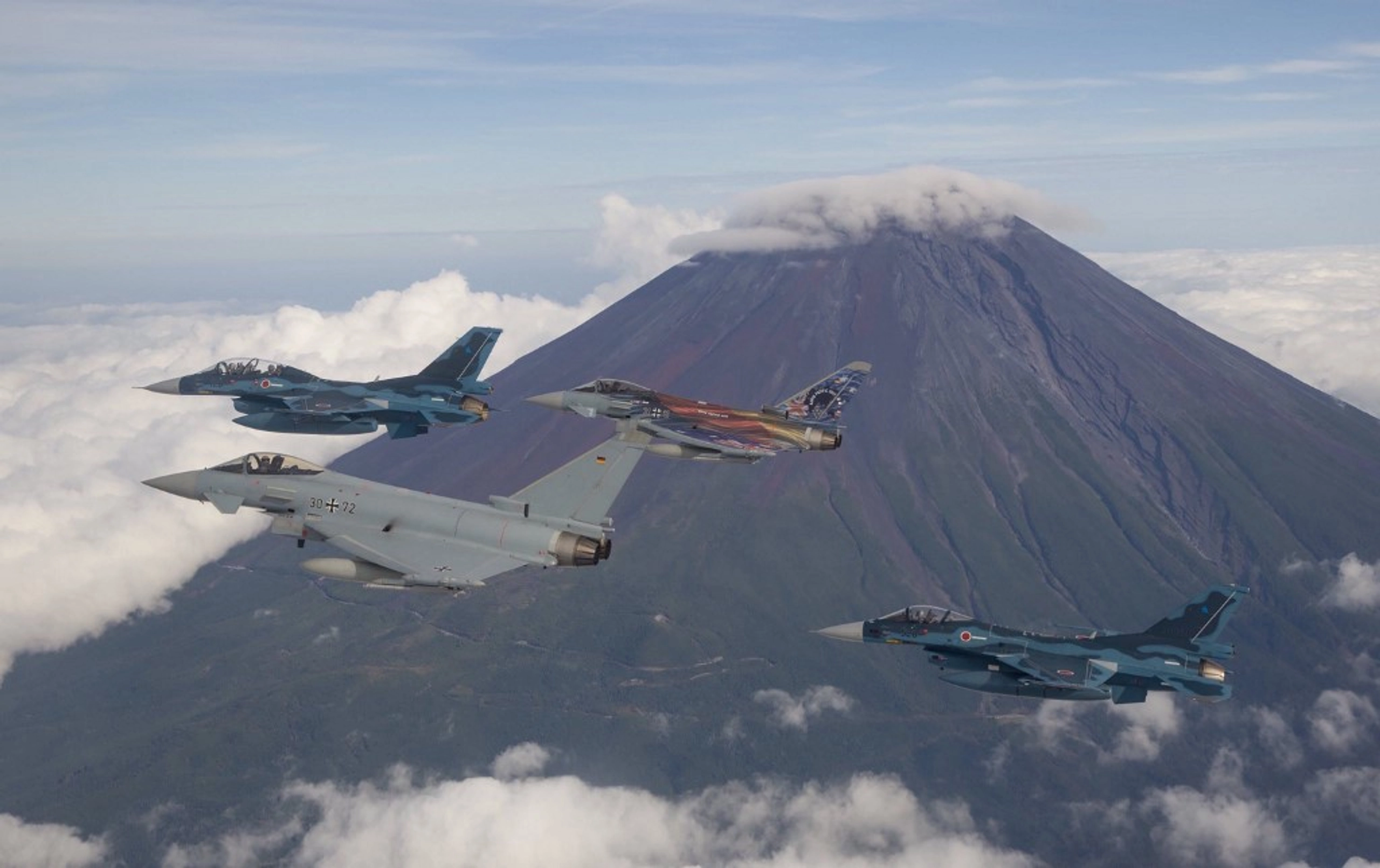
Two of the most “evil regimes” in the 20th Century were Germany and Japan, perpetrators behind WWII.
The Soviet Union stands alongside them.
JOIN US ON TELEGRAM
Follow our coverage of the war on the @Kyivpost_official.
That conflict resulted in between 70 and 85 million fatalities. The two nations were not only defeated but were also devastated. Their governments and martial hierarchies were dismantled, punished, and replaced with democracies. They created pacifist constitutions that only allowed them to develop domestic defense forces.
But fortunately, the victorious allies, led by the United States, decided to rebuild both countries. The Marshall Plan in Europe rebuilt the countries that Moscow had not gobbled up at the end of the war. This prevented further incursions by communists and made Europe economically self-sufficient by fostering trade.
West Germany, eventually united with East Germany in 1990, played a key role in Europe’s redevelopment. Japan was also rebuilt and given access to the US market in return for supporting US interests in Asia. Now Germany and Japan have decided to fully join the fight with America and Europe against today’s two “evil regimes” – Russia and China – by remilitarizing.
The commitment of Germany and Japan will help secure global peace, as Americans grow weary of their country’s role as the world’s “global policeman.” But it also represents a turning point in history.
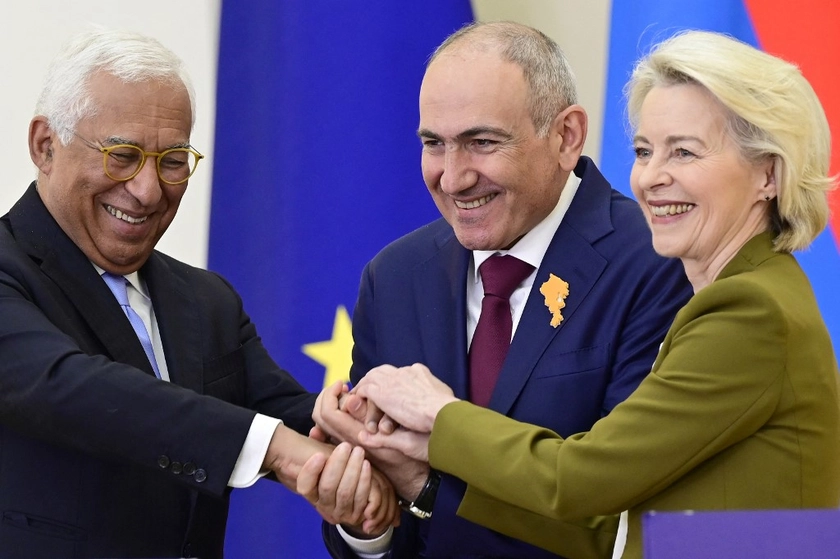
EU Disburses €34M in Support Package for Armenia
Moscow wages wars in Europe, conducts terrorism globally, supports proxies such as Iran and North Korea, and represents a global threat, as does China.
Beijing currently supports Russia’s war in Ukraine and elsewhere by providing equipment, technology, and components for its weaponry. While currently not directly involved in violence as yet, China’s President Xi Jinping has said he also wants to annex Taiwan or invade it if necessary. In addition, China poses a significant threat to most Asian nations, having built a large navy to gain control over the region’s vital shipping lanes.
A military buildup by Germany and Japan will also reduce the post-war burden that the United States has assumed. These two advanced countries will also contribute to technological advances and innovations in the development of warfare and weaponry. Both countries immediately stepped up to help after Putin invaded Ukraine in 2022 with funding, diplomatic support, and political heft. Three days after the invasion of Ukraine in February 2022, then-German Chancellor Olaf Scholz committed to doubling Germany’s defense spending and revamping its armed forces because of the Russian threat to the continent as a whole.
At the end of April 2022, Japan’s then-Prime Minister Fumio Kishida proposed doing the same. Now Germany and Japan must also move beyond their pacifist past and reduce or scrap restrictions that have prohibited the deployment of troops to foreign countries.
Japan: The 1947 Constitution bans war and prevents Japan from maintaining a military for outward deployment. However, in the 1990s, Tokyo allowed troops to leave the country for limited overseas roles in peacekeeping or logistical support operations. In 2015, revisions allowed deployments abroad in defense of allies. But a constitutional amendment to remove barriers altogether has not yet been proposed. However, Japan has expanded and enhanced the size and heft of its maritime forces.
Germany: Germany’s Basic Law, enacted in 1949, permits overseas missions if the Bundestag approves each deployment. Like Japan, there has been no constitutional amendment to remove barriers; however, in early 2025, the Bundestag approved increased defense spending. Unlike Japan, its military can be deployed.
In May 2025, thousands of German troops left the country for the first time since WWII and were stationed in Lithuania to bolster NATO’s presence in response to Russia’s rampage in Ukraine. Plans are to send thousands more, Germany’s entire 45th Armored Brigade, by 2027, to enhance the overall security of the Baltic region.
Naturally, the reaction to rearmament by the Germans and the Japanese has been mixed, due to concerns about their past predations. And both nations have been severely berated and attacked by Russia and China, respectively.
Russia: Putin is upset about Germany’s rearmament, and his spokesman Dmitry Peskov said of German troops in the Baltic that “Germany is becoming dangerous again.” In July 2024, Putin warned Germany against allowing the deployment of US long-range missiles from its territory. He threatened that this would lead to Russia taking “mirror measures” and abandoning its self-imposed moratorium on deploying intermediate and shorter-range, nuclear-capable missiles against Europe. Putin said he considers German involvement as provocative and escalatory, and another step toward all-out war in Europe.
China: Xi’s reaction to Japan’s rearmament and alliance with the US and Europe (and with the QUAD in the region, which includes India, the US, and Australia) has been characteristically polite in tone but threatening. This is because China, unlike Russia, seeks to maintain its business presence and credibility in the United States and Europe. But Xi’s comments, conveyed through spokesmen, chide Japan and play on guilt. The Sino-Japanese war, which overlapped WWII, was a catastrophe that resulted in the deaths of between 15 million and 20 million Chinese soldiers and civilians. The South China Morning Post reported that former Chinese Foreign Minister Qin Gang said: “Japanese militarism has inflicted deep damage on the Chinese nation, which is still painful to this day. The Chinese people will not forget, and neither should the Japanese side.”
Germans and Japanese are also ambivalent about rearmament, as are their politicians, for historical reasons. Both societies are in turmoil: recent elections in each have overthrown existing, long-standing governments, brought in new leaders, and reflect profound shifts in attitudes, as well as increased polarization. However, their commitment to rearmament remains and is necessary to strengthen the civilizational alliance that aims to deter Russia and China from destroying, seizing, and harming more people and nation-states. Germany and Japan will bolster the United States and the rest of Europe because political support for foreign affairs or military intervention is waning there and can no longer be taken for granted.
(Next: Profiles of Germany and Japan)
Reprinted from https://dianefrancis.substack.com/ – Diane Francis on America and the World.
The views expressed in this opinion article are the author’s and not necessarily those of Kyiv Post.
You can also highlight the text and press Ctrl + Enter

Zelensky Reveals Intercepted Intel From Putin’s Desk