The recent 25% tariff imposed by the United States – the largest market for Indian goods – has sent ripples through India’s export sectors, which include textiles, pharmaceuticals, auto components, engineering goods, and IT hardware.
Small and medium enterprises (SMEs), the backbone of India’s export-driven economy, are especially vulnerable to these shocks. Economic analysts warn that India could risk losing upwards of $2.5 billion in export revenue, adding pressure to its existing account deficit and weaken the rupee.
JOIN US ON TELEGRAM
Follow our coverage of the war on the @Kyivpost_official.
The European Union’s 18th package of sanctions, adopted in July, targets Russia’s energy sector and includes a ban on imports of refined petroleum products derived from Russian crude – such as those processed in India, Turkey or the UAE – designed to further curb Russia’s war machine.
As a result, India’s $14.3 billion export market to Europe is coming under strain. Key Indian refiners such as Nayara Energy’s Vadinar refinery, partly owned by Russian oil giant Rosneft, face operational disruptions due to the withdrawal of global shipping services and tightened enforcement of the Russian oil price cap.
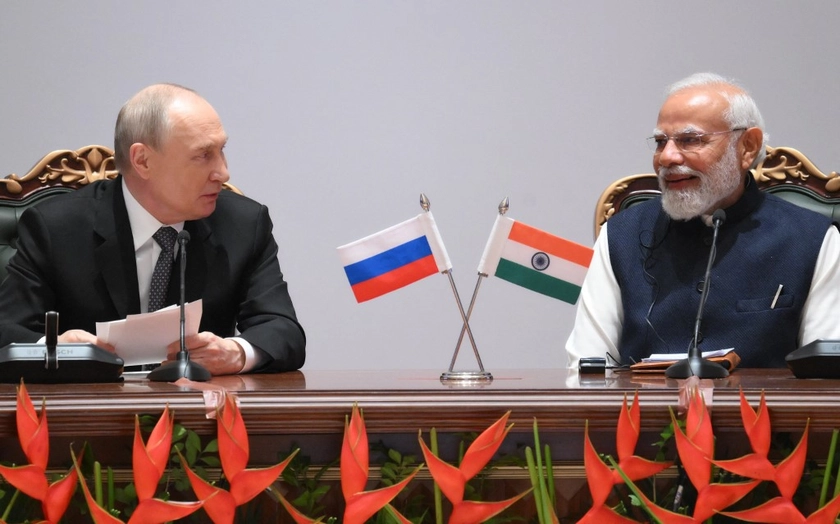
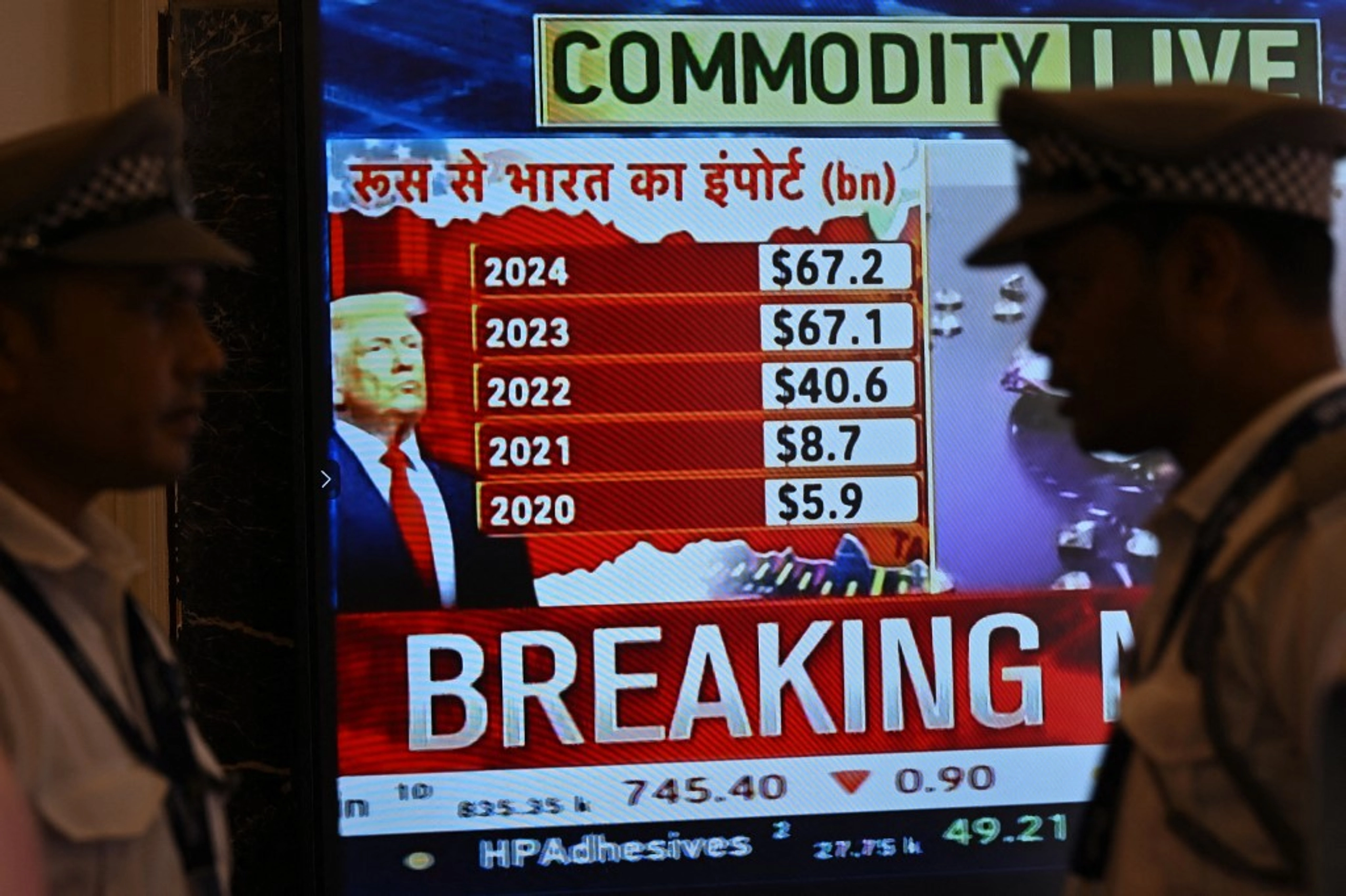
India’s continuing trade with Russia that dates back to the Soviet era, particularly in military equipment and energy, has long raised concerns among Western allies. On Aug. 4, US President Donald Trump escalated tensions by threatening to “substantially” raise tariffs on Indian goods, accusing India of profiting from reselling Russian crude.
Ukraine Says Strikes on Russia’s Shadow Fleet Are Legal
In a social media post he declared:
“India is not only buying massive amounts of Russian Oil, they are then, for much of the Oil purchased, selling it on the Open Market for big profits… They don’t care how many people in Ukraine are being killed by the Russian War Machine.”
Rising Diplomatic Tensions and the “Double Standard”
In response, India’s Ministry of External Affairs (MEA) has challenged US President Trump’s claims stating that “the very nations criticizing India are themselves indulging in trade with Russia.” Indian officials have pointed out the apparent double standard when it comes to business dealings with Moscow by highlighting strong business ties between Russia and the EU.
“The European Union in 2024 had a bilateral trade of €67.5 billion [$78.3 billion] in goods with Russia. In addition, it had trade in services estimated at €17.2 billion [$20 billion] in 2023. This is significantly more than India’s total trade with Russia that year or subsequently. European imports of LNG in 2024, in fact, reached a record 16.5 million tons, surpassing the previous record of 15.21 million tons in 2022,” India’s MEA said.
According to the Centre for Research on Energy and Clean Air (CREA), an independent body that runs its Russia Fossil Fuel Tracker, the EU imports of Russian fossil fuels in the third year of the invasion surpassed the €18.7 billion ($21.7 billion) of financial aid they sent to Ukraine in 2024.
Neither Russian pipeline gas nor its liquefied natural gas (LNG) is currently subject to the EU sanctions. According to CREA, the EU has paid Russia $105.6 billion as of April 2025 – equivalent to 75% of Russia’s entire 2024 military budget – for gas imports since the start of the full-scale invasion. As for Russian LNG, EU imports have seen a 9% year on year increase with France, Belgium, Spain and the Netherlands recording the largest increases in purchase.
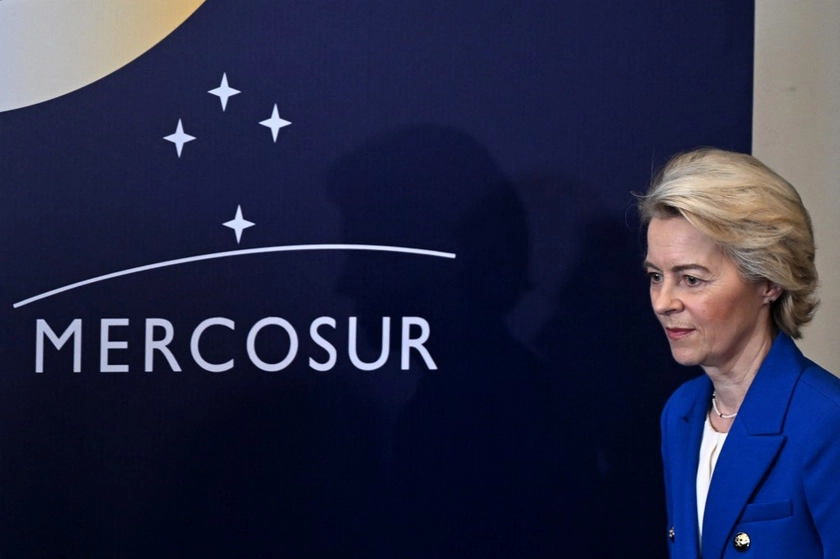
As India struggles to conclude its bi-lateral trade agreements with both the EU and the US by year’s end, the coming weeks and months will test the country’s economic resilience in the face of increasingly hostile US presidential rhetoric and the EU imposition of Russian sanctions. While New Delhi asserts its energy policy is driven by national interest, Washington sees India’s Russian oil imports as undermining global sanctions aimed at stopping Russia’s war machine.
So far, the Asian tiger has been reacting with loud defiance, as has its regional adversary China, the largest purchaser of Russia’s discounted crude.
India’s national security adviser, Ajit Doval, was set to arrive in Moscow this week for bi-lateral talks aimed at increased energy and military cooperation, including the procurement of S-400 air defense systems. Even though this trip was pre-planned, Washington could interpret it as a sign of India’s defiance in the wake of Trump’s recent remarks.
However. India seems to be in no hurry to change course, despite the increasing economic pressure exerted by the US administration and EU sanctions. How India responds to the double economic and diplomatic challenge may well define its place in the future global order.
You can also highlight the text and press Ctrl + Enter

Russia Hit by 660-Drone Overnight Barrage Targeting Moscow, Crimea and Key Military Sites