On the eve of the meeting between Trump and Putin in Alaska on Aug. 15, one might wonder what the US president’s opinion of Ukraine is. But it might be even more interesting to understand how well the US administration’s technical experts, who prepare these meetings and the information needed to make important political decisions, understand the complex situation in Ukraine.
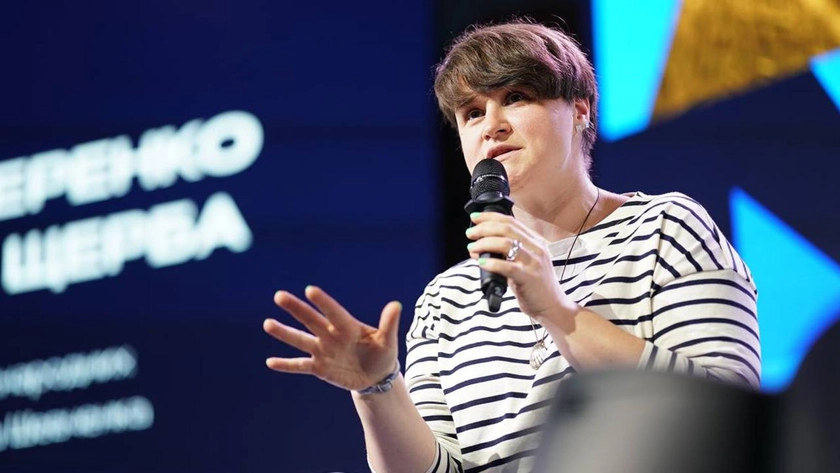
Kyiv Post spoke with Natalia Khizhnyak, language instructor for the Pentagon-related programs and formerly BBC News Ukrainian correspondent in Washington DC, where she has lived for 18 years and has consistently promoted meetings between Ukrainian and the US politicians.
JOIN US ON TELEGRAM
Follow our coverage of the war on the @Kyivpost_official.
Can the lack of knowledge about Ukraine’s recent history adversely influence US policy decisions?
Most Americans do not realize what huge role 1991 played and how many Ukrainians voted for independence. Also, most Americans are unaware that Ukrainians have favored a decentralized political system throughout history, unlike that in Russia, and that they opposed Soviet rule even during the USSR.
Nor has the Trump administration tried to learn anything about these questions either. President Trump’s special envoy to Ukraine had misstated what really happened at the beginning of the war and expressed agreement with Russia’s framing of the crisis.
Only specialists who work on Ukraine issues (at the former Institute of Peace, Atlantic Council, Freedom House, NED) are aware of the Soviet and imperial legacies. Unfortunately, the role of these institutions is fading. Many of them were closed by Elon Musk’s DOGE.
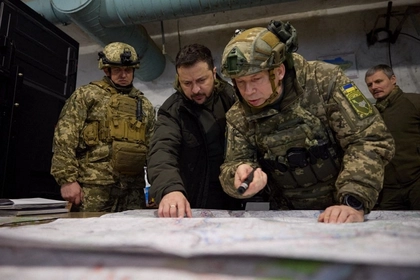
Syrsky: Russian Maps Show False Advances to Please Top Command
From Washington’s perspective, is there a sufficient depth of expertise on Ukraine’s current political landscape?
No, but it is growing. When the Russians invaded in 2014, very few Americans, even public officials, had enough understanding of the country.
This has been improving due to the efforts of NGOs, such as the US-Ukraine Foundation, think tanks such as the Atlantic Council, and the active outreach of the Ukrainian embassy here in Washington. Congress has been very supportive as well, led by Congresswoman Marcy Kaptur and the leadership of the Ukraine Caucus.
The same Ukraine supporters have greatly increased the awareness of decision-makers involved in Ukraine’s nation-building. However, many Americans complain that Ukraine is a “corrupt country,” so why should they support it? This is a big challenge, and more could be done.
Do you think there is an over-reliance on Cold War-era frameworks when interpreting Ukraine today?
I don’t think so. During the last years of the war, Ukraine, thanks to President Zelensky’s lead, has made itself very well known. Many Americans – especially among military – say how fascinated they are with Ukraine’s bravery and the fight for its independence. In many ways it’s Americans who can understand Ukraine more than Europeans, taking into account their war to become independent.
Most Americans are suspicious of Russia and its ambitions. This means that many Americans are instinctively supportive of Ukraine and blame Russia for the war. Washington houses were filled with Ukrainian flags in the beginning of the war. During the Cold War experts largely ignored Ukraine’s aspirations, with the exception of figures such as Zbigniew Brzezinski and Ukrainian studies experts.
Many Americans tend to think that the breakup of the USSR was fueled by the democratic aspirations of the Soviet peoples, including Ukraine. In the US, they tended to ignore the issue of national identity which contributed to the fall of the USSR.
Has the tone or substance of US policy discussions shifted as the war has dragged on?
President Biden’s support of Ukraine and the current administration’s belief in Deals are so strongly shocking that you can’t believe we are talking about the same country.
Decisions are framed primarily as measures of national security. Another shock was how little the Democrats’ voice is heard on Ukraine after Trump’s many contradictory statements.
A billionaire becoming a politician as a head of US state without caring about the role of democratic institutions unfortunately puts Ukraine in a vulnerable position.
To what extent are decisions framed primarily around US national security and geopolitical interests rather than Ukraine’s own priorities?
It is a combination of each of those approaches. Above all, Americans support the Ukrainian people, both the general public and the majority of the members of Congress. However, their motivations seem to be different. Many support Ukraine for the suffering they have endured. Many also support Ukraine’s efforts to build democracy.
However, there is always a strong streak of isolationism in how some American view of the world. They may sympathize with Ukraine, but do not think it is our business to get involved. A very small minority tend to believe Putin’s propaganda about the war. Many of the people in these two categories support President Trump, but they are not the majority.
In your experience, how well do US political classes grasp the linguistic and ethnic diversity of Ukraine’s different regions?
Very poorly. They do not realize that Ukraine historically is a multinational society, the fascinating facts about Kharkiv and Lviv, the Donbas history, and Odesa’s uniqueness are known only to those who pay close attention to Ukraine. Coming to Washington 15 years ago and working as an RFE/RL Ukrainian correspondent, I often needed to make small briefs for British colleagues regarding what Ukraine was about, before they went to Kyiv.
In Washington DC, Freedom House, US-Ukraine Foundation, US-Ukraine business council did their best to raise awareness of Ukraine’s story. In 2017, I began working as a Ukrainian language instructor for the Pentagon-related program, which trained military advisers, who went to the Ministry of Defense in Kyiv. That was the time to explain the vital differences between Russia and Ukraine, and for many, Ukraine was an open, unread book. They fell in love with it later.
Many Ukrainians speak the Russian and Ukrainian languages without a problem. However, because so few Americans know much about Ukraine, its history, the role of Cossacks in particular, Ukrainian traditions, some can’t see through the differences between Ukraine and Russia. Nor they are aware of the many contributions that Jewish community made to the country.
What are the most overlooked aspects of Ukraine’s political culture that Americans should understand to make better-informed policy choices?
They should understand how impervious to authoritarian rule Ukraine is (for instance, the events of the Maidan). The historic, cultural, and political differences of Ukraine and Russia. They underestimate the extent to which most Ukrainians support democracy and integration into the West, especially the younger generations.
You can also highlight the text and press Ctrl + Enter

OPINION: Cutting Off Crimea