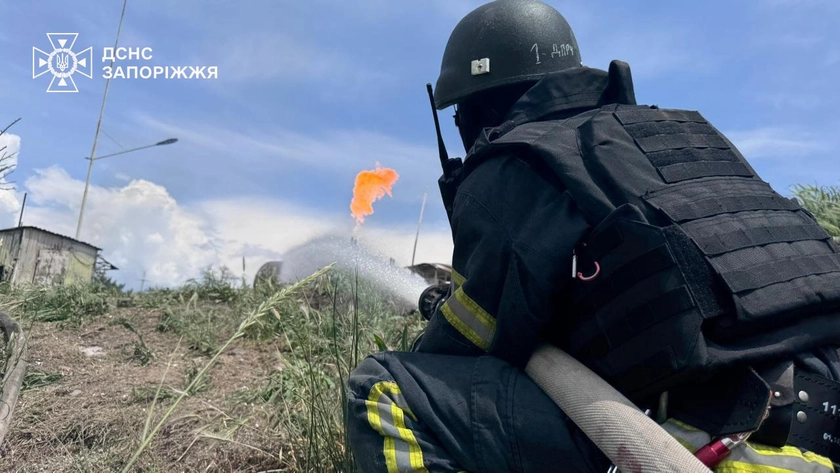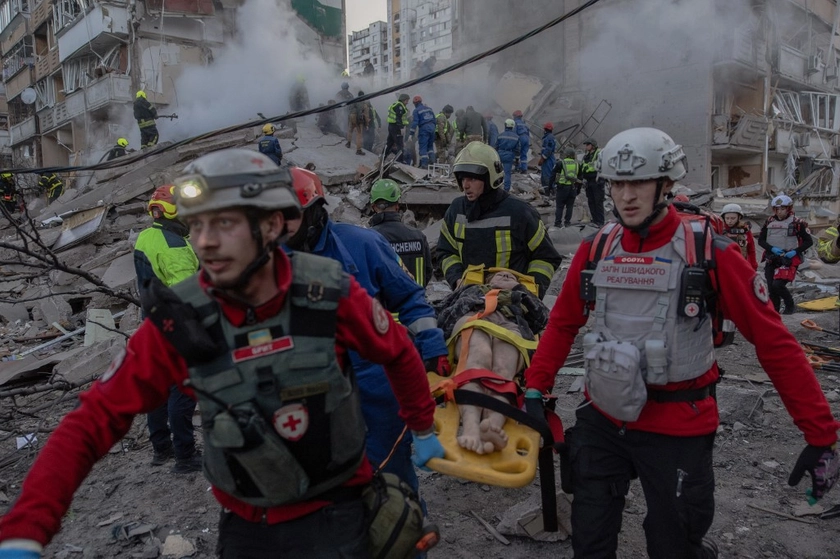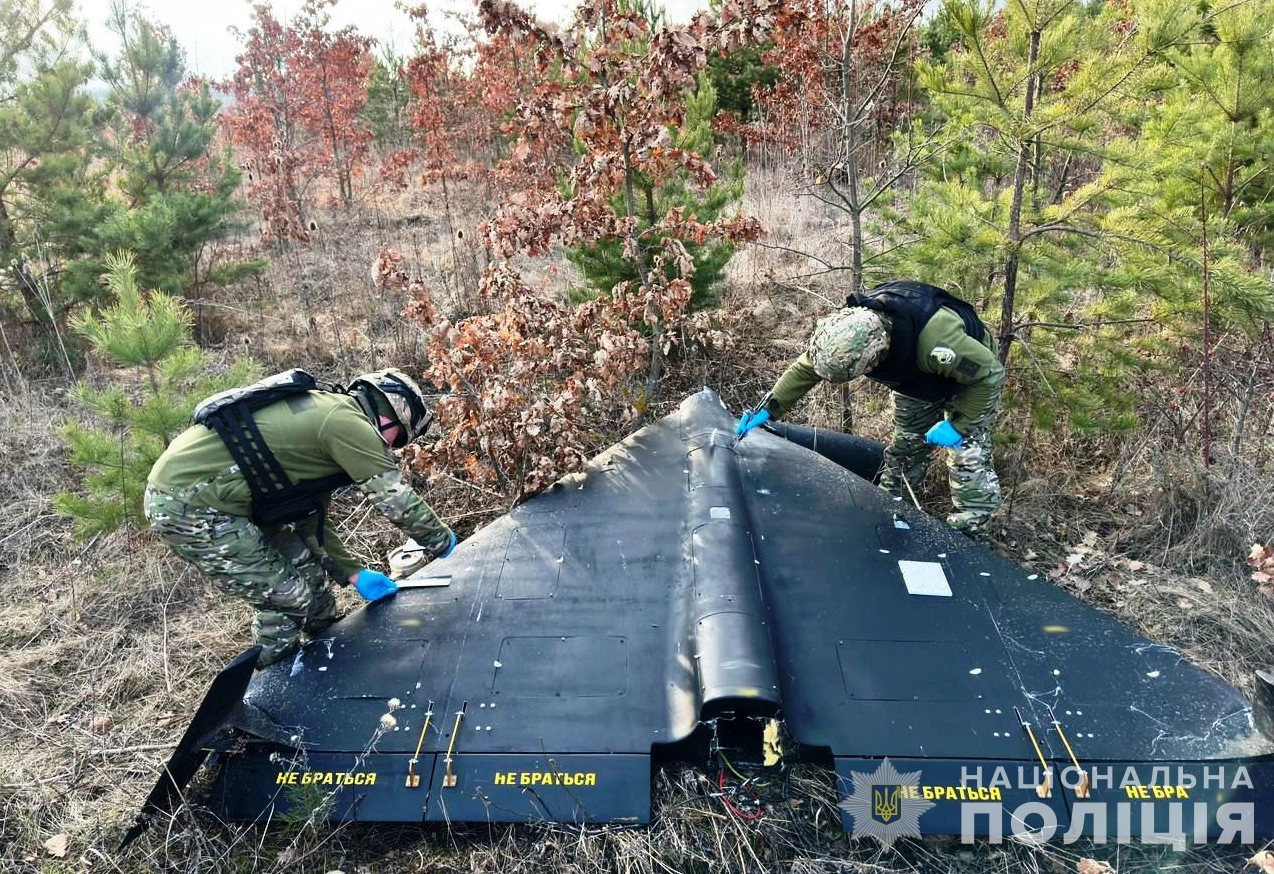
Since Russia’s full-scale invasion of Ukraine began in February 2022, Iran has emerged as a critical enabler of Moscow’s war machine, supplying weapons and technology that have fueled devastating attacks on Ukrainian cities, hospitals, schools, and civilian infrastructure.
Iran’s provision of Shahed drones and technological know-how has not only amplified Russia’s capacity to wage war but also entrenched a dangerous partnership within a broader “Axis of Evil” alliance alongside China and North Korea. This collaboration threatens global stability and demands urgent action. Harsh sanctions can cripple Iran’s malign reach and protect Ukrainian lives.
JOIN US ON TELEGRAM
Follow our coverage of the war on the @Kyivpost_official.
Iran’s involvement began early in the conflict, with the transfer of Shahed-136 drones to Russia in August 2022. These low-cost, long-range, kamikaze drones, designed to crash into targets with explosive payloads, have become a cornerstone of Russia’s strategy to terrorize Ukrainian civilians. The Shahed-136, rebranded by Russia as the Geran-2, has been used in swarm attacks to overwhelm Ukraine’s air defenses, targeting energy grids, command centers, and civilian infrastructure. By June 2025, Russia had launched over 5,300 Shahed-type drones at Ukraine in a single month – a scale of destruction made possible only by Iran’s contributions.
Iran’s actions not only harm Ukraine but also threaten global security by empowering authoritarian regimes.
These drones, costing as little as $20,000-$50,000 per unit, allow Russia to inflict maximum damage while depleting Ukraine’s air defense systems. Beyond direct exports, Iran has facilitated Russia’s domestic production of these drones. In 2022, Tehran provided blueprints, technical expertise, and components to establish a drone manufacturing facility at the Alabuga Special Economic Zone in Russia’s Tatarstan region.
Lavrov Demands Russian Language Rights as Core Condition for Peace
This technology transfer has allowed Russia to reduce reliance on Iranian imports, ensuring a steady supply of drones to sustain its relentless assaults. However, the cooperation on drone tech between the Russians and Iranians remains very close. Ukrainian intelligence has reported that Russian soldiers were even trained by Iranian Revolutionary Guards and Hezbollah operatives in Syria to operate these drones until very recently. Drone debris found in Ukraine in the summer of 2024 indicates that Iran is still providing Russia with new advanced components for its drones, using the war in Ukraine as a laboratory for its new drone tech and as one of the main ways of proving its loyalty to Russia in the sphere of military cooperation.
20 years of terror
This military cooperation is formalized through a 20-year strategic partnership agreement signed in December 2023, which has deepened the symbiotic relationship between Tehran and Moscow.
In exchange for drones and missiles, Iran has secured Russian advanced weaponry, including attack helicopters and radar systems, and potentially Su-35 fighter jets and S-400 air defense systems in the future. Russia is also sharing nuclear and space technology with Iran, raising alarms about Tehran’s nuclear ambitions.
The partnership serves both nations’ interests: Russia gains critical munitions for Ukraine, while Iran leverages chaos in the Middle East, through proxies like Hamas and Hezbollah, to drain US and Western weapons stocks and divert resources from Ukraine.
The significance of Iran’s role was underscored during Israeli Foreign Minister Gideon Sa’ar’s visit to Kyiv in June 2025. Sa’ar condemned Iran’s military support for Russia, emphasizing that Tehran’s drone and missile transfers are “directly contributing to Russia’s war crimes” in Ukraine.
He called for stronger international sanctions to disrupt this supply chain, noting that Iran’s actions not only harm Ukraine but also threaten global security by empowering authoritarian regimes.
The new axis of evil
This challenge is embodied in what has been termed the new “Axis of Evil,” a phrase originally coined by President George W. Bush in his 2002 State of the Union address to describe Iran, Iraq, and North Korea as state sponsors of terrorism and proliferation. Since Russia’s invasion of Ukraine, prominent US politicians have revived and expanded this term to include China, Russia, Iran, and North Korea. During the debate surrounding the Ukraine supplemental bill in October 2023, Senator Mitch McConnell went from interview to interview to stress the threat posed by “The New Axis of Evil.”
The axis operates through mutual support. China, while avoiding direct weapons transfers, supplies Russia with dual-use technologies, such as microchips, industrial machinery and commercial equipment, critical for military production.
Iran’s oil exports to China, generating over $50 billion annually, fund its military activities, including its support for Russia.
If unchecked, Iran and Russia could escalate their cooperation.
North Korea has provided Russia with nine million artillery rounds and up to 15,000 troops, while receiving Russian missile technology in return. Additionally, North Korea has historically collaborated with Iran on ballistic missile development and tunnel construction for nuclear facilities, further tightening their ties.
If unchecked, Iran and Russia could escalate their cooperation, potentially integrating Iranian missile guidance systems into Russian weaponry or co-developing advanced drones and anti-ship ballistic missiles. Iran may also seek Russian assistance to rebuild its missile stockpiles, depleted by Israeli strikes in June 2025, enabling Tehran to potentially launch large-scale exports to Russia of missiles and suicide drones.
To counter this, the West must impose crippling sanctions on Iran.
Bringing out the big guns
The European Union has already taken steps, sanctioning seven individuals and seven entities, including three Iranian airlines, for missile and drone transfers to Russia in October 2024.
But the main weapon hasn’t been used yet. The E3 countries – Germany, France and the UK – are party to the 2015 JCPOA agreement about Iran’s nuclear program and can trigger UN sanctions against Iran
The so-called “Snapback Mechanism” of the JCPOA enables France and the UK to veto any attempt of the security council to stop the UN sanctions from being imposed on Iran again. Effectively, it means that France and the UK can decide on:
- An arms embargo (no sale or supply of weapons to or from Iran)
- A ban on ballistic missile activities
- Asset freezes for certain Iranian individuals, companies, and government entities
- Travel bans for designated persons
- Restrictions on sensitive nuclear-related trade and technology
Most importantly, the sanctions would hit Iran’s oil industry in the same way they did in 2012-15, when Iran’s oil exports dropped by over 50%, causing the Rial to lose two-thirds of its value and inflation to soar above 40%.
However, the Snapback Mechanism expires on Oct. 18 this year; the 10th anniversary of the JCPOA’s adoption. France and England have just weeks to decide whether to finally punish Iran for aiding the Russian invasion of Ukraine and to cripple the capabilities of one of the 4 members of the New Axis of Evil described by Senator Mitch McConnell.
The sanctions would not merely be punitive but also a vital tool to save Ukrainian lives and weaken Russia’s war machine. By targeting Iran’s drone and missile industries, financial systems, and oil exports, the West can choke the resources fueling Russia’s aggression.
Failure to act decisively risks emboldening the New Axis of Evil, allowing Iran, Russia, China, and North Korea to further destabilize the global order. The time to act is now, both to protect Ukraine and safeguard international security.
Oleksiy Honcharenko is a Ukrainian parliamentarian from the opposition European Solidarity party.
The views expressed in this opinion article are the author’s and not necessarily those of Kyiv Post.
You can also highlight the text and press Ctrl + Enter