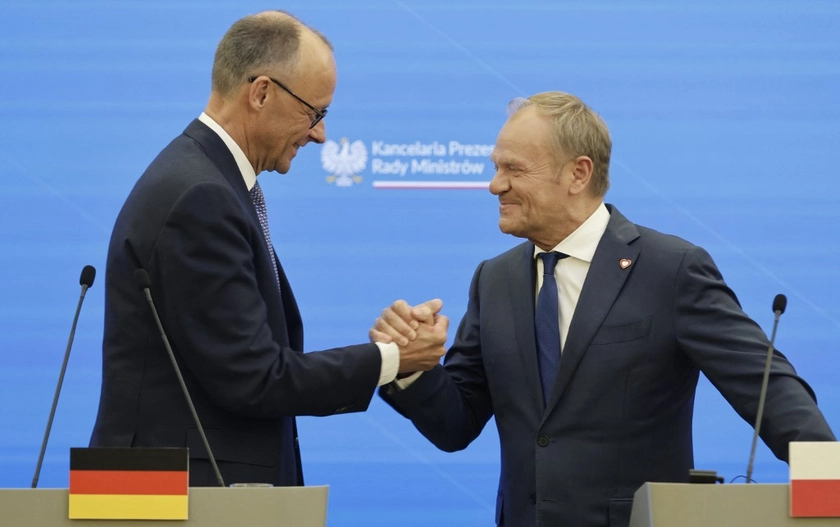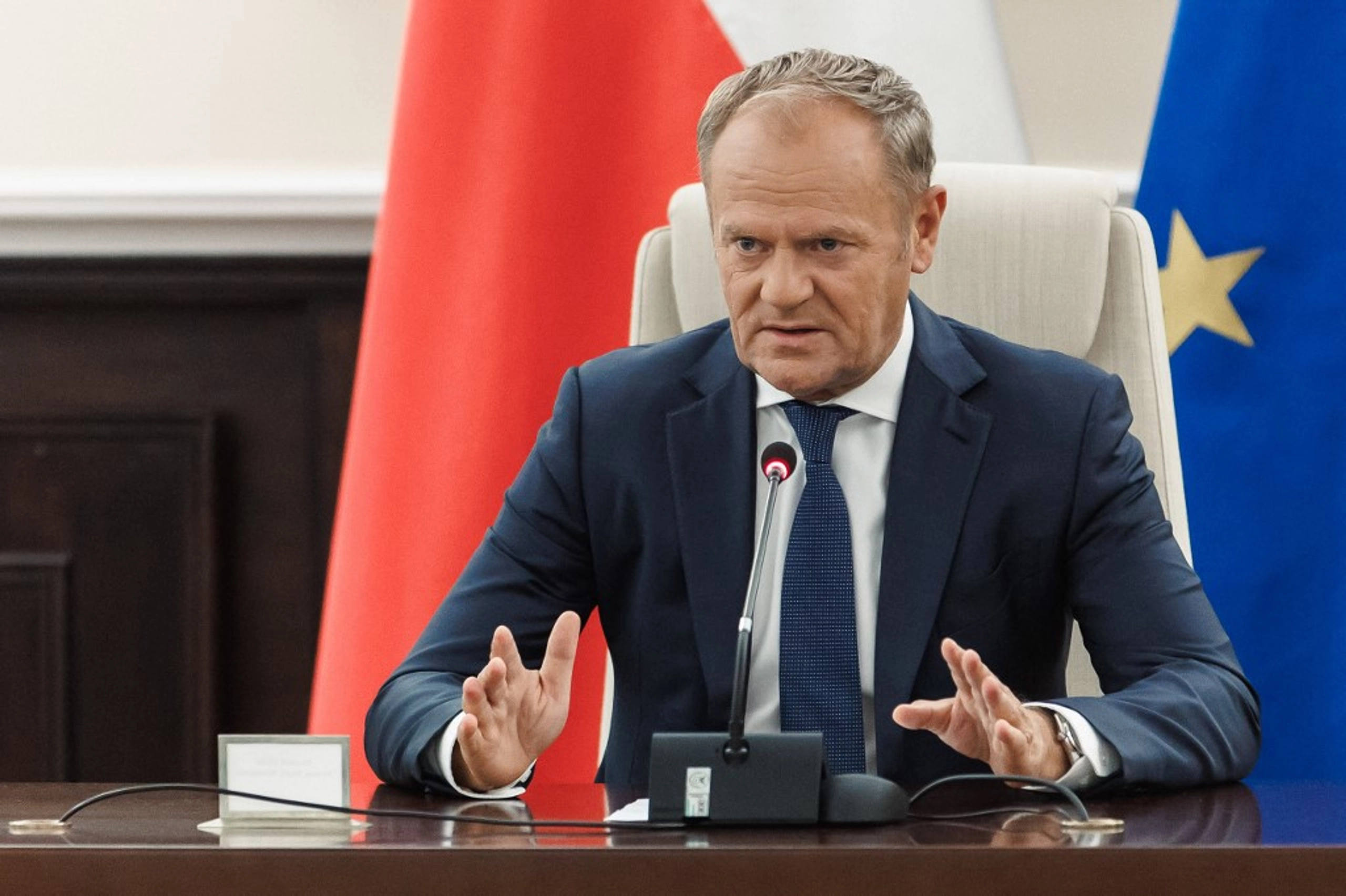
Polish Prime Minister Donald Tusk said there were 19 drone intrusions into Polish airspace overnight, with many of the UAVs entering from Belarus.
He noted that four drones were likely shot down, the last one at 6:45 a.m. (0445 GMT), according to a Reuters report.
JOIN US ON TELEGRAM
Follow our coverage of the war on the @Kyivpost_official.
Tusk confirmed that Poland has formally requested the activation of Article 4 of the NATO Treaty, which calls for consultations among allies regarding security issues.
“The fact that these drones, which posed a security threat, were shot down changes the political situation. Therefore, allied consultations took the form of a formal request to activate Article 4 of the NATO Treaty,” he said.
The prime minister added that Poland requires more than symbolic backing from partners: “Poland needs more than expressions of solidarity and more support from allies.”
At the same time, he clarified that Poland is not at war, but is facing its most dangerous situation since 1945: “There is no reason to claim that Poland is in a state of war, but it’s in a situation closest to armed conflict since World War Two.”
Article 4 stipulates that NATO members will consult whenever they believe their territory, political independence, or security is under threat. Such consultations at the North Atlantic Council could lead to a joint decision or coordinated action.
Meanwhile, Russia dismissed Poland’s claims. Andrey Ordash, Russia’s chargé d’affaires in Poland, told RIA state news agency that Warsaw has presented no proof: “We see the accusations as groundless. No evidence that these drones are of Russian origin has been presented.”

Dnipropetrovsk Tightens Evacuations, Nikopol Defenses
Ordash confirmed he had been summoned by Poland’s Foreign Ministry.
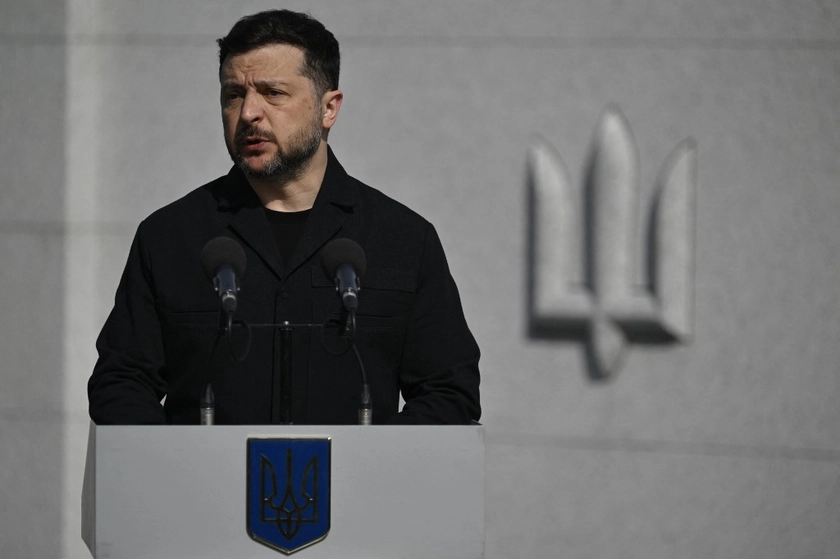
President Volodymyr Zelensky wrote in his latest Telegram post that he had received a new report from the commander of the Ukrainian Air Force.
“We are clarifying all available data, analyzing the details of this Russian strike. Even at night, the Ukrainian military reported to the Polish side through appropriate channels information about the movement of Russian drones,” he said.
According to Zelensky, at least two Russian drones that entered Polish territory during the night had flown through Belarusian airspace.
“In total, at least several dozen Russian drones moved along the border of Ukraine and Belarus and in the western regions of Ukraine, approaching targets on the territory of Ukraine and, apparently, Poland,” he added.
The president revealed that the number of Russian drones that crossed into Poland and penetrated deeper into its territory could be higher than initially reported. Updated data suggests that around two dozen drones may have entered Polish airspace that night.
“Ukraine is ready to expand our cooperation with partners to reliably protect the sky, so that not only information or intelligence is exchanged, but also real joint actions in the sky are carried out to guarantee the safety of neighbors. Russia must feel that Europeans know how to defend themselves,” Zelensky said.
Meanwhile, Poland’s Rzeczpospolita reported that 23 drones had crossed into Polish airspace. The outlet stressed that, given the scale of the violation, it is difficult to consider the incident accidental and that it was most likely a deliberate Russian operation aimed at testing Poland’s response.
The outlet also criticized Poland’s Ministry of National Defense, writing that for the past year and a half it has shown “striking indifference” toward developing counter-drone systems.
Rzeczpospolita recalled that modernization of the SkyCTRL system had been halted by a decision of the Technical Modernization Council. Despite months of research and costs running into hundreds of millions of zlotys, the system was effectively abandoned.
The publication added that although the military presented a comprehensive plan to create an anti-drone system a year and a half ago, no progress has been made due to lack of funding.
It estimated that it would take Poland at least several more months to strengthen its capacity to detect small drones.
Belarus said its military shot down drones that strayed into its airspace during Russia’s latest strikes on Ukraine. Chief of the general staff Pavel Muraveiko claimed the UAVs had “lost their track” due to jamming and interceptions by both Moscow and Kyiv, and added that Belarus had warned Poland of objects heading its way.
Poland confirmed scrambling jets with NATO allies and using weapons against “hostile objects.” Four airports, including Rzeszów and Warsaw, were temporarily closed, with several regions put at risk.
A Ukrainian-linked monitoring channel reported more than 10 drones entered Poland and did not return – an unprecedented event. Tusk called it a “large-scale provocation” by Russia.
Local media said one drone struck a house near the Belarus border, damaging a roof but causing no injuries.
The incident coincided with one of Russia’s heaviest barrages in months, targeting 15 Ukrainian regions, including Lviv, 80 km from Poland. Kyiv warned Putin was “testing the West” and urged allies to act, saying Russian drones could “fly even further into Europe.”
NATO has previously logged stray drones or missiles, but this was the first time a member state reported shooting them down.
You can also highlight the text and press Ctrl + Enter

Putin’s Worst Nightmare
Zelensky Reveals Intercepted Intel From Putin’s Desk