The UN’s Office of the High Commissioner for Human Rights (OHCHR) released its latest report on the treatment of Ukrainian civilians by Russian occupation forces. The 27-page document covers the period from the February 2022 full-scale invasion until August 2025.
The accompanying press release said there is not only evidence of the large-scale illegal deprivation of liberty of both Ukrainian civilians and military personnel but there is evidence of “widespread and systematic” ill-treatment of detainees that includes torture and sexual violence that is in direct contravention of international humanitarian law (IHL).
JOIN US ON TELEGRAM
Follow our coverage of the war on the @Kyivpost_official.
The report itself adds that the OHCHR has no accurate details of the number of Ukrainian citizens held in the occupied territories or transferred to Russia. “It is not known how many Ukrainian civilians the Russian Federation has detained in the context of its full-scale armed attack against Ukraine,” states the report.
In August, Ukraine’s Office of the Prosecutor General said it had identified 15,250 civilians who were and continue to be detained since February 2022.
Legality of civilian detention
The Fourth Geneva Convention says that occupying forces have an obligation to respect – unless absolutely prevented – the laws in force in the occupied territories. However, Moscow claims the annexed occupied areas of Crimea, and the Donetsk, Luhansk, Kherson, and Zaporizhzhia regions are part of its federation and, therefore, its citizens are subject to the Kremlin’s legal and judicial system – in violation of international law.
EU: No More Protection for Ukrainian Men?
The application of Russian criminal law on persons in the occupied territories – largely Ukrainian citizens – can be prosecuted for “treason,” “betrayal of the Russian Federation,” and “discrediting of the Russian armed forces.”
It adds that while IHL allows for the internment of civilians considered to be a threat to security this includes an obligation to identify the grounds of detention, a review system, procedures for fair and safe treatment and access to humanitarian agencies such as the Red Cross – Russia has established no such system according to the report.
The report said that many Ukrainian’s held by Russia were “outside the effective protection of the law during their detention” in the face of Moscow’s complete disregard of the safeguards required under IHL and a total lack of accountability among those charged with detaining civilians.
The report says that detainees are often held in and moved between multiple locations making documenting the treatment of civilian detainees particularly challenging especially as the OHCHR has been prevented from visiting places of detention despite repeated requests to Russian authorities.
Evidence of released detainees
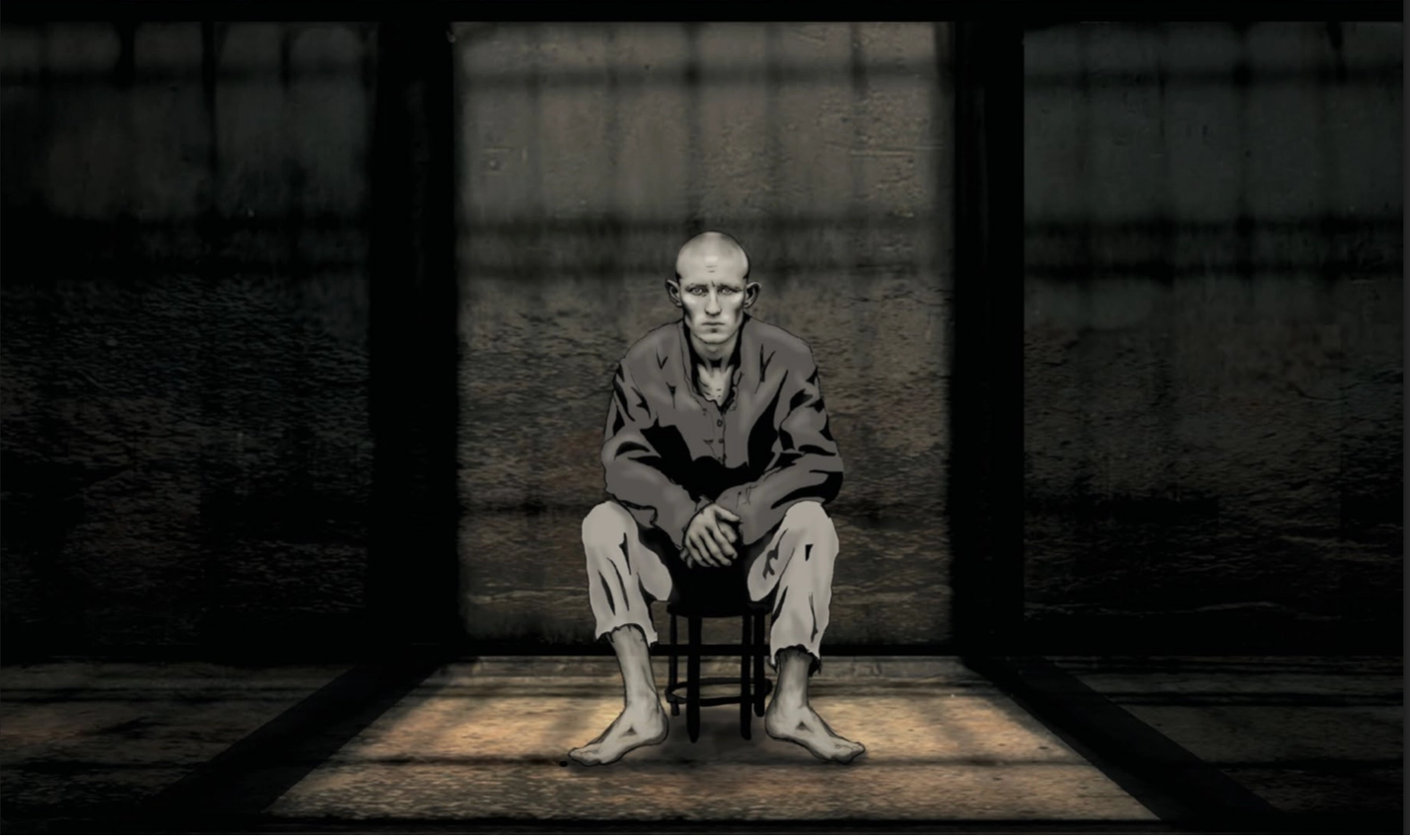
The OHCHR said it had documented details of 508 cases of civilian detainees covering all age groups, from adolescents to pensioners which included 15 disabled persons. Of these it had only been possible since June 2023 to interview 216 former detainees detainees (152 men, 63 women, and one boy), the vast majority of whom “gave consistent and detailed accounts of having been subjected to torture or ill-treatment during their captivity.”
This included “Severe beatings with a variety of instruments, such as batons and sticks, electric shocks to various body parts [and] mock executions,” with many saying death threats against them and their relatives were frequently made.
AFP cited the head of the OHCHR, Volker Türk, as saying that “People have been arbitrarily picked off the streets in occupied territory, charged under shifting legal bases and held for days, weeks, months and even years.”
He added that it was “Essential that the human rights of civilian detainees, who have been severely impacted by this terrible conflict, are prioritized in any peace talks.”
The report also documented isolated “instances of torture and ill-treatment” of civilians held in pre-trial detention by Ukrainian authorities since 2022 – the majority of the 2,250 or so civilians were Ukrainian nationals with very few Russians – charged with offences related to national security, treason and espionage.
Others faced charges in liberated areas of collaboration with Russia’s occupying forces, many who simply carried on their normal work including emergency services, construction, humanitarian relief and garbage removal.
In mitigation the OHCHR said Ukrainian authorities, unlike those in Russia, had instigated procedural safeguards including access to humanitarian organizations and acceptable detention conditions.
However, the OHCHR said Ukraine’s EU accession process gave an opportunity to carry out a comprehensive review of its prison systems and to strengthen safeguards in line with the requirements of IHL.
You can also highlight the text and press Ctrl + Enter