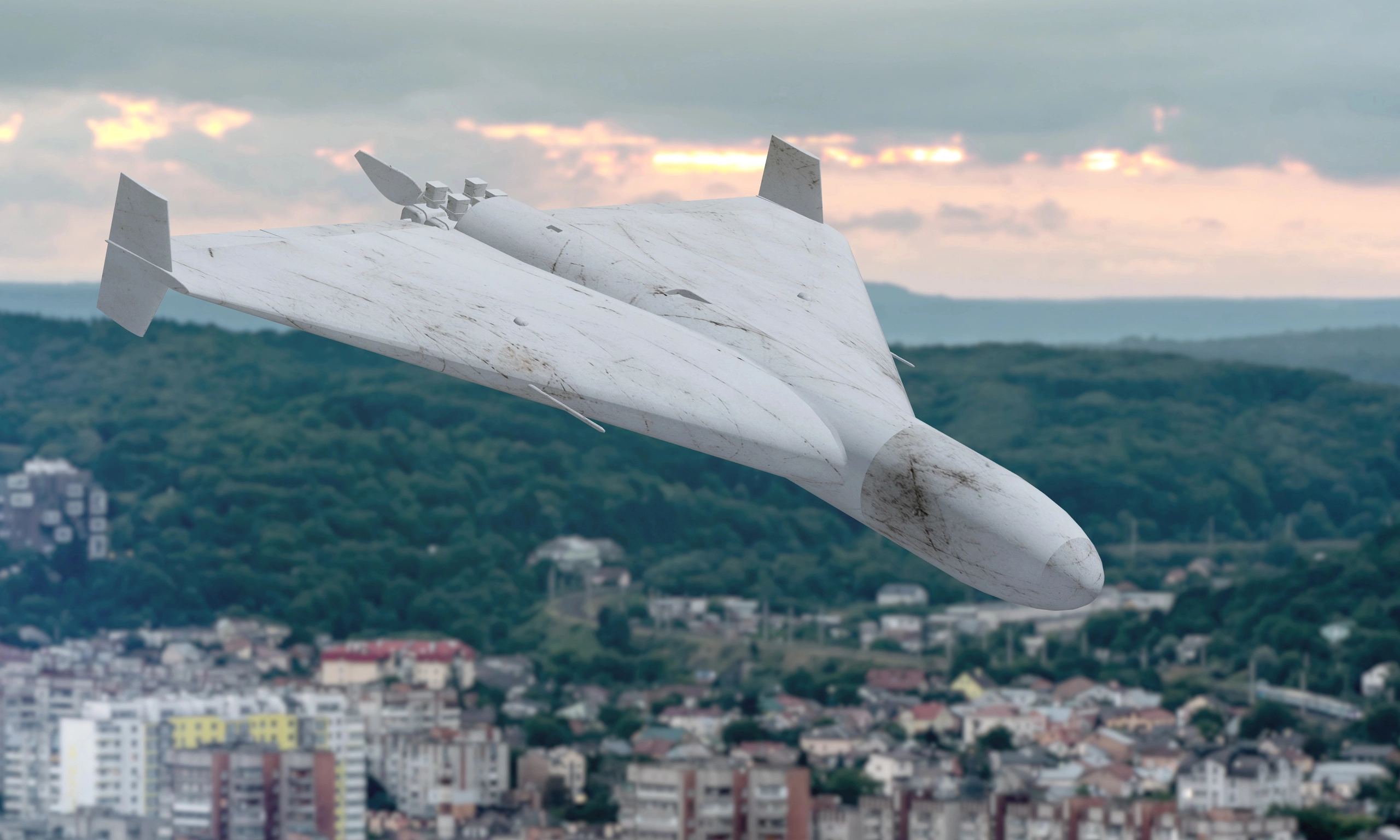
Russia could potentially reach nearly all of Europe with its latest Shahed (Geran-2) drones that now have a range of around 2,500 kilometers (1,600 miles).
“Following Russia’s drone attack on Poland with so-called ‘foam Gerbera’ drones and the appearance of unidentified UAVs over airports in the capitals of Norway and Denmark, a simple question arises: how far can Russia’s long-range drones fly?” Defense Express writes in its report.
JOIN US ON TELEGRAM
Follow our coverage of the war on the @Kyivpost_official.
According to Ukraine’s Main Intelligence Directorate (HUR), the Shahed / Geran-2 UAV has an estimated range of 1,800-2,500 kilometers (1,100- 1,600 miles).
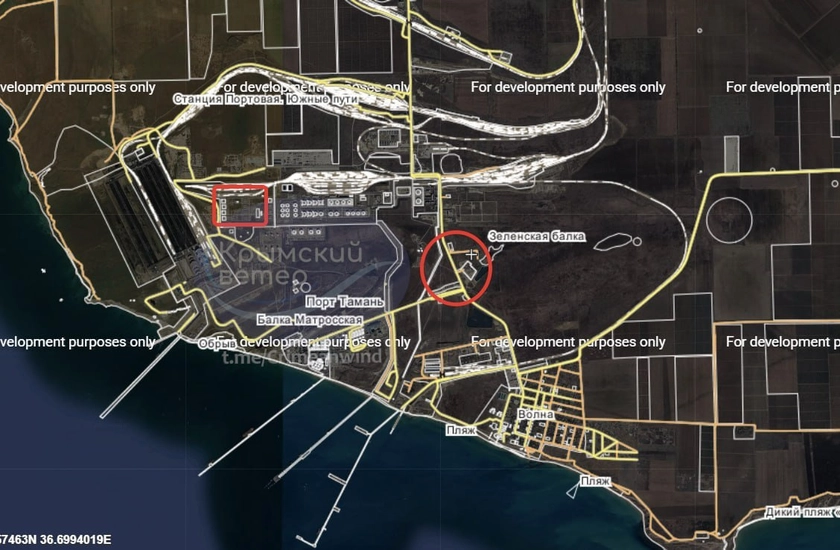
The publication notes that existing Russian launch sites in Bryansk and occupied Crimea could already be used to target areas within several NATO countries. St. Petersburg is also highlighted as a highly advantageous launch area in terms of logistics and reach into Europe.
At the lower range limit, Russia could strike Scandinavia, the Netherlands, much of Germany, and southern Italy, while at the upper end almost all of Europe would be in range – including the UK, France, Italy, and even Madrid - only Portugal would be out of reach.
Defense Express emphasizes that new launch pads can be created within months. Possible locations include Belarus’ Osovtsy air base or Russia’s Kaliningrad region, both of which would significantly extend Moscow’s reach.

Russia Disguises Fuel Trucks as Milk Tankers to Reach Crimea
However, the report cautions that these figures represent maximum ranges, with Russia often using complex flight paths to evade Ukrainian air defenses, thereby foreshortening its overall range.
The analysis also points to the recent use of “foam Gerbera” drones in Poland, which exposed gaps in NATO’s eastern air defenses. Once drones break through the initial defensive line, they may move with relative freedom – and shooting them down is far costlier than their production value.
Earlier, Bild reported that NATO spent at least €1.2 million to down three Russian drones over Poland on Sept. 10, using two Dutch F-35s and a German Patriot system.
The F-35s reportedly used AIM-9 Sidewinder missiles costing over €400,000 each – to down drones each costing no more than a few thousand euros.
A senior NATO officer admitted that deploying F-35s against drones was “impractical” in the long run.
Flights in Denmark and Norway were disrupted overnight after unidentified drones were spotted near major airports, forcing temporary airspace closures.
Copenhagen Airport suspended take-offs and landings around 8:36 p.m. local time after 2-3 large drones were detected nearby, diverting at least 35 flights to alternate airports, including Malmö and Gothenburg. Police confirmed the airspace remained closed until late evening as investigations continued.
In Norway, Oslo’s Gardermoen Airport also shut down for several hours after drones were reported, causing multiple diversions, including a Paris-Oslo flight rerouted to Copenhagen.
Oslo police later detained two people in connection with unauthorized drone flights in the city center. Authorities in both countries are investigating possible links between the incidents.
You can also highlight the text and press Ctrl + Enter

Putin’s Worst Nightmare