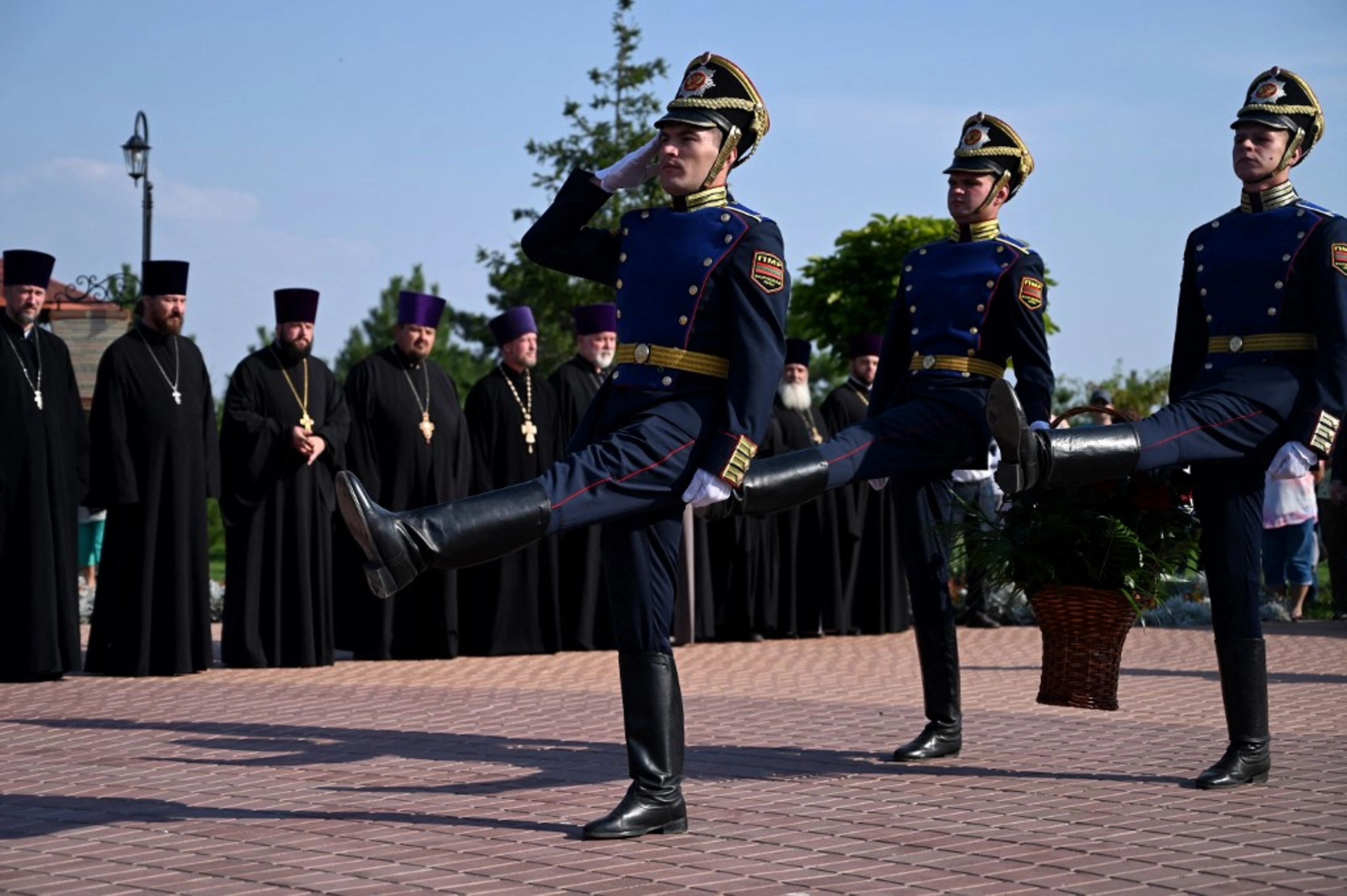
Transnistria, Moldova’s pro-Russian renegade region, has been a Moscow-backed “separatist” sliver of a sector since the breakup of the Soviet Union, in 1991-1992. There are four things you might not have known about the rogue region and the Russian troops that have been there for decades, presented here as in-FAQs, infrequently asked questions.
Why are Russian troops in Moldova at all?
In 1991-92, Moldova fought an unsuccessful war to prevent a Russian-speaking region called Transnistria from seceding from Moldovan control, largely because Russian armed forces stationed there at the time intervened on the separatists’ side. A ceasefire agreement left a Russian peacekeeper force in place, but in November 1999, Russian President Boris Yeltsin signed an agreement in Istanbul committing Russia to withdraw all its troops by Dec. 31, 2002.
JOIN US ON TELEGRAM
Follow our coverage of the war on the @Kyivpost_official.
Representatives from Moldova, Transnistria, Ukraine and the OSCE also signed the agreement; the EU and the US were present in Istanbul as observers.
Since then Russia has withdrawn only a small number of obsolete military vehicles from the enclave. The Kremlin’s position on the missed deadline is that its troops must stay in Moldovan Transdnistria, despite the Istanbul agreement, for “regional stability.”
Transnistria’s some 470,000 residents are critically dependent on Russia for money financing about 70 percent of Transnistria’s “government expenditures.” Russian energy subsidies delivering natural gas have allowed Transnistria’s inefficient Soviet-era steel and manufacturing industries to retain a market, especially in the EU. When Ukraine cut off Russian gas deliveries to Transnistria in 2024, Moscow replaced it with humanitarian aid directly to Transnistria residents.
Belarus Opposition Warns Lukashenko May Be Preparing for War
What Russian troops are on the ground in the Moldovan territory of Transnistria?
The Russian Federation, against Moldova’s wishes and international treaties, maintains a force of about 1,500 men in Moldovan territory. Those troops overall are probably by themselves as combat-capable as the larger but less well-trained Moldovan armed force, but would almost certainly collapse if forced to fight NATO troops or the Ukrainian military.
The heart of the Russian troop presence in Moldova is a 500-800-man security contingent stationed in and around the city Colbasna, on the Moldova-Ukraine border, in territory controlled by Transnistria. Located south of Colbasna, less than three kilometers from Ukraine’s border, is a Soviet-era ammunition depot containing an estimate 20,000 tons of Soviet- and Tsarist-era munitions. The Russian peacekeepers secure the ammunition depot and, by their presence, deter Moldova (or after 2022 Ukraine) from capturing it and its contents.
A smaller Russian “peacekeeper” contingent of 400 personnel is headquartered in the Transnistria capital Tiraspol and tasked with the mission of patrolling the ceasefire line between Moldovan and Transnistrian forces, and generally helping keep the peace. These troops also operate checkpoints and observation posts. Another 300-400 Russian soldiers and officers serve in jobs in the headquarters, logistics, communications and operating electronic “elephant cage” style eavesdropping equipment aimed at NATO.
Rank and file in these Russian units are Moldovan nationals born and raised in Transnistria, and paid $1,500-$2,000 a month – a wealthy individual’s salary by regional standards. Some have dual nationality with Russia, but do not live there. Officers are Russian military cadre serving in command positions, usually for six months. Following Russia’s February 2022 invasion of Ukraine, Moldova closed its territory to the rotation of Russian cadres. Russian officers rotating to or from Transnistria service since then have had to mask their presence by traveling to Moldova as tourists, or illicitly.
In mid-Sept. 2025 Transnistria formally complained to the Organization of Security and Cooperation in Europe (OSCE), the international agency helping monitor the 1992 ceasefire, that Moldovan airport authorities are “interfering” with “Russian citizens” peacefully traveling to and from Transnistria as tourists.
According to Ukrainian military intelligence, Russian military equipment and supplies – aside from what might be carried in an officer’s briefcase past Moldova’s customs officers – no longer reach Russian units in Transnistria.
Armed with light weapons like wheeled armored personnel carriers and machine guns, and lacking heavy weapons like tanks and artillery, the Russian “peacekeepers” in Moldova are capable of suppressing local unrest but by equipment unprepared for real battle. For practical purposes these troops carry out day-to-day jobs like guarding, patrolling, or logistics support and don’t train for combat.
Dorin Recean, Moldova’s Prime Minister and senior Advisor to the President on Defense and National Security, in June 2025 called the entire Russian force in Transnistria, even with local allies, “almost meaningless.”
What ‘Transnistrian’ forces are there to help the Russians?
Sponsored and armed by the Russian Federation, the Armed Forces of the Pridnestrovian Moldavian Republic, usually abbreviated to PMR, is on paper a force of 5-6,000 men and women recruited in Transnistria, a Moldovan province that – also with Russian assistance – broke away from Moldovan control in 1992.
According to PMR statements, the force numbers about 6,000 soldiers, most conscripts serving two or three years of obligatory military service. Personal freedoms as a draftee are minimal, but volunteers from the PMR are the main source of rank and file recruits of Russian Federation troops in the region. Pay in the PMR is regular and equivalent of about €500 ($585) a month, a living wage in Transnistria.
Equipment in the PMR dates back to the 1990s. The most powerful heavy weapons are about two dozen Ukraine-manufactured T-34 tanks, around 80 BTR armored personnel carriers and roughly 20 rocket launchers on trucks. By size and strength, this force is roughly the same size, on paper, as the Moldovan army across the unofficial Transnistrian “border.”
Training is limited, unrealistic, and poorly financed; it’s most visibly limited to quarterly “maneuvers” during which working vehicles are taken out of garages and driven close to the ceasefire line with Moldovan forces. Aside from aircraft operated by a few enthusiasts and paid for out of their pocket, the PMR does not operate even hobby-sized drones.
Junior soldier enthusiasm for a military career is low. Kyiv Post since Russia’s February 2022 invasion of Ukraine has, via military information platforms, found solid evidence of thousands of mercenaries from Nepal, Cuba, India, Syria and Central Asia agreeing to join the Russian military and fight, smaller contingents from China and Somalia and individuals from Serbia, Kenya and even the United States – but none from Moldova nor its renegade province of Transnistria.
A key plank of Transnistrian state messaging is that a pro-Russian ethnic Slav population rose up against a Moldovan central government intent on stamping out Russian influence and language, and veterans of the 1991-2 fighting in Transnistria enjoy tax, housing and other social support benefits as state-designated heroes of that conflict.
Transnistrian media reports routinely on the “civic responsibility” of former draftees to return to the ranks as reservists reinforcing the regular military. The reserve pool is probably between 15,000 and 75,000 troops, depending on how old a reservist the Transnistrian state might consider mobilizing. Aside from a once-a-year muster of potential reservists Transnistria does not practice mobilizing reserves.
What’s the Ukrainian view of the Russian military ‘threat’ in Transnistria?
At the outset of Russia’s full-scale invasion of Ukraine in February 2022, Kyiv officials led by President Volodymyr Zelensky accused the Kremlin of possibly mobilizing forces in Transnistria to invade Ukraine from a new direction, the West.
Armed Forces of Ukraine (AFU) success in stopping Kremlin attempts to impose a quick regime change in Ukraine and Russian forces bogging down across the front, along with increasing Ukrainian army combat effectiveness and confidence, had pushed worries like that to the background by early 2023. Since then Ukraine has typically maintained no more than two and usually only a single line combat brigade, backed with a similar number of territorial brigades, in its western Odesa region, opposite Transnistrian territory.
In a 2023 article reviewing the military balance between Transistrian/Russian forces and AFU fighting capacity, Ukrainian political scientist Yelizaveta Pavlenko in an analysis published by Zaborona magazine wrote:
“Ukraine is the country most interested in the demilitarization of the Transnistria after Moldova itself… Armed escalation by the Russian Federation, if the Putin government dares to do so, would be a suicidal decision… Such a confrontation would not take more than 3–4 days: the Transnistrian combatants have had no combat experience for 30 years.”
In a June 2025 interview with the analytical news platform Oboz.Ua, Oleh Simoroz, a Ukrainian military analyst and combat veteran, said in part:
“The destruction of the Russian military units on the territory of Moldova would not be a difficult task for the AFU… We have enough brigades to completely destroy this group (of Russian forces)… If the Russians escalate in Transnistria, it will end badly for them. But in general, even the idea of (the Kremlin) reinforcing the (Russian) contingent in Transnistria is ridiculous.”
In a Monday interview with the news channel Telegraf.ua, Ukrainian political scientist Taras Zahaordny predicted peace not war in Transnistria:
“You should understand that the leadership Transnistria is not going anywhere at all and they do not want to fight anyone… The local bonzes [“fat cats”] who run Transnistria, they are doing well… They are allowed to go to Europe, mainly, the export of Transnistria goes to Europe – people don’t really know this.”
You can also highlight the text and press Ctrl + Enter

EXPLAINED: More and Better Western Assistance to Ukraine Announced This Week
EXPLAINED: What’s the Deal With Russia’s Frozen Assets in Europe? All You Need to Know