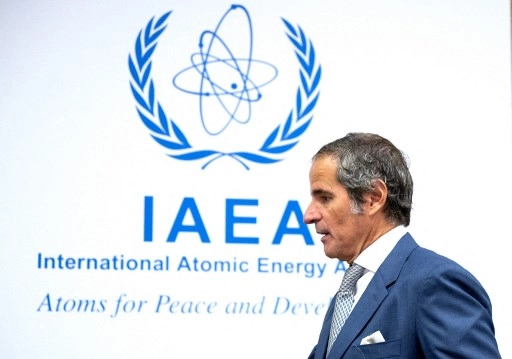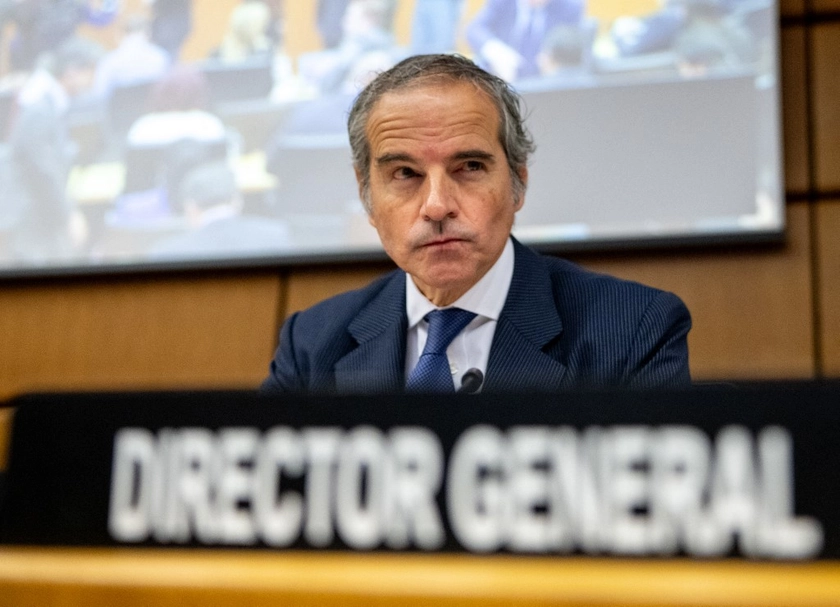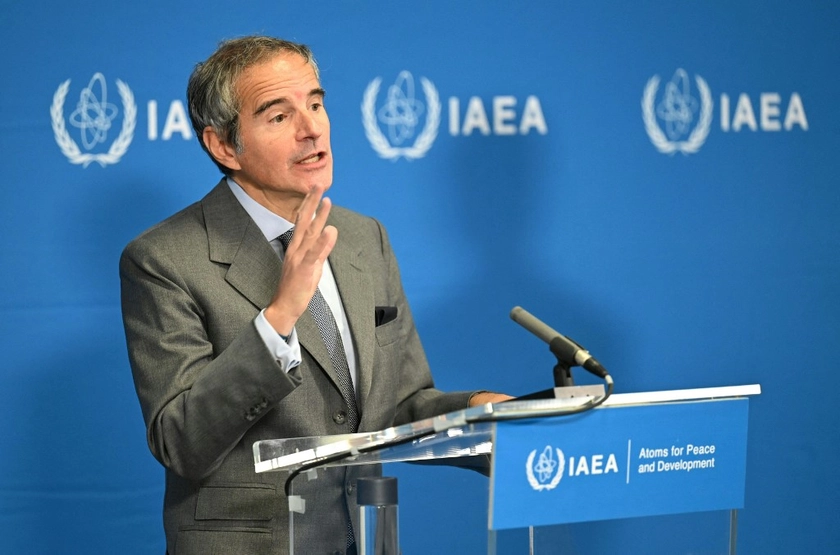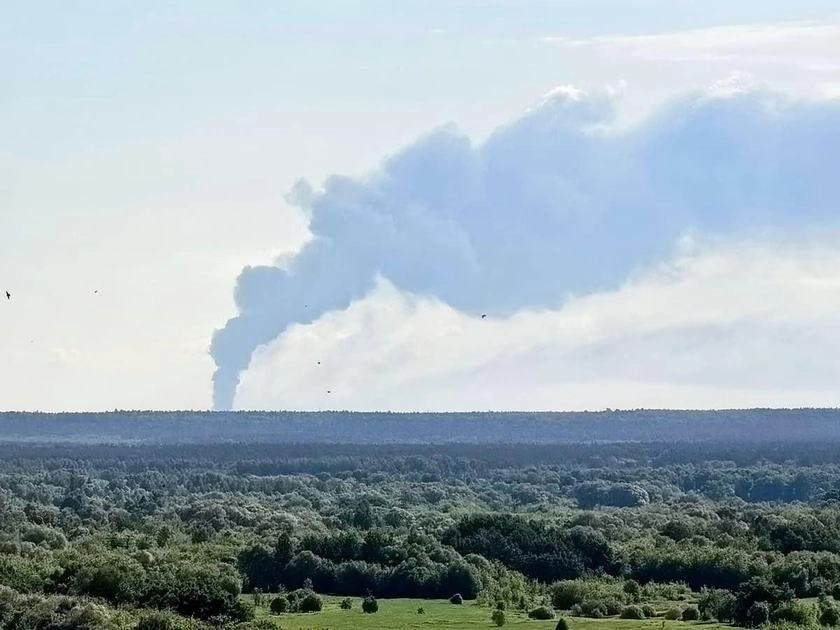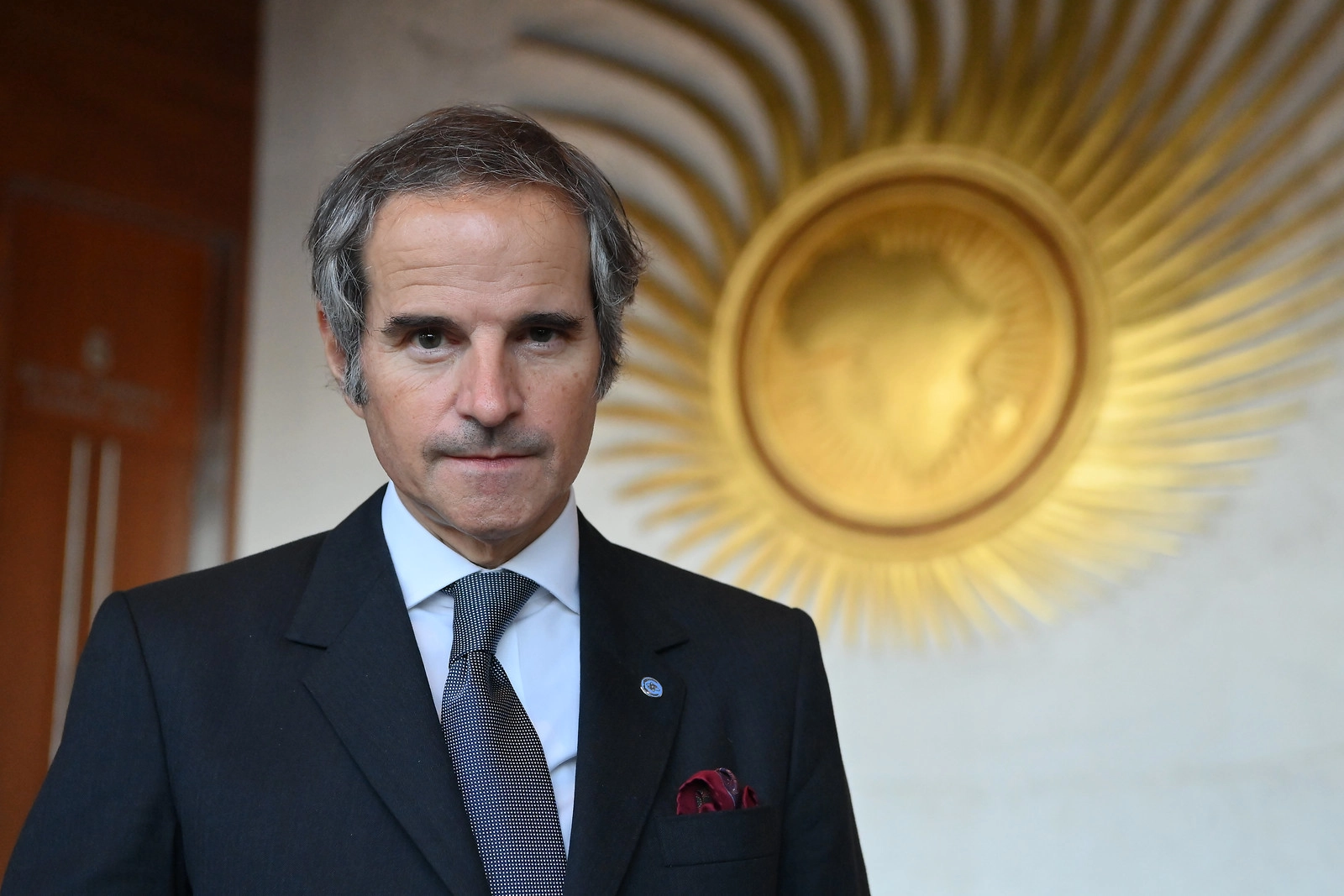
The head of the UN’s nuclear watchdog has cast a harsh light on the paralyzing deadlock over Europe’s largest nuclear power plant, declaring on Friday that only ‘political will’ from both Moscow and Kyiv is preventing the restoration of a vital power link to the Russian-held facility.
International Atomic Energy Agency (IAEA) Director General Rafael Grossi confirmed in a statement he is engaged in intense discussions with senior Russian and Ukrainian officials, presenting “detailed proposals” to fix the off-site electricity lines that have left the Zaporizhzhia Nuclear Power Plant (ZNPP) relying on emergency backup power for a record-breaking ten days.
JOIN US ON TELEGRAM
Follow our coverage of the war on the @Kyivpost_official.
“Both sides say they stand ready to conduct the necessary repairs on their respective sides of the front line,” Grossi noted. “But for this to happen, the security situation on the ground must improve so that the technicians can carry out their vital work without endangering their lives.”
He was unequivocal, asserting, “It is a question of political will, not whether it is technically possible, which it is.”
Week and a half on diesel
The ZNPP, captured by Russian forces early in the 2022 invasion, has suffered ten complete losses of off-site power (LOOP) since the war began. However, the current outage – which began on Sept. 23 – is by far the longest.
The loss of external power has been compounded by ongoing military activity. The plant lost one 330 kilovolt (kV) power line in May due to damage on the Ukrainian side. Critically, the sole remaining 750 kV line was disconnected on Sept. 23, with the damage occurring on the Russian-controlled side of the frontline.
Kasparov: Ukrainian Flag in Sevastopol Is the Shock Russia Needs to Accept Empire Is Dead
While the plant’s six reactors have been shut down since 2022, they still require a constant, reliable supply of electricity to cool the nuclear fuel and prevent a catastrophic meltdown and radiation release.
Safety net at risk
Grossi acknowledged that the plant’s emergency diesel generators (EDGs) are “functioning without problems, and there is also plenty of fuel in reserve.”
The IAEA’s on-site team confirmed eight EDGs are currently operating, generating sufficient power for nuclear safety needs, with an additional twelve units on standby. Diesel fuel deliveries are being made daily, with reserves said to be sufficient for at least ten days of operation.
Yet, the Director General stressed the unprecedented danger: “If the emergency diesel generators (EDGs) stopped functioning for any reason, it could lead to a complete blackout and possibly cause an accident with the fuel melting and a potential radiation release into the environment, if power could not be restored in time.”
Chornobyl power loss exposes wider threat
The escalating crisis is not confined to Zaporizhzhia. Grossi also detailed a frightening power loss this week at the decommissioned Chornobyl site, the location of the 1986 disaster.
On Wednesday, military activity damaged a power line near the town of Slavutych, causing a 16-hour off-site power cut to the Chornobyl site. For three hours, the New Safe Confinement (NSC)– the massive arch protecting the destroyed reactor – experienced a partial blackout and had no back-up EDG electricity.
The IAEA team at Chornobyl confirmed that radiation monitoring and ventilation systems within the NSC remained operational via an interconnection to other facilities, and radiation levels never exceeded normal limits. However, the incident serves as a stark reminder of the fragile state of nuclear safety across the entire country.
President Zelensky went on to directly criticize the international response, stating, “Russia is intentionally creating a risk of radiological incidents, taking advantage, unfortunately, of the weak stance of the IAEA and Director General Rafael Grossi, as well as the dispersed global attention.”
He also referenced the situation at the Russian-occupied Zaporizhzhia plant, which had been off the grid for more than a week, as a continuous global danger.
In a small piece of good news amidst the escalating risks, Grossi announced that the South Ukraine Nuclear Power Plant received two mobile portal monitors, funded by Norway, to enhance nuclear security measures at the facility.
You can also highlight the text and press Ctrl + Enter

Russia Hit by 660-Drone Overnight Barrage Targeting Moscow, Crimea and Key Military Sites