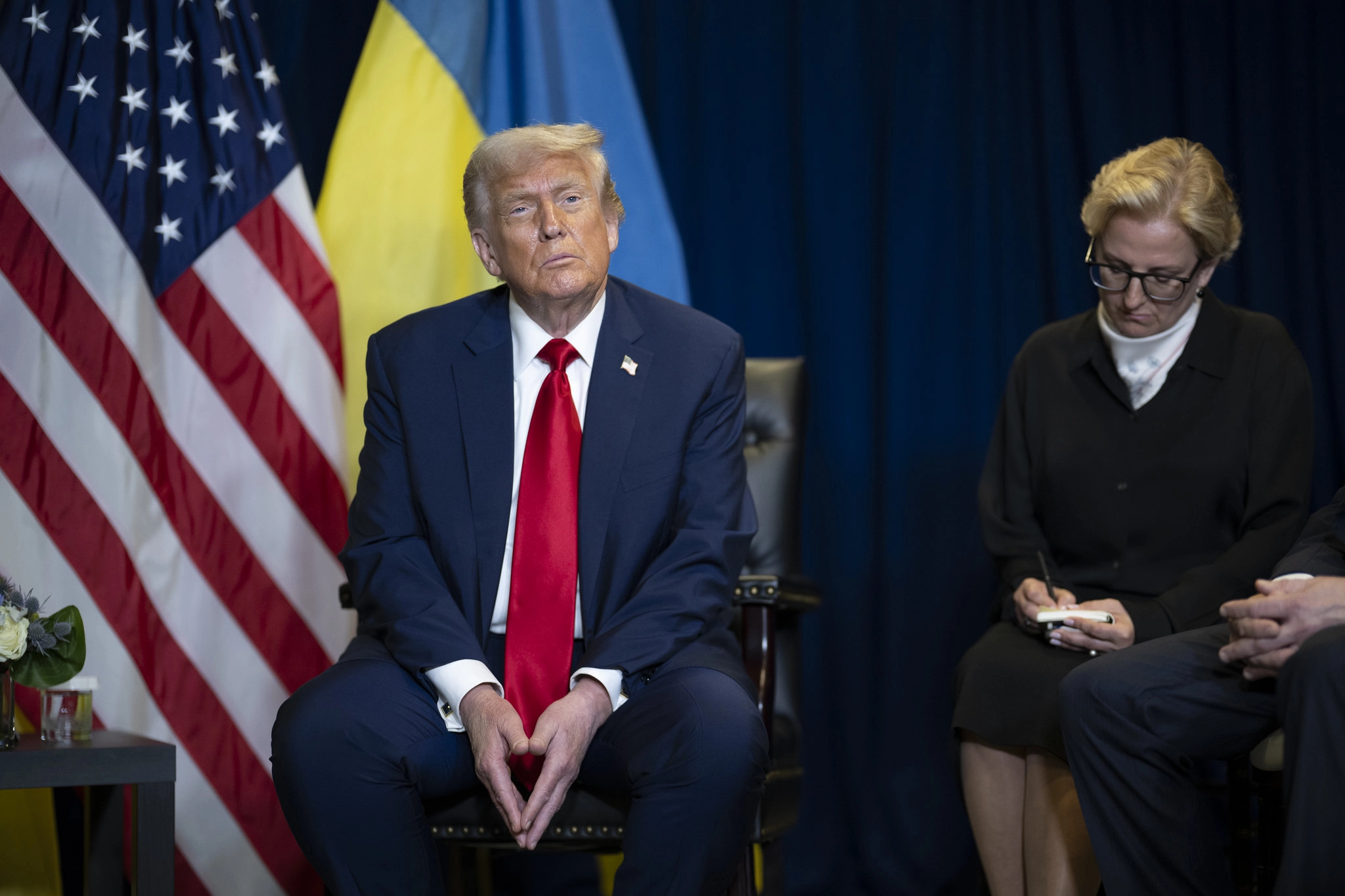
WASHINGTON, DC – US President Donald Trump suggested on Monday that he has “sort of made a decision” on Kyiv’s urgent request for long-range Tomahawk cruise missiles, a move that analysts agree could fundamentally reshape the war.
His remarks came after massive Russian strikes crippled Ukraine’s energy grid over the weekend, adding urgency to discussions about Western military aid.
JOIN US ON TELEGRAM
Follow our coverage of the war on the @Kyivpost_official.
Trump, whose administration has been considering the transfer of the 1,600-mile-range missiles, couched his decision in caution about the conflict’s mounting human cost and the potential for greater involvement.
“I sort of made a decision, pretty much, if you consider... I think I want to find out what they’re doing with them. You know, where are they sending them? I guess I’d have to ask that question,” he told reporters, before adding that the war “should never have started. Would have never started. Such bad judgment was used there, I think on both sides, by the way.”
He stressed that he is not looking for further conflict: “I would ask some questions obviously. I’m not looking to see escalation.”
A senior US administration official, speaking to Kyiv Post on Monday evening, confirmed the US was on the verge of approving long-range cruise missile sales to Kyiv, but said the deal was hedged with demands for clarity on striking deep into Russian territory.
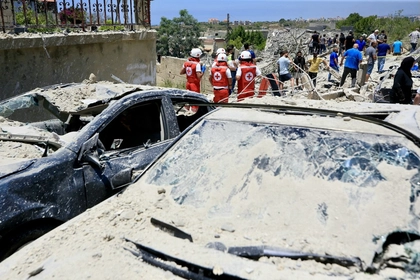
Iran States Lebanon Conflict to Top Agenda in Talks with US in Switzerland
Putin’s escalation warning and the ISW assessment
Despite Trump’s apparent hesitancy, the Institute for the Study of War (ISW), a Washington-based think-tank assessed that Russian President Vladimir Putin is actively attempting to head off the transfer of the Tomahawks.
The think tank noted that Putin “continues attempts to deter the US from sending Tomahawk missiles to Ukraine by linking improvements in the US-Russian bilateral relationship to concessions from the US on the war” in Ukraine.
The Kremlin’s objective, the ISW stated, is clear: It is trying to prevent the US from providing the missiles “in order to retain the sanctuary that Russia enjoys in its rear.”
Putin has warned that a potential Tomahawk transfer would damage US-Russian relations and lead to the “destruction” of the “emerging positive trend” between the two administrations – a rhetorical tactic the ISW suggests he previously used to contest the delivery of Abrams tanks and F-16s.
Russia’s energy war and the call to “close the sky”
The debate over the missiles comes as Russia launched one of its largest aerial assaults of the war, a deliberate campaign targeting critical civilian infrastructure.
Over the weekend, Moscow deployed approximately 500 drones and 50 missiles against cities far from the front, with officials in the Lviv region confirming the attacks killed a family of four, including a 15-year-old girl.
The scale of the bombardment prompted dire warnings. The CEO of the state-owned gas company Naftogaz condemned the strikes as a calculated “act of Russian malice aimed solely at disrupting the heating season and depriving Ukrainians of warmth in winter.”
In response, leading Ukrainian advocates, including Yuriy Boyechko, CEO of the US-based humanitarian organization Hope for Ukraine, called for a drastic measure: “NATO must act to close the sky over western Ukraine, because Ukraine cannot continue to repel such large-scale attacks week after week on its own”
Speaking to Kyiv Post on Monday, Boyechko argued that closing the sky over the non-frontline areas would “project strength and close the sky over western Ukraine so that the Ukrainian military can redeploy its air defense systems from the west to the front lines.”
Game changer: Payload and distance
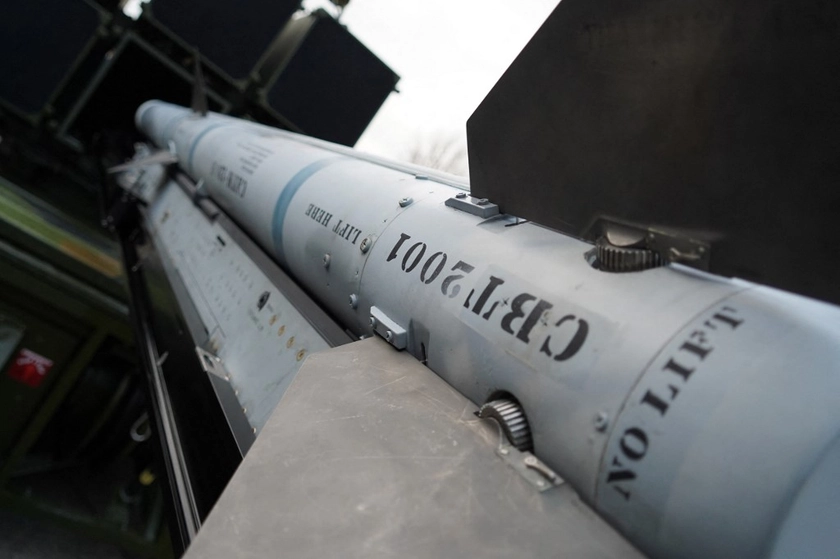
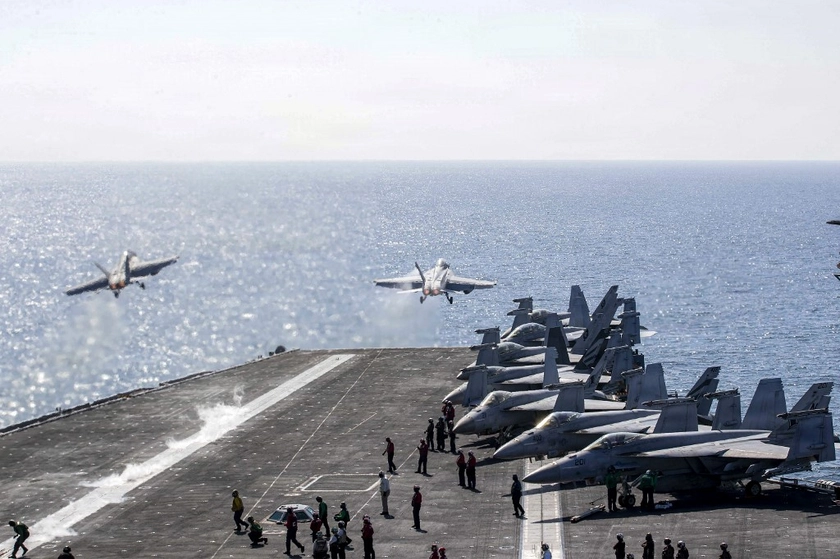
For Ukraine, the Tomahawk represents a crucial capability in a weapon that only the US Navy currently possesses in its arsenal.
George Barros, a Russia analyst with the ISW, told Kyiv Post that Ukraine has an “operational requirement of striking Russia’s intermediate and deep rear.”
He stressed that while existing domestic long-range vehicles are available, they frequently “lack the payload capacity” necessary for meaningful strikes.
The Tomahawk cruise missile would directly address this gap by providing Kyiv a critical counter to Russia’s massive drone campaigns, which currently involve packages of over 500 Shahed drones every few days.
“If Ukraine had Tomahawk missiles, Ukraine could destroy the factory in Tatarstan that has the capacity to produce 2,700 of them monthly,” he noted on Monday.
ISW’s mapping analysis shows the military implications of such a strike capability are vast: There are “at least 1,945 Russian military objects within range” of the extended-range Tomahawk variant and at least “1,655 within range” of the standard version.
Ultimately, Barros concluded, the missiles would degrade Russian logistics on the front lines and near rear.
US Navy re-arming its own deep-strike arsenal
The prospect of transferring Tomahawks to Ukraine also comes as the US Navy doubles down on its own Tomahawk programs.
On Monday, the Navy published a justification and approval to procure 837 Maritime Strike Tomahawk (MST) seekers from Raytheon through fiscal year 2028.
This procurement is part of a larger, long-term modernization push for the Block V Tomahawk family, which includes developing a passive seeker and modifying the missiles to be launched from both US Army and US Marine Corps ground-based launchers.
The MST, which recently achieved Early Operational Capability (EOC) with the Navy, is designed for anti-ship missions and will form a significant part of the fleet’s deep-strike capability in the 2030s.
The simultaneous push to both arm Ukraine and re-arm the US fleet with the advanced missiles underscores the strategic importance of long-range strike capabilities in modern conflict, placing the Tomahawk at the intersection of US force modernization and its foreign policy toward the war in Europe.
You can also highlight the text and press Ctrl + Enter