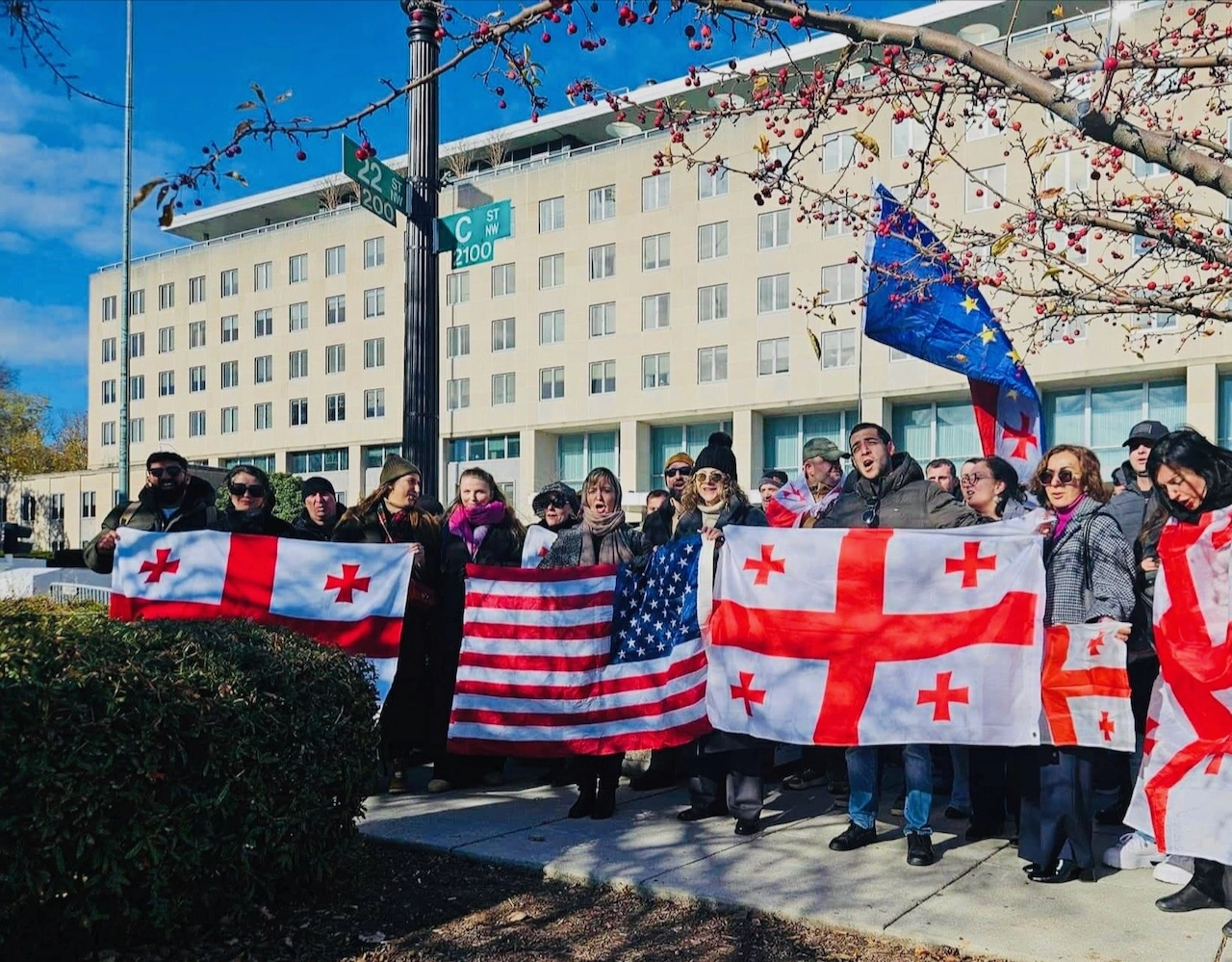
WASHINGTON DC – Georgia’s political landscape has been plunged into crisis after the ruling Georgian Dream (GD) party used last weekend’s municipal elections as a springboard for a severe crackdown on opposition figures and civil society, drawing comparisons to authoritarian regimes and prompting deep concern in Washington.
The process, according to experts, was less an election and more a calculated move to seize total power, with the repression that followed entirely predictable.
JOIN US ON TELEGRAM
Follow our coverage of the war on the @Kyivpost_official.
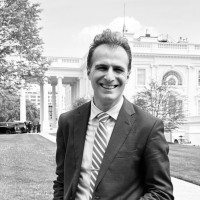
“I don’t think the elections were very surprising to anyone, because it was a foregone conclusion,” said Laura Thornton, senior director for Global Democracy Programs at the McCain Institute.
In an interview with Kyiv Post, Thornton noted that the GD’s ultimate goal was clear: “GD wanted to get over this final hurdle of sweeping all offices.”
With this achieved, the pro-Russian party now commands “all levers of power at all levels of government,” she argued.
Convenient pretext
The subsequent arrests, including leading activists, as well as prominent figures like opera singer Paata Burchuladze, have been portrayed by the GD as a response to “group violence.”
Thornton, however, argues that the violence was a marginal element used as a pretext for a wider political purge.
While admitting that isolated acts – such as attempts to storm government buildings – are illegal, she emphasized the peaceful nature of the broader movement. “The vast majority of the Georgian protesters are peaceful protesters,” she stressed.

Russia Accuses Sweden of Failing to Protect Embassy After Fake Drone Drops
Nonetheless, the GD’s strategy, she observed, is to “lump everyone together” to discredit the entire opposition.
Pivot to Moscow
The domestic political maneuvering is inextricably linked to a dramatic shift in Georgia’s foreign policy, with the GD increasingly abandoning its Euro-Atlantic orientation in favor of a pivot towards Russia.
“I don’t think Georgia is Belarus yet,” Thornton cautioned, maintaining that “I still see there’s some space in Georgia.” But the direction of travel is unmistakable.
The recent elections marked “another notch on the wall of going away from the EU,” particularly after European monitors from the OSCE declined to participate, realizing the vote was a “farce.”
Thornton believes the trend is a huge victory for the Kremlin. “It’s delightful to Russia,” she said. “They have to do very little now in Georgia, because the Georgian Dream government is doing it for them,” she explained.
She pointed to the GD’s rhetoric, which includes “accusing the EU ambassador of being responsible for a coup”, as proof that the party has embraced an anti-Western stance.
“Russia itself has already almost explicitly said the Georgian Dream is, you know, their ‘little puppy dog’,” she noted, concluding that Tbilisi is “getting further and further away from the West and closer and closer to Russia.”
US indifference and Congressional alarm
The lack of a robust, unified response from the US government has been a major concern for pro-democracy advocates.
“To me, it’s... sort of shameful that the US is basically indifferent to the situation in Georgia,” Thornton stated, describing Washington’s presence as “just, you know, not present.”
She specifically called for pressure points that have not yet been utilized, highlighting the significance of the MEGOBARI ACT, a bipartisan bill targeting GD that has been stalled in the Senate awaiting a final vote.
“We really, really wanted to see stricter legislation coming out of the US,” including “financial sanctions” and “more robust action against not just Georgian Dream, but also their enablers,” Thornton said.
This sentiment was partly echoed by the Senate, where a bipartisan statement from the Foreign Relations Committee on Thursday highlighted serious alarm.
Senators Jim Risch (R-ID) and Jeanne Shaheen (D-NN) jointly condemned the GD’s actions, stating: “We are increasingly concerned by the deteriorating political situation in Georgia and the troubling actions taken by the Georgian government following recent local elections.”
They directly challenged the GD’s targeting of critics, including those who worked with Washington. “Prime Minister [Iraki] Kobakhidze’s decision to outlaw opposition parties and jail their leaders is egregious, undemocratic,” they said, calling the intimidation of civil society leaders “an attempt to silence dissent.”
Addressing the GD’s baseless allegations of foreign interference, the Senators issued a sharp rebuke: “Let us be clear: it is Georgian Dream, not the US, that is undermining Georgia’s democracy and their ability to determine their future.”
Ultimately, however, Thornton maintains a pessimistic outlook on US priorities.
“I just don’t see this, this administration, prioritizing Georgian democracy,” she concluded, leaving the Georgian people to ask a question that remains unanswered: “What’s the strategy? What is US Georgia policy?”
You can also highlight the text and press Ctrl + Enter
EU Investigates von der Leyen Over Zelensky Chat