Russia’s attempt to seize Ukrainian territory and dictate the policies of a sovereign nation represents a threat not only to Ukraine but to global security, a senior NATO official said on Tuesday, speaking to Kyiv Post on the sidelines of the defense ministers’ meeting in Brussels.
“What Russia is doing – trying to conquer territory, trying to dictate to a sovereign country how to live, which policies to have – is unacceptable. It violates the UN Charter, it violates the rule of law, it violates all the fundamental principles,” the official said, before adding, “Russia’s war against Ukraine, first and foremost, is a risk to all of us.”
JOIN US ON TELEGRAM
Follow our coverage of the war on the @Kyivpost_official.
The official noted that the instability caused by Moscow’s aggression is affects the whole international community, which is why continued support for Ukraine remains critical.
“We’re all sharing in this instability together, unfortunately, and also continuing to help Ukraine to withstand it,” they said.
The official underscored that Russia’s aggression is also directed at the digital domain, with increasing cyber threats targeting societies worldwide.
“We see cyberattacks coming from everywhere – from state actors, non-state actors, criminal organizations – for political purposes, organized crime, and ransomware,” they explained.
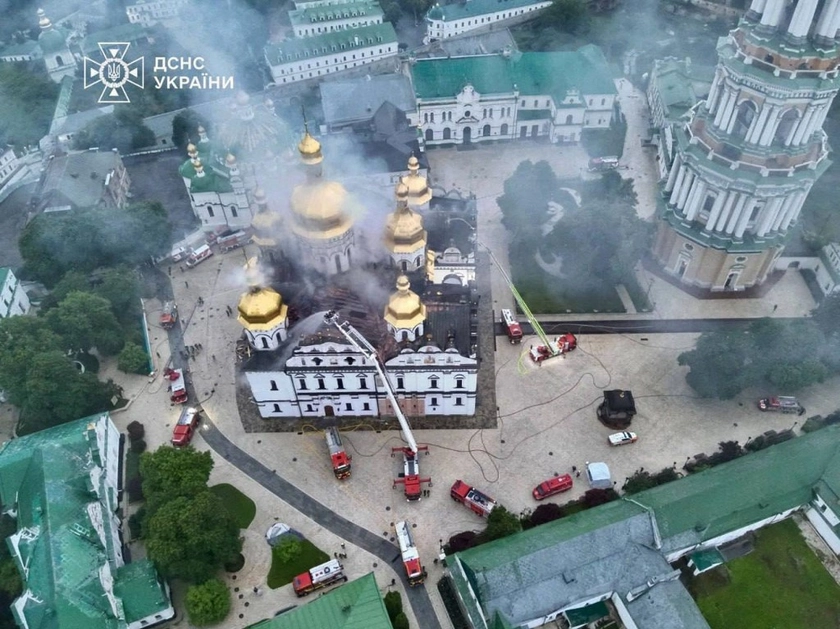
UK Signals Readiness to Support Kyiv-Pechersk Lavra Restoration
“These are challenges we are all facing together, and this will remain the reality of our life in the future.”
Building societal resilience, they stressed, is a key lesson NATO allies can learn from Ukraine: “One of the things that has been tremendously impressive to me personally is the resilience of Ukrainian society following the full-scale invasion,” the official said.
“Ukraine prepared for crisis management [processes], its civil society is vibrant, and we could take important lessons from that experience. It’s been crucial to Ukraine’s ability to keep fighting almost four years later.”
The official concluded that governments and societies must engage in deeper discussions about security, resource allocation, and capability development.
“We need to explain that we live in a completely different context, which entails very difficult political decisions,” they said, echoing remarks made by former NATO Secretary General Jens Stoltenberg at the NATO Parliamentary Assembly in Ljubljana earlier this week.
You can also highlight the text and press Ctrl + Enter

Putin’s Worst Nightmare
Zelensky Reveals Intercepted Intel From Putin’s Desk