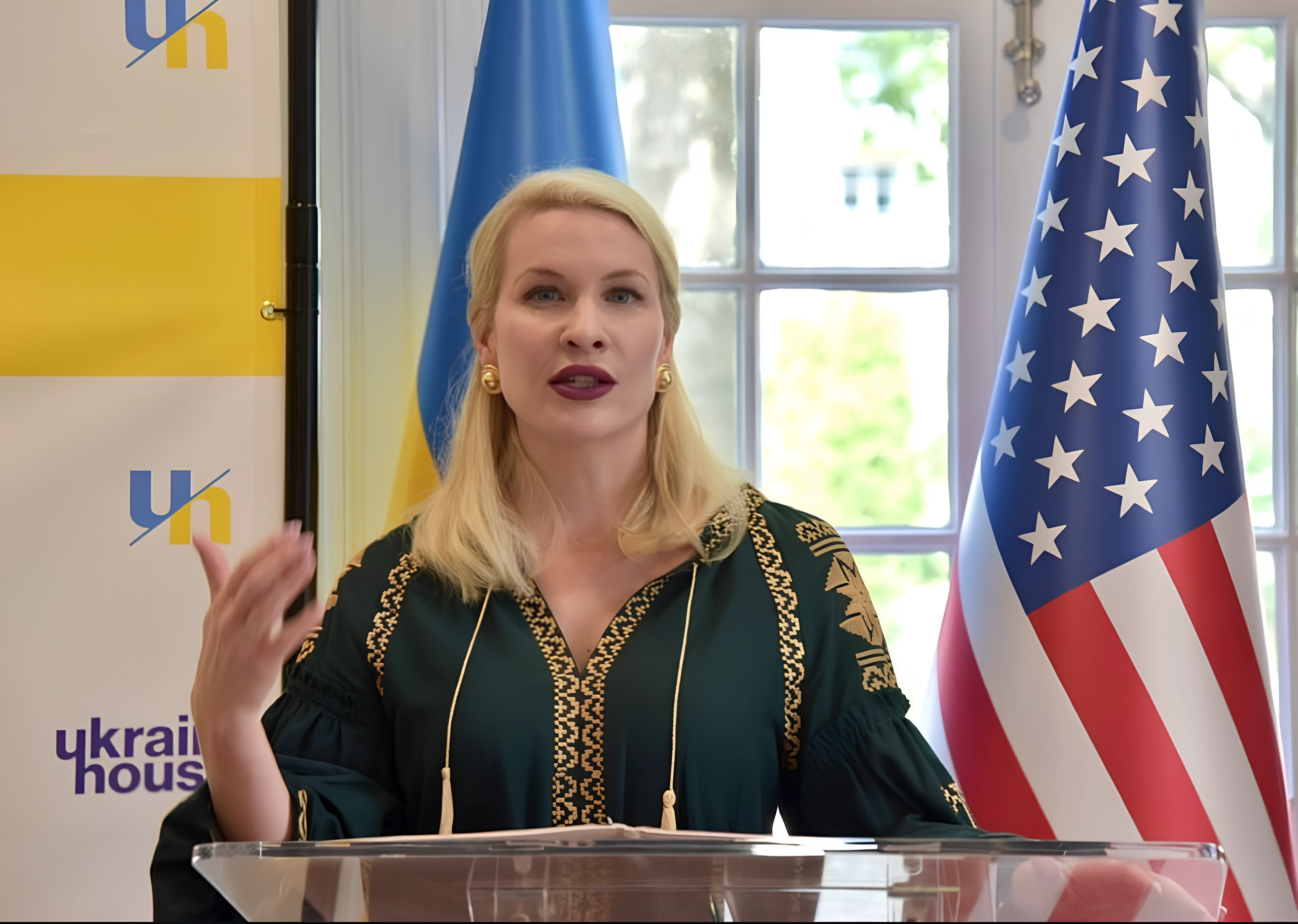
Meaghan Mobbs is one of the key figures in the MAGA camp and behind the scenes in Washington. And yet, she is someone who surprises in many ways. She is a die-hard Republican and Trump confidante, but at the same time an Atlanticist who warns against isolationism and a vocal supporter of Ukraine. The daughter of US Special Envoy for Ukraine Keith Kellogg, she is a trained psychologist, director of the Center for American Safety and Security, and president of the Weatherman Foundation.
Stefan Schocher: You have been very active in Ukraine for quite some time. Has anything changed in the Ukrainian attitude since the beginning of 2025?
JOIN US ON TELEGRAM
Follow our coverage of the war on the @Kyivpost_official.
Meaghan Mobbs: I would say that in the run-up to the election, many Ukrainians were indeed enthusiastic about a Trump presidency. They were frustrated by what they perceived as the audacity of the Biden administration. I think there were times when Ukrainians – and I’m talking about the Ukrainian people, not the Ukrainian government – were frustrated because the war has intensified in recent years and the attacks have increased. And I think they have become increasingly tired of what feels like an unwillingness to confront the situation. That has changed significantly in recent months. President Trump has also begun to change his negotiation strategy and tactics.
Trump’s strategy is full of twists and turns. Where does that leave us now?
Intent in Plain Sight: the Politics of a UN-Recognized Genocide
Dialogue was extremely important for this administration – and, incidentally, effective, as it showed who Vladimir Putin really is. I think we are now in a negotiation strategy based on peace through strength. Most recently, Minister of War [Pete] Hegseth spoke very aggressively in Ramstein about the PURL initiative, which was catastrophically successful.
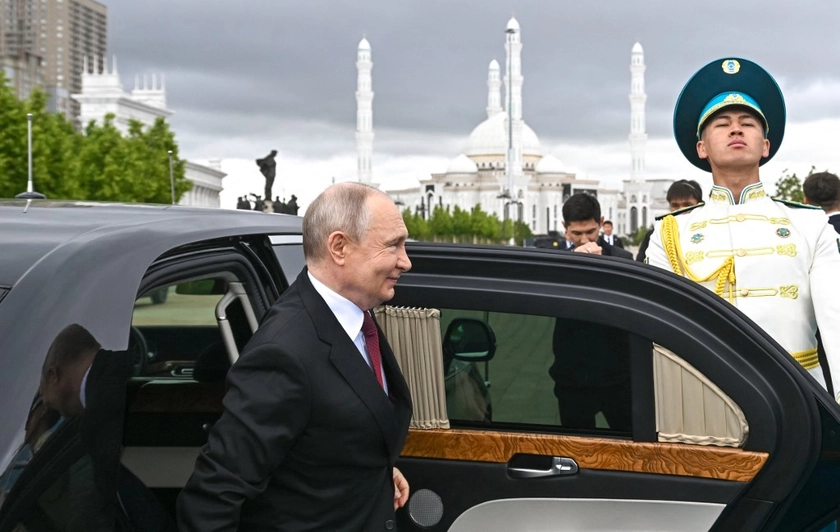
The President describes Russia as a paper tiger. He talks about how Putin was willing to throw millions of his own countrymen into a kind of meat grinder – even if he didn’t use that word. We are reaching a point where many who have known President Trump for a long time have realized that when his initial attempts at rapprochement, along the lines of “Hey, let’s settle this diplomatically. Let’s find a solution,” are rejected, he does not tolerate such rejection.
There were these offers and debates about territories, areas, exchanges, the ceding of territories. Is that still on the table on the part of the Trump administration?
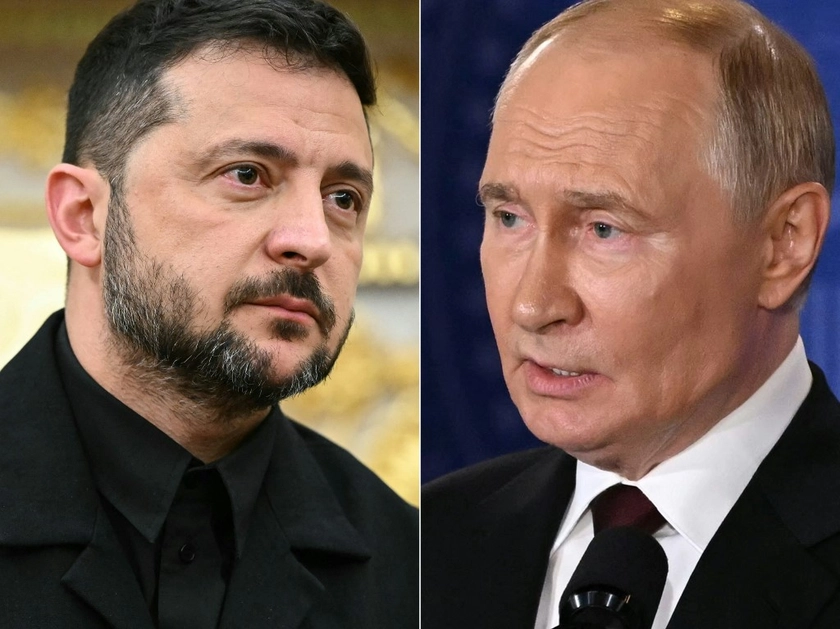
I don’t know what secret talks are going on, and of course I don’t speak for the government or my father. But I think what the Ukrainians have done quite well is to repeatedly show that they are willing to sit down at the negotiating table. There is only one party that has not been willing to do so, and that is clearly the Russians.
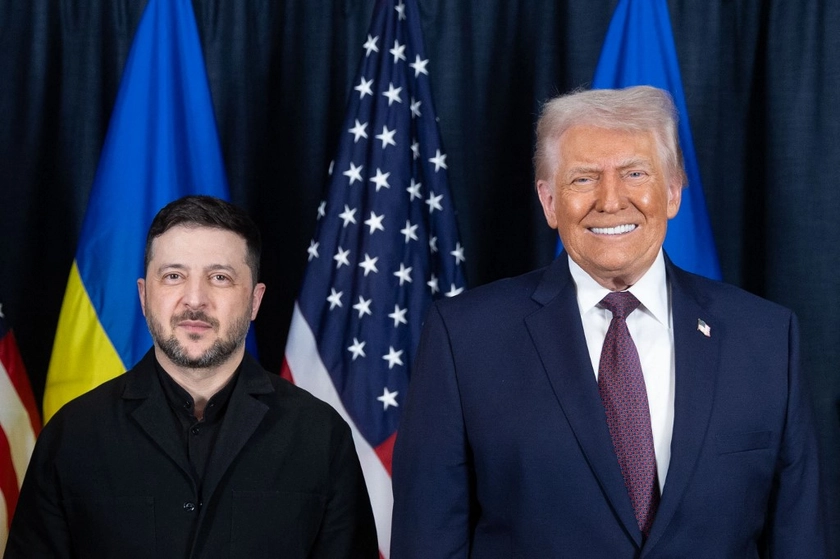
I think that after the Trump-Zelensky meeting, we will have a better idea of what the whole thing will ultimately look like. I am very hopeful about this meeting. Unfortunately, Ukraine does not have the military capacity to liberate all the currently occupied territories. I am not saying this to criticize Ukraine. I think it is realistic, and with this realism we can help you to be as safe as possible. There will probably have to be some kind of negotiated solution that includes recognizing these territories as temporarily occupied.
No one was prepared to believe that Russia would actually do this to this extent. It was a failure of the West’s imagination.
You sound very clear on this point when you say “peace through strength.” But do you have the impression that this is also how it is seen in Europe?
I believe that Europeans are beginning to understand how dangerous this “expansion” is, and by “expansion” I mean Russia. I believe that people are now becoming increasingly aware that the danger is on their own doorstep. I believe that Russia’s actions in recent months in particular have made this reality very clear.
I always feel a little frustrated when Europeans use fine words. They are very good at explaining why something is bad, but sometimes, when it comes to doing something about these bad things, they get stuck. Without Europe’s cooperation, however, it will be impossible to achieve a just and secure peace. That is why we must make it clear to our partners that there must be an appropriate sharing of responsibility.
Where do you think this sometimes hesitant attitude on the part of Europe comes from?
I believe that none of us ever wants to consider the possibility of our own destruction. It is human nature that no one wants to think about what it would mean if everything we own were to be destroyed down to the foundations.
I think part of it stems from the question of how all this could have happened in the first place. How is it possible that in 2025, an aggressive nation like Russia would do something we all learned about in school: namely, the possibility of invading a European country like Ukraine, and on such a large scale. I think it contradicts our psychological desire to believe in security. It’s hard to come to terms with. But I also think it’s very easy to remain in your own comfort zone.
In any case, I don’t envy politicians for their responsibility to convey to their people that the war actually has an impact on their lives. And I don’t think they were particularly good at explaining the connections – that is, saying: this is the cause, this is the effect.
I think that ultimately no one was prepared to believe that Russia would actually do this to this extent. It was a failure of the West’s imagination.
You are also a psychologist. Would you say that this is less a communication problem than an analysis problem?
Yes, I think it’s an analysis problem. I also think that our intelligence services – and by that I mean both those in the US and in Europe – are often so bureaucratic and complex that the information that reaches our decision-makers has already passed through too many hands, been analyzed too many times and viewed through so many lenses that it is quite far removed from the original data when it arrives. I think there really needs to be reform in our intelligence community to better inform our decision-makers so that they can actually make difficult decisions.
Europe was so closely tied to the US on security issues that one could say security issues were outsourced. That is no longer the case. Is it really gone? And from a psychological perspective, what does such a withdrawal of affection trigger?
I don’t think it’s gone. Looking back at the first Trump administration, I think it’s important to understand that there was a real impetus at that time to do more – especially for NATO. If that impetus hadn’t come, Europe would be in a much worse position today, quite frankly.
All the talk about Europe giving up is exaggerated, in my opinion. I think the Americans and the [US] president are frustrated that there has been this outsourcing of security and this excessive dependence. But I also believe that most Americans understand the need for collective security, as does the president. I mean, the president has explicitly stated that he will defend every inch of NATO territory and will not abandon Europe under any circumstances.
At the same time, I believe that Europe’s excessive dependence has unfortunately led over time to something that we can also observe in my country: namely, the erosion of defense capabilities. I very much fear that we have forgotten to explain to our citizens why our states are important, why our values are important, why it is worth fighting and dying for them.
But where things are actually changing is in the whole system of international organizations. The Trump administration has cut funding for many international organizations. But couldn’t these international organizations be the key to a solution, especially in a situation like this?
You’ve hit the nail on the head: they could be. The problem is that these organizations have been funded with so much money without any solutions in sight. The problem is that the bureaucratic bloat of many of these international organizations has prevented successful outcomes.
That is not to say that international relations and multilateral institutions do not play a role and cannot be very effective. They just haven’t been so far.
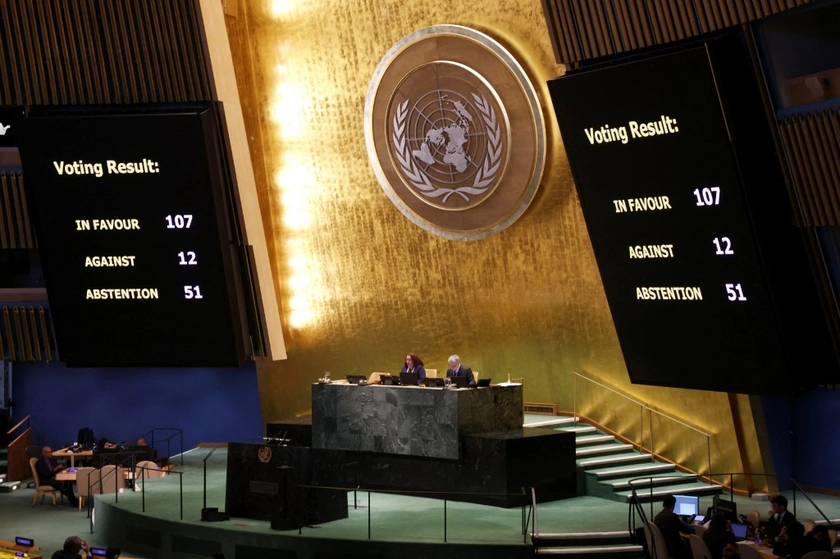
I am extremely frustrated with the UN. It is highly ineffective for a variety of reasons. It no longer fulfils the purpose for which it was founded in its charter.
I very much fear that we have forgotten to explain to our citizens why our states are important, why our values are important, why it is worth fighting and dying for them.
One thing that international organizations such as UN organizations do, however, is document war crimes. And when it comes to finding a solution for Ukraine, to achieving peace, then it is also a matter of bringing these crimes to justice.
Do you really believe that the UN will hold anyone accountable? I don’t believe so, for a number of reasons. And that is the problem.
The United States is not part of the International Criminal Court. But is that a suitable vehicle?
Correct. I would also say that Europe has taken a leading role and formulated and established a mechanism for accountability for war crimes. That is a good thing, because that is exactly where it should lie – and that is what we should want.
As an American, that is what I want. I love Europe. I want Europe to be strong and united. I want them to take on this leadership role, because we will need each other.
In a sense, American-European relations depend on the famous telephone number that Washington cannot call when it needs Europe.
So, yes and no. I think that, in a way, we are showing more unity than we have in a long time.
Incidentally, I am always someone who sees the glass as half full. Even if the walls were literally collapsing around us, I would say, “Oh, look at the sky, it’s beautiful.” I think that in a world that is sometimes a mean place, it is imperative to see where the light is.
Ultimately, European leaders came together in Washington to show the world what happens when Europe and the United States work together. Perhaps the EU is a patchwork of different personalities and nation states. But they have all come together in a remarkable way.
One of the reasons why all these European heads of state and government travelled to Washington together is that no one really understands how President Trump works and how to persuade him.
I think we have all forgotten that politics is made through presence. But it takes leadership to do just that, and they all did it. With their presence, they all sent a signal of their desire for a common policy. I think it’s easy to forget how remarkable that is. And regardless of what brought them there, the result is exactly what anyone who believes in a transnational relationship or in a free, sovereign Ukraine should strive for.
At the same time, you warn that an America First policy could also lead to the US isolating itself.
I think America should put America first, just as I believe every European country should put itself first. I don’t see a problem with that.
However, I do think there is a risk involved that we must be wary of. We must be wary of becoming isolated. It is possible to become isolated in one’s position of primacy, and this is precisely where we must be careful not to slip into the idea of “America alone.” That should never be the case, and President Trump never meant it that way.
I believe there are some bad actors who are trying to manipulate the situation in that direction – towards a much smaller, isolationist, defeatist, declining America. I don’t think President Trump would agree with that.
You can also highlight the text and press Ctrl + Enter

Putin’s Worst Nightmare