Russia launched a massive combined strike on Ukraine’s energy infrastructure overnight, targeting thermal power plants and oil and gas facilities in multiple regions.
“The enemy has been attacking the country’s energy infrastructure all night. The massive attack continues,” Energy Minister Svitlana Hrinchuk said.
JOIN US ON TELEGRAM
Follow our coverage of the war on the @Kyivpost_official.
She added that once security conditions allow, energy workers will begin assessing the damage and carrying out restoration work.
Emergency power outage schedules have been activated across the country.
Russian forces launched a combined drone and missile attack strike on Kyiv, with residential buildings hit in several districts.
Mayor Vitali Klitschko reported on Telegram that two people were killed and five injured, including a two-year-old child. All the wounded have been hospitalized.
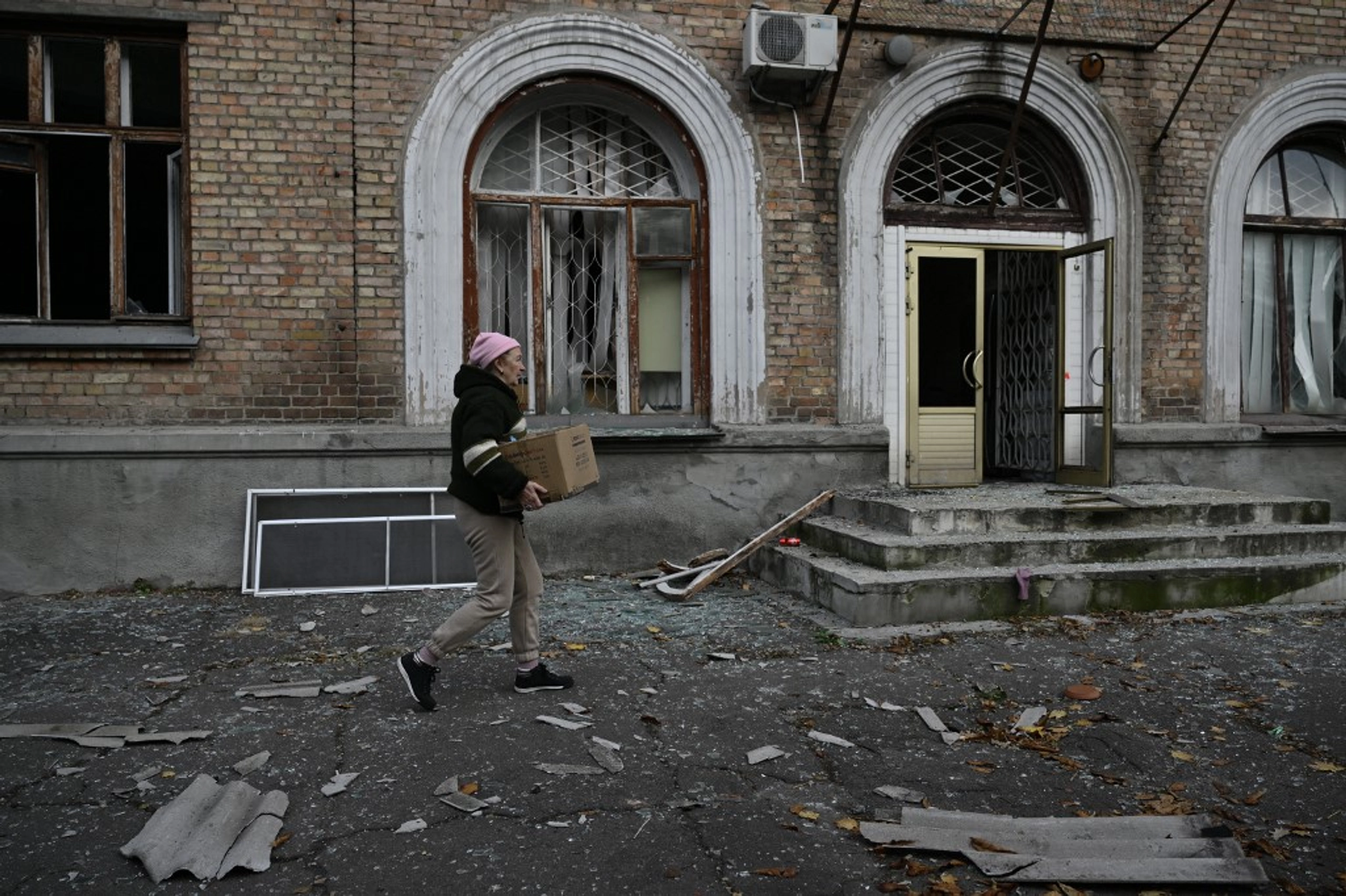
According to the State Emergency Service (DSNS), in the Dniprovskyi district, a residential building was hit, sparking a fire on the sixth floor of a 16-story apartment block. Ten people were rescued and brought to safety.
Rescuers later discovered the bodies of two people killed in the attack. The fire has since been extinguished.
In the Darnytskyi district, a drone strike ignited a fire that spread from the 11th to the 16th floors of a 17-story building. Firefighters have contained the blaze, rescuing 15 people, including two children.
Elsewhere, a non-residential two-story building also caught fire but was quickly contained.
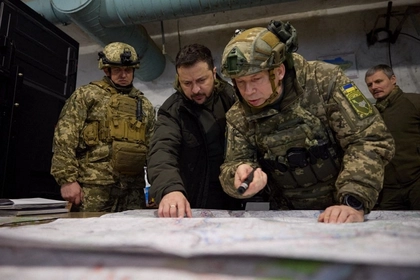
Syrsky: Russian Maps Show False Advances to Please Top Command
In the Desnianskyi district, a drone strike damaged the facade of a 10-story building, set a car ablaze, and ruptured a gas pipe. Twenty people were rescued during the response.
In the Pecherskyi district, another drone hit the 21st floor of a 25-story residential building. A small fire was extinguished before emergency crews arrived.
Klitschko later clarified that the number of victims had risen to 19, including five children.
“Four children and five adults have been hospitalized, while the others are receiving outpatient care,” he wrote.
The head of the Kyiv City Military Administration (KMVA), Timur Tkachenko, reported on Telegram that 21 people have now been confirmed injured in the capital.
“Currently, 21 people have been confirmed injured, including 5 children. Two Kyiv residents have died,” the message stated.
Tkachenko later clarified that, as of 12.40 p.m., the number of people injured in the Russian attack had risen to 25, including five children. More than 10 people were hospitalized, four of them children.
DSNS also reported three deaths in the Kyiv region, including two children.
As per the report, several districts in the region came under fire. Three people, including children, were killed in the Zazymia community. Rescuers continue search operations and are clearing the rubble.
In Brovary, an 83-year-old woman was rescued from a burning house. She was in shock but alive. Debris also caused fires in a private house and a truck with a trailer, which were quickly extinguished.


In Zaporizhzhia, 13 people sought medical assistance following a Russian night attack, according to the head of the Zaporizhzhia Regional Military Administration (OVA), Ivan Fedorov.
The DSNS reported that nine people were injured, though the total number of victims is still being clarified. Rescuers evacuated residents from danger zones.
Fedorov also said that nearly 2,000 people were left without electricity due to the attack.
“Work to eliminate the consequences will begin as soon as the security situation allows,” he wrote.
Early on the morning of Oct. 22, Russian forces reportedly launched nine Shahed drone strikes on Zaporizhzhia. Fires broke out in a residential high-rise and several private houses.
“They hit infrastructure,” Fedorov added.
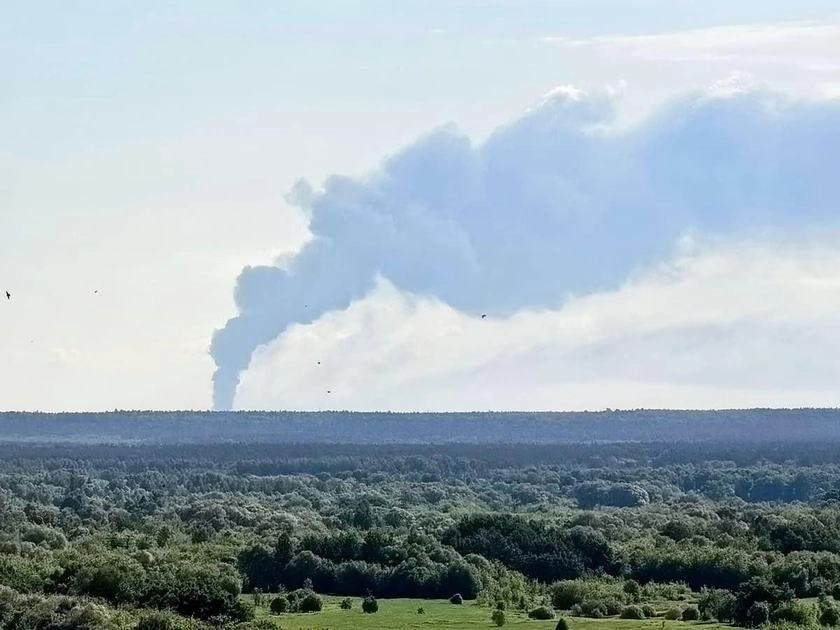
Direct strikes and falling debris damaged oil and gas facilities in the Myrhorod district of Poltava region, the head of the Poltava OVA, Volodymyr Kohut, reported on Telegram.
“Fortunately, there were no casualties,” Kohut said.
The Russian army also attacked Izmail in the Odesa region, damaging energy and port infrastructure.
“The city’s power supply is gradually being restored,” the Izmail District State Administration said in a statement.
Emergency and utility services are working to address the aftermath of the attack.
“All critical infrastructure is operating. Fortunately, there were no casualties, and the fires were quickly extinguished,” the report added.
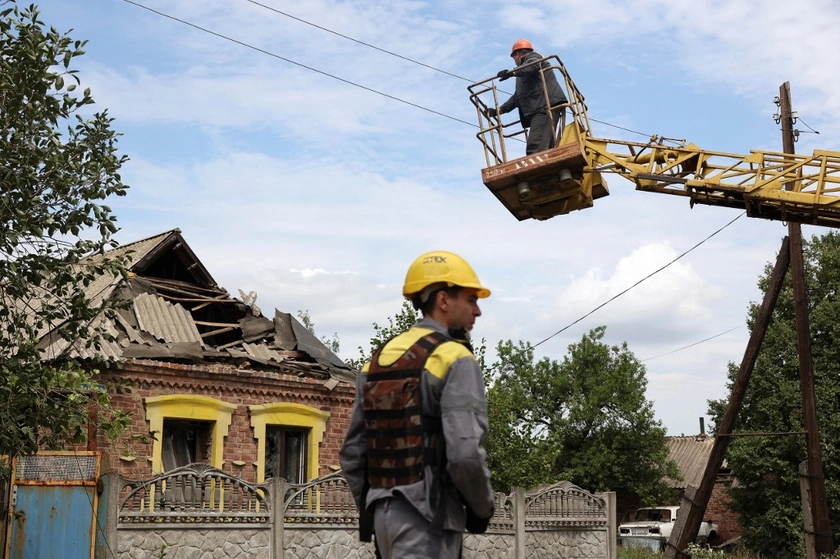
More than 14,000 families were left without electricity after a Russian strike on a DTEK power plant in the Odesa region.
“At night, the enemy again struck a DTEK power plant in the Odesa region,” the company reported later.
According to DTEK, energy workers have reconnected critical infrastructure and residential buildings to backup lines where technically possible and have already restored power to 14,200 households.
“The damage is significant. Repairs will take time,” the company added.
The massive Russian strike across Ukraine also caused damage to railway infrastructure and power outages. Ukrzaliznytsia reported on Telegram that some trains are running with delays and on modified routes.
President Volodymyr Zelensky has responded to the latest Russian attack on Ukraine.
“Another night that proves Russia does not feel enough pressure for dragging out the war… Ordinary cities were hit – mainly our energy sector – but there are also many strikes on residential buildings. Fires in Zaporizhzhia, hits on houses in Kyiv,” he wrote on Telegram.
According to Zelensky, the Kyiv, Odesa, Chernihiv, Dnipropetrovsk, Kirovohrad, Poltava, Vinnytsia, Zaporizhia, Cherkasy, and Sumy regions were affected.
“Six people, including two children, unfortunately died. My condolences to their families and loved ones,” the president said.
Zelensky emphasized that Russia’s statements about diplomacy “mean nothing” as long as its leadership does not face real consequences.
“This can only be ensured by sanctions, by long-range weapons, and by coordinated diplomacy from all our partners. It is high time for the European Union to adopt a strong sanctions package. We also count on decisive steps from the U.S. and the G7 – from all those who seek peace,” he wrote.
The president added that “everyone who helps Ukraine with long-range capabilities brings the end of the war closer.”
According to the Air Force, starting at 19:00 on Oct. 21, Moscow launched a combined strike on Ukraine’s critical infrastructure using strike UAVs, air-launched, and ground-launched missiles.
In total, Russian forces deployed 433 air attack vehicles:
- 405 strike UAVs of the Shahed and Gerbera types, about 250 of them Shaheds;
- 11 Iskander-M/KN-23 ballistic missiles;
- 9 Iskander-K cruise missiles;
- 4 Kh-47M2 “Kinzhal” aeroballistic missiles;
- 4 Kh-59/69 guided aviation missiles.
- “The main direction of the strike is the Kyiv region. Dnipropetrovsk, Zaporizhzhia, Cherkasy, Chernihiv, and Odesa regions were also affected,” the report says.
The attack was repelled by aviation, anti-aircraft missile troops, electronic warfare and unmanned systems units, and mobile fire groups of the Defense Forces of Ukraine.
As of 12:30 p.m., preliminary data shows air defense systems shot down or suppressed 349 air targets:
- 333 Shahed and Gerbera UAVs;
- 8 Iskander-K cruise missiles;
- 6 Iskander-M/KN-23 ballistic missiles;
- 2 Kh-59/69 guided aircraft missiles.
- Direct hits from 12 missiles and 55 strike UAVs were recorded at 26 locations, while fragments from downed UAVs fell at 19 locations. In addition, 17 UAVs did not reach their targets; details are being clarified.
“Unfortunately, there are casualties. The attack is ongoing, and several enemy UAVs are still in the airspace. Follow safety rules,” the report adds.
This story is developing and will be updated as more information becomes available.
You can also highlight the text and press Ctrl + Enter

Russia Hit by 660-Drone Overnight Barrage Targeting Moscow, Crimea and Key Military Sites