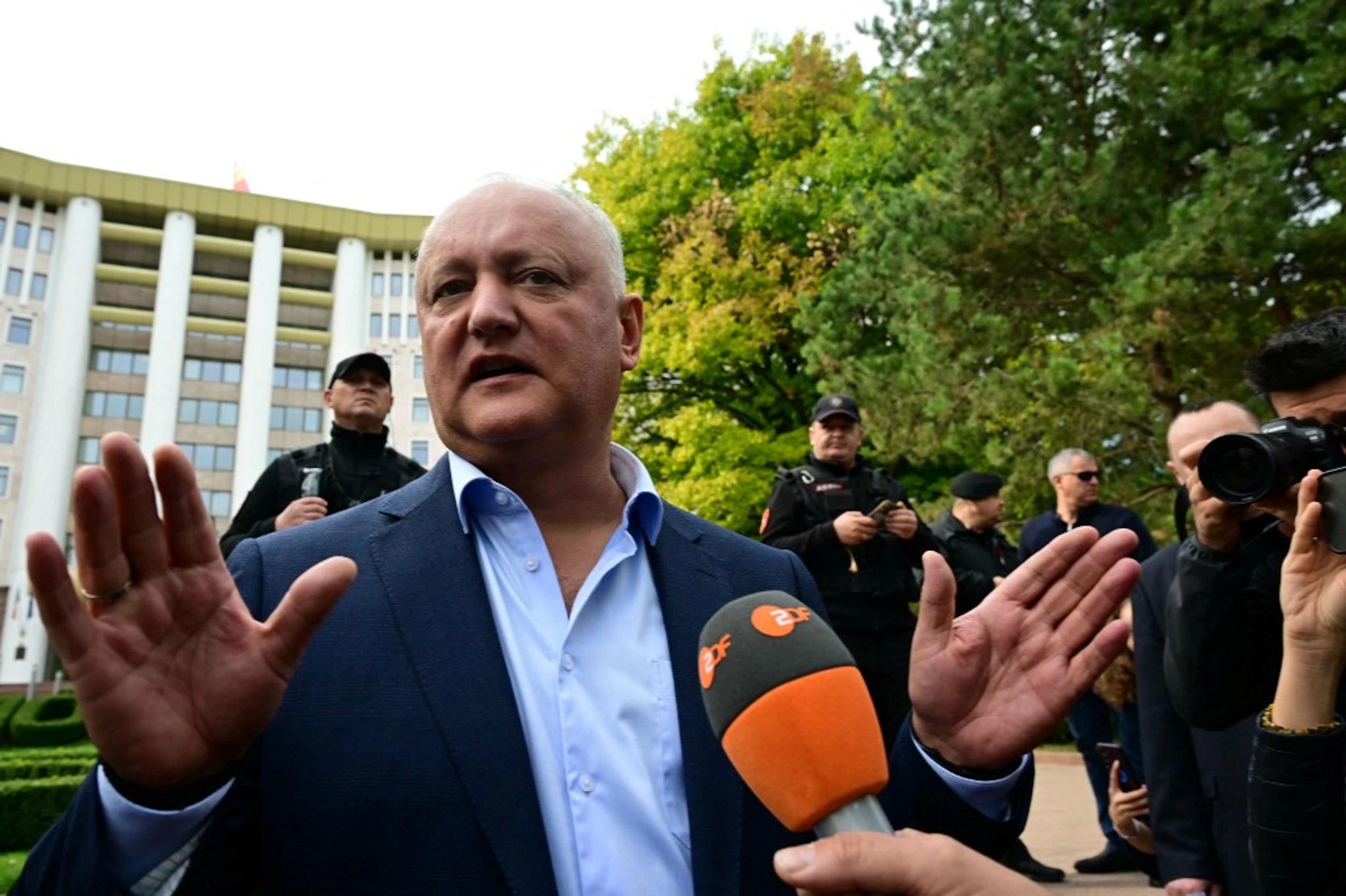
Moldovan opposition leader Igor Dodon described Moldova as a “one-party dictatorship” after meeting with Moldovan President Maia Sandu on Thursday.
Dodon, who is the leader of Moldova’s Socialist party, led the pro-Russian Patriotic Electoral Bloc to defeat at the country’s recent parliamentary elections.
JOIN US ON TELEGRAM
Follow our coverage of the war on the @Kyivpost_official.
Writing on Telegram, he said he told Sandu that both Moldovan Prime Minister Dorin Recean’s government and the ruling Party of Action and Solidarity (PAS) have “ignored the voice of the people, represented by the opposition.”
“This means that a one-party dictatorship has been established in Moldova, and either the presidential administration is unaware of this – which is bad – or it is directly complicit in this undemocratic form of government – which is even worse,” he said.
This appears to be a stark reversal of Dodon’s more conciliatory remarks during the inaugural session of Moldova’s new parliament on Wednesday – when he promised that his party would be a “tough, critical, yet professional and responsible opposition force, with concrete proposals to improve the lives of citizens.”
“The time for electoral battles is over. We’ve thrown stones at each other enough. Now our moral duty is to work for the citizens,” the opposition leader said.
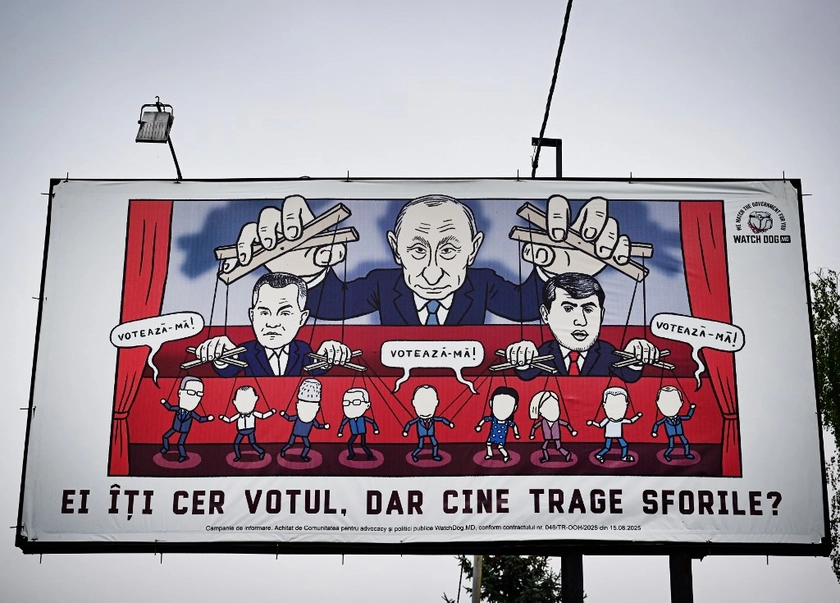
Despite evidence of a huge Russian effort to influence the election – which allegedly included sending pro-Russian Moldovans to camps in Serbia to train in sabotage and protest techniques – PAS secured more than half the vote in the Sept. 28 parliamentary elections.
Ukraine, Moldova to Join €1.1B EU Transport Infrastructure Initiative
The Patriotic Bloc, made up of Dodon’s Socialist party, the Communist party, and the Future of Moldova party, secured just 24%.
The next day, Dodon questioned the legitimacy of the elections and called for protests outside the parliament building in Chisinau. Despite fears that Russia might attempt to undermine the newly re-elected pro-European government with violent protests, the event drew only a small crowd which dispersed in less than an hour.
None of the Sept. 29 protesters were willing to speak to the Kyiv Post. However, a pro-European counter-protester told the press that “Dodon has been eating too much from Russia – I am here to give him an enema!”
You can also highlight the text and press Ctrl + Enter