Germany, France, the Netherlands, Belgium and Luxembourg have proposed new safeguards for future European Union members, including the possibility of temporarily restricting some voting rights and introducing stronger rule-of-law oversight mechanisms, according to a joint paper seen by Reuters on Tuesday, June 9.
The proposal comes as the EU prepares for a new phase of enlargement, with Montenegro aiming to join the bloc by 2028 and Ukraine, Moldova and Albania seeking to advance their accession processes.
JOIN US ON TELEGRAM
Follow our coverage of the war on the @Kyivpost_official.
According to Reuters, the five countries argue that lessons learned from democratic backsliding in some existing member states should be reflected in future accession agreements.
The joint paper outlines several options that could be included in accession treaties for future EU members.
Among them is a safeguard mechanism that would allow the bloc to take action if a new member seriously backslides on democratic standards, media freedom or the rule of law.
The proposal also calls for discussions on “temporary, transitional limitations of voting rights” in policy areas where unanimous approval by all member states is required.
“The EU should have an in-depth discussion on the possibility of temporary, transitional limitations of voting rights for new Member States,” the paper states.
The countries specifically pointed to enlargement decisions, foreign policy and EU budget matters as areas where unanimity requirements can create challenges.
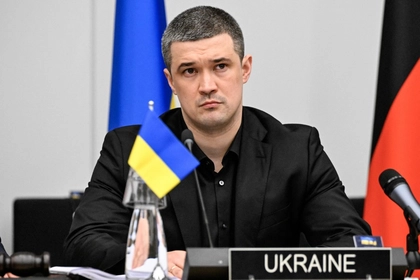
Ukraine Regained Battlefield Initiative but Needs More Aid to Keep It – Fedorov
Debate comes as Ukraine advances EU bid
The proposal emerges as Ukraine and Moldova continue to move through the accession process.
Last week, Cyprus, which currently holds the rotating presidency of the Council of the European Union, said preparations had begun to formally open negotiations on the first accession chapters with both countries.
The initial cluster of negotiations focuses on democratic standards, the rule of law and governance reforms.
Estonian Prime Minister Kristen Michal voiced support for accelerating Ukraine’s accession process following a meeting with President Volodymyr Zelensky in Tallinn on Tuesday.
“Ukraine belongs in the EU. All six accession clusters should be opened without delay,” Michal wrote on X.
On June 2, Politico reported that Hungary was preparing to lift its long-running veto on Ukraine’s EU bid; on June 8, the Ukrainian outlet Suspilne said Budapest had essentially given its blessing after reaching an agreement with Kyiv on 10 of 11 requirements.
The shift follows recent negotiations on the rights of ethnic Hungarians in Ukraine as EU ambassadors rush to finalize a joint position.
Concerns over democratic backsliding
The proposal reflects growing concern within the EU about preserving democratic standards as the bloc expands.
Several member states have pointed to past disputes over rule-of-law issues within the union, particularly involving Hungary, as evidence that stronger safeguards may be needed before admitting new members.
Under former Prime Minister Viktor Orban, Budapest’s disputes with Brussels over rule-of-law standards led to the suspension of EU funding, while his pro-Kremlin positions often resulted in vetoes that blocked EU consensus.
The paper does not propose immediate changes to current accession negotiations but calls for broader discussions on how future enlargement should be managed as the EU prepares to potentially admit multiple new members in the coming years.
You can also highlight the text and press Ctrl + Enter