WASHINGTON, DC – Russia’s invasion of Ukraine is not a localized conflict but part of a “systemic war” being waged against the West, according to Poland’s leading security think tank. The organization warns that Moscow is actively betting on Western divisions and political fatigue to achieve its goals.
Analysts from the Centre for Eastern Studies (OSW) – Poland’s leading government think tank specializing in Eastern Europe, Russia, and security in Central and Eastern Europe – met with a group of reporters in Washington, DC, on Tuesday to share the Polish analytical perspective on the evolving security dynamics in the region.
JOIN US ON TELEGRAM
Follow our coverage of the war on the @Kyivpost_official.
The analysts, whose work closely informs the Polish government, underscored that the conflict has escalated beyond Ukraine’s borders, involving constant hybrid attacks designed to destabilize NATO members.
Escalation and intention
The core strategic assessment is that the scope of the war is far broader than commonly accepted. “This war is not a local conflict about any piece of Ukrainian territory. This is a part of Russia’s systemic war with the West,” said Marek Menkiszak, head of the Russian Department at OSW.
He argued that Moscow uses this narrative to justify its initial strategic failure to quickly subjugate Ukraine.
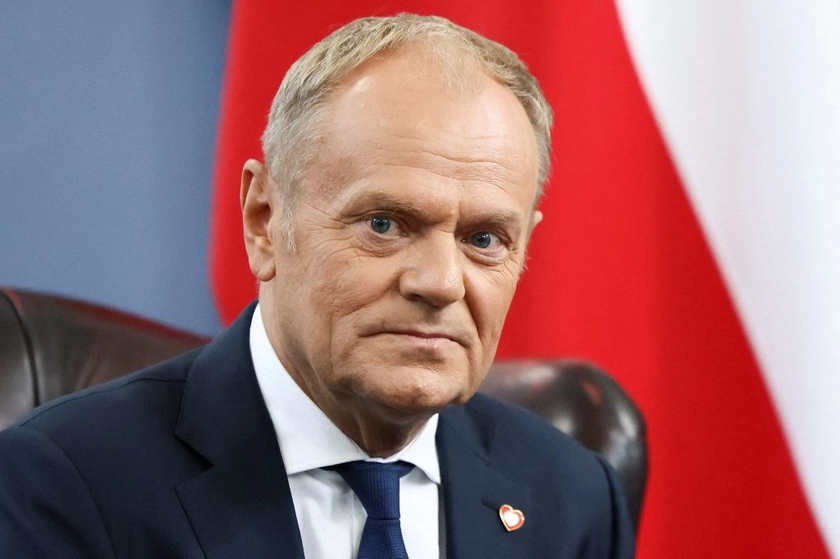
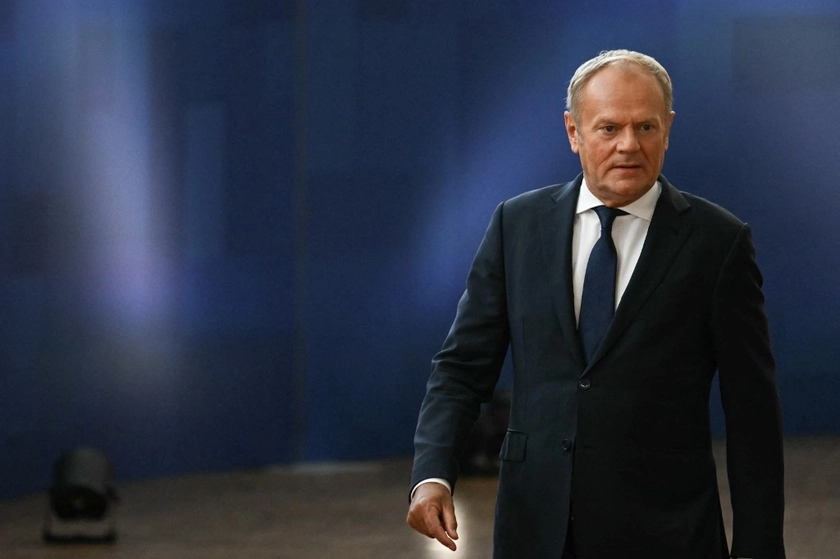
Echoing this urgency, Polish Prime Minister Donald Tusk has recently asserted that Europe is already in a state of war, even if it appears to be a “new kind of war.”

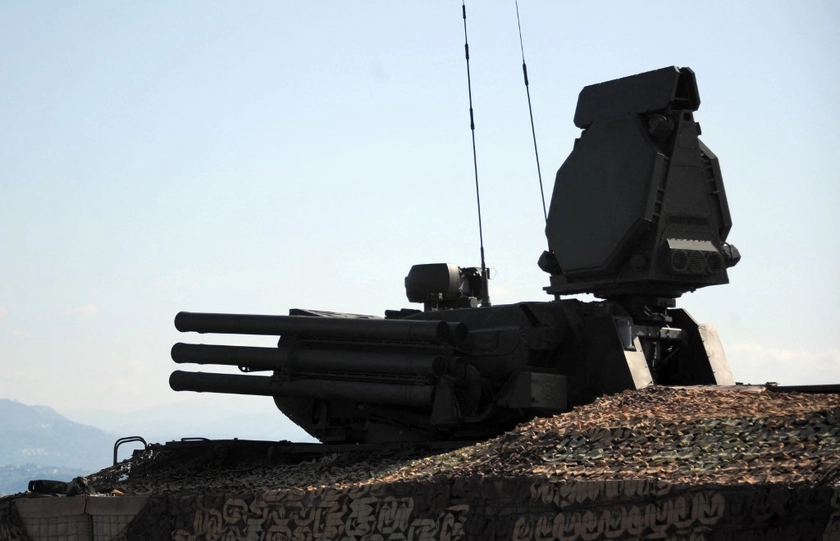
Additional Pantsir Air Defense System Spotted Near Attacked Moscow Oil Refinery
OSW experts noted that while Moscow occasionally attempts to project willingness for negotiation, this is a tactical deception.
The analysts said Russians “try to fake the peace process” and provide “business offers to the Trump administration.” However, these efforts are ultimately designed only to benefit Moscow in prolonging the war.
Witold Rodkiewicz, senior Russia specialist, explained that the Kremlin leadership views the Ukraine issue as crucial for internal regime survival. They are, in a way, prisoners of their own making – a trap set by their core belief – given how Vladimir Putin and other Russian figures insisted that Ukrainians are merely “misguided” Russians.
Rodkiewicz elaborated that this belief reinforces the claim that while democracy can be effective in countries like Poland and Germany, Russia – and, by extension, Ukraine – is fundamentally different and requires a distinct, non-democratic system for governance.
Despite its current aggressive posture, OSW analysis suggests Russia’s long-term position is precarious. This precarious long-term outlook, however, is what drives Moscow’s immediate aggression.
Menkiszak noted that in the long term, “the Russians understand that they are in a very bad position,” adding that “all major trends work against them – economy, energy trends, demography, climate change and growing dependency on China – and precisely because of that, they are very aggressive.
“They are rushing against time,” he said, adding that unlike China, Russians “don’t have the time” to wait for geopolitical shifts.
Hybrid attacks test NATO resolve
The Russian strategy involves simultaneously waging a campaign of “information aggression” against European countries, quickly followed by other coordinated hybrid actions aimed at intimidation, according to Wojciech Konończuk, director of OSW.
Recent incidents include physical and non-military threats ranging from repeated airspace incursions to border manipulation. Russian jets have violated Estonian airspace, and multiple Russian-origin drones have crossed into Polish territory from Belarus.
Konończuk cited the recent escalations of “smuggler balloons” that have repeatedly disrupted air traffic in Central and Nordic Europe, including at Vilnius International Airport. He argued that the escalation “is not an accident; it’s part of a broader operation” to intimidate populations into accepting Russian terms.
Justyna Gotkowska, deputy director of OSW, also highlighted continued pressure on the Polish-Belarusian border, where the migration crisis remains a flashpoint, with 80 illegal attempts to cross the border recorded between Oct. 24 and 26.
In response to these threats, Polish authorities closed a key border crossing with Belarus, a move that purposefully affected not just Belarusian interests but also “Russian and Chinese interests – Chinese interests by rail to Europe,” as Konończuk explained.
Betting on Western weakness
The entire Russian strategy, according to the OSW analysts, is rooted in a fundamental miscalculation about NATO’s resilience. They “bet on our weaknesses,” Marek Menkiszak said.
Moscow views internal political crises in the West as opportunities. The experts noted that Russia considers the emergence of certain US political figures, such as President Donald Trump, as a “symptom of a crisis in the US, and they want to benefit by using the weaknesses against the US.”
The Kremlin believes its strategy is validated by time, assuming that public fatigue will lead to capitulation: “They believe it’s a matter of time” before Western support crumbles.
However, OSW analysts offered a strong counterpoint to this Russian calculation, noting that contrary to popular belief, there is “no sign of Ukraine fatigue in Europe.”
Furthermore, they expressed confidence in Ukraine’s immediate defensive capability, stating that they “don’t think there will be a front line collapse in the near future.”
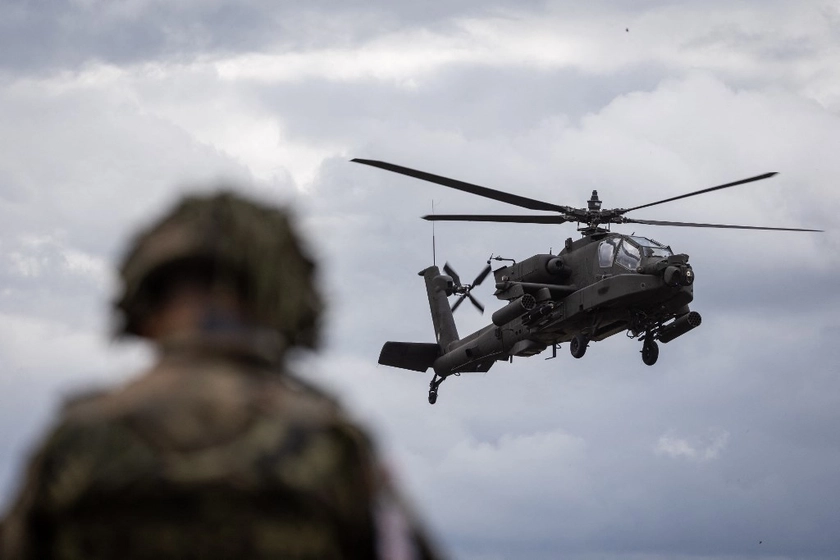
Poland, viewing Russia as prepared for a full-scale confrontation, has dramatically increased its military spending to demonstrate resolve. After spending 4.5% of its GDP on defense in 2024, Poland is planning to allocate 4.7% of GDP – amounting to $50 billion – for 2025, solidifying its position as NATO’s top relative spender.
You can also highlight the text and press Ctrl + Enter

Poland, Germany Clash Over €6.6B in EU Funds for Ukraine