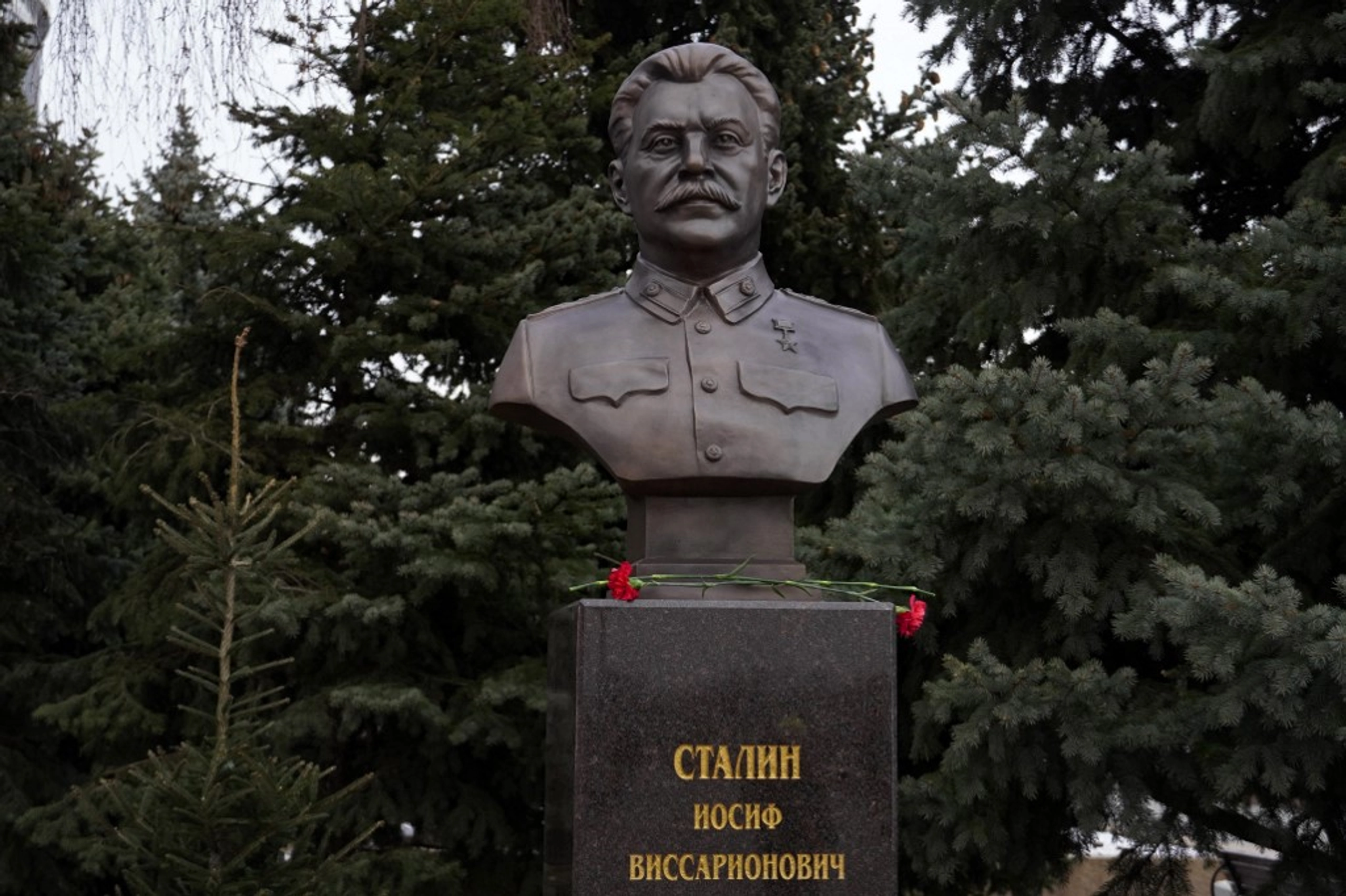
Western diplomats in Moscow on Wednesday honoured the victims of Soviet-era political repression, at a time when Russian authorities are trying to rehabilitate Soviet dictator Joseph Stalin and use history to justify its offensive on Ukraine.
Since sending troops into its pro-Western neighbour in February 2022, Russia has effectively outlawed all forms of dissent, including banning groups that criticised the glorification of Stalin and sought to preserve the memory of those persecuted in his 1930s Great Terror.
JOIN US ON TELEGRAM
Follow our coverage of the war on the @Kyivpost_official.
The Kremlin casts Stalin as a war hero who defeated Nazi Germany in World War II, glossing over the massive repression that saw millions put in labour camps, mass deaths and a forced famine in Ukraine.
AFP reporters saw envoys from Britain, France, Germany and representatives of the European Union laying flowers at the Solovetsky Stone memorial outside the FSB headquarters -- the successor to the feared Soviet-era KGB -- in Moscow.
A few members of the public also laid flowers at the site.
Some wreaths had yellow and blue ribbons around them -- the colours of the Ukrainian flag, taboo in Russia.
Others featured blue-and-white colours -- typically associated with Russian opposition movements.
Before the war in Ukraine, the now-outlawed Memorial organisation gathered activists at the spot for an annual “Returning of the Names,” where Russians read the names of people who were exiled, imprisoned or executed under Stalin.
Russia Issues 1,100+ ‘Traditional Values’ Visas in 2025 as Kremlin Expands Anti-Western Push
Russia ordered Memorial to dissolve in 2021 after it was accused of creating a “false image of the USSR as a terrorist state”.
Last year officials shuttered Moscow’s award-winning Gulag History Museum, which told the story of Soviet-era repression.
Busts of Stalin have been erected in many Russian cities, including in a major metro station in Moscow.
You can also highlight the text and press Ctrl + Enter

Putin’s Worst Nightmare