As Ukraine nears a funding cliff and EU leaders scramble to agree on the use of frozen Russian assets before sanctions expire in January, the so-called Witkoff proposal has become a defining fault line: Washington would run reconstruction funds and collect profit, Europe would put up additional money, and Russia’s capital would be reinvested – leaving many critics asking whether the West is rewarding the aggressor and billing the victim’s allies.
US-linked proposal outlines asset split
According to Euromaidan Press, the widely discussed peace plan, initiated by US President Donald Trump’s special envoy Steve Witkoff and his Russian counterpart Kirill Dmitriev envisioned dividing roughly $300 billion in frozen Russian assets into three portions. One-third would go toward Ukraine reconstruction under US supervision, with the United States receiving 50% of profits generated from those investments.
JOIN US ON TELEGRAM
Follow our coverage of the war on the @Kyivpost_official.
A second tranche – described as an additional $100 billion – would come from European taxpayers. The remaining $200 billion would be placed into a joint US-Russia investment mechanism, effectively returning significant capital to Moscow in exchange for halting hostilities.
The report characterizes the structure as placing most financial responsibility on Europe, despite the assets being frozen on European soil.
Focus shifts to Washington’s terms and incentives
Euromaidan Press notes that the proposal would leave Ukraine dependent on a US-controlled reconstruction mechanism, while Europe would fund a substantial share of recovery costs.
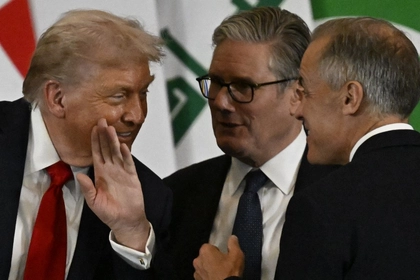
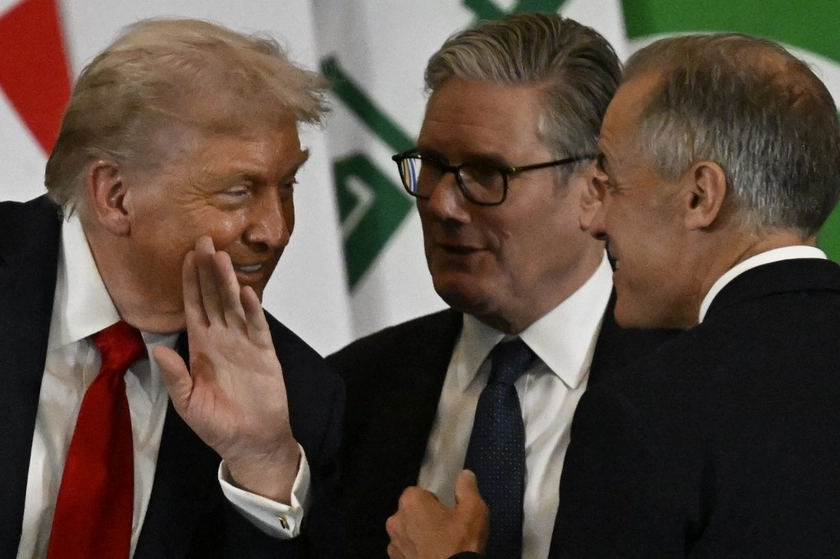
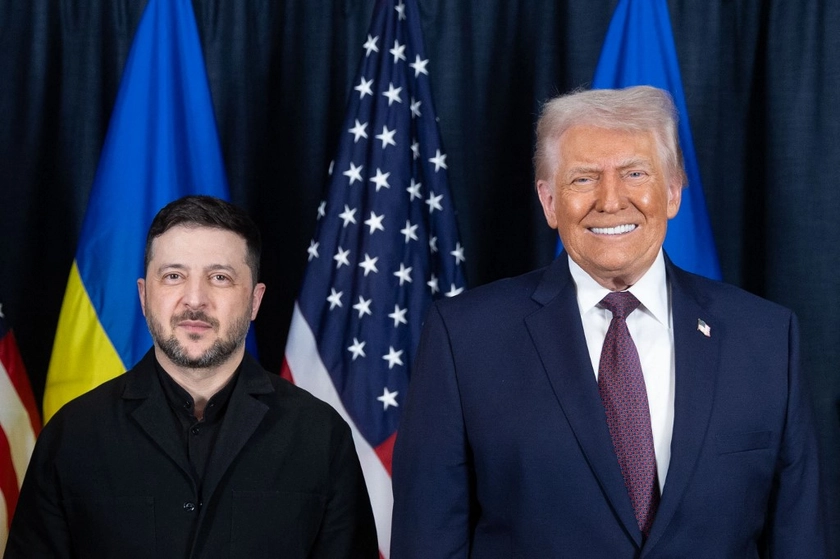
G7 Summit to Address ‘Five-Point’ Peace Plan as Trump and Zelensky Join European Leaders
Under such terms, Russia would receive investment gains instead of compensating Ukraine for the damage it caused, while the US would secure profit participation.
With each new detail emerging around the proposal, the imprint of Washington’s negotiating approach becomes increasingly visible. European diplomats familiar with the discussions, speaking on condition of anonymity, said US officials have also privately urged several EU governments to push back against the reparations loan approach, arguing that frozen Russian central bank funds should be reserved for a future settlement with Moscow rather than directed toward mechanisms that could prolong the war.
EU reparations loan model presents different path
As outlined by Euromaidan Press, European institutions have discussed a separate approach often described as a “reparations loan.”
Under that model, up to €210 billion ($245 billion) in frozen assets would serve as collateral rather than being invested or transferred. Ukraine would only be required to repay if Russia later compensates for the destruction it caused.
After laying out both approaches, the outlet notes that “Washington positioned itself to profit from Ukraine’s destruction while billing Europe for Russia’s rehabilitation. The cards are now on the table.”
But so far, progress within the EU has stalled. Belgium – whose Euroclear depository holds roughly €183 billion ($213 billion) in frozen Russian assets – has pledged to block the plan as long as other EU member states provide binding legal guarantees and share liability risks equally.
Legal analysis: Can Russia win in court?
Still, how well-founded are the concerns underpinning Belgium’s veto position? Euromaidan Press says its legal assessment found no realistic path for Russia or the Russian central bank to successfully overturn EU measures on frozen assets in major international or European courts.
The analysis concludes:
- International Court of Justice (ICJ): Russia lacks standing and has no credible route to challenge the measures on the merits.
- EU Court of Justice: Treaty provisions and procedural rules effectively block Russia or the Bank of Russia from bringing a viable claim.
- European Court of Human Rights (ECHR): Russia lost access after its expulsion from the Council of Europe, removing this avenue altogether.
- Belgium–Russia bilateral investment treaty: Euromaidan Press describes this as the only semi-realistic channel, but argues that the Bank of Russia’s role in financing the war would seriously undermine any claim.
The report also notes that since 2022 the EU Council has allowed Euroclear to build up a €5.58 billion ($6.5 billion) reserve for litigation and contingencies. That sum would be enough to “hire the planet’s best lawyers” to defend cases that are already assessed as having very poor odds of success for Russia.
Against this backdrop, the outlet says Belgium’s continued reluctance to move on frozen assets raises uncomfortable questions. It points out that Euroclear has paid Belgium €3.39 billion ($3.9 billion) in windfall profit taxes since 2022, while Belgium’s bilateral aid to Ukraine over the same period totals €2.2 billion ($2.6 billion). Belgium seems to have a clear fiscal interest in not “releasing the goose that lays golden eggs.”
How the EU could bypass Belgium and Hungary
Euromaidan Press argues that the EU Council already has tools to protect the frozen assets and limit the ability of individual states to block action, if there is sufficient political will.
At present, decisions to prolong asset immobilization require unanimity every six months, which gives Hungarian Prime Minister Viktor Orbán – seen as the EU’s most Russia-friendly leader and a frequent holdout on Ukraine-related measures – leverage to threaten vetoes and extract concessions. The article notes that EU rules do not strictly require this set-up: the Council could instead decide that sanctions are lifted only once their objectives are met — effectively shifting the burden of proof onto those demanding an end to the measures.
The piece also highlights Article 122 of the EU Treaty, which allows decisions to be taken “in a spirit of solidarity, appropriate to the economic situation.” The European Commission, it says, wants to interpret this as a basis for moving to qualified majority voting on the issue – meaning at least 15 countries representing 65 % of the EU population could approve measures on frozen assets until “Russia ceases hostilities and pays reparations.”
Von der Leyen gambles on Article 122 to break deadlock
Commission President Ursula von der Leyen has been testing every available lever to unlock frozen Russian assets for Ukraine, and her latest proposal – described by the Financial Times as the most daring yet – would rely on emergency measures normally reserved for natural disasters to immobilize the funds indefinitely.
“It is extraordinary. It is awfully difficult on a number of legal points,” former EU Council Legal Service director Jean-Claude Piris told the Financial Times, adding, “But it’s so important that I think they will push for it. When it is an emergency, a time of war, you have to do it.”
The Commission justifies this approach by linking Russia’s war and hybrid attacks to risks for EU stability, though diplomats and legal scholars caution that Brussels may be stretching the interpretation of Article 122, given that sanctions already exist as the legal foundation for immobilization.
Europe must decide whether to act – or be acted upon
With the Dec.18-19 European Council summit approaching, Euromaidan Press cautions that stalled decisions could weaken Europe’s leverage. Should leaders fail to settle on a mechanism this month, the issue will collide with the end-of-January sanctions extension – a point the outlet frames as decisive. A breakdown at that stage, it argues, risks easing pressure on Moscow and could “give Washington and Moscow exactly what they want” by diminishing Europe’s control over the assets.
The outlet writes that European hesitation has slowed movement on the EU proposal, while pointing out that Europe still controls the frozen funds and must choose whether to deploy them or allow external actors to determine their future.
Should consensus fail, another idea floated by the Commission is joint borrowing – yet several member states, including Germany, oppose taking on new collective debt, and unanimity requirements make the option politically improbable.
German Chancellor Friedrich Merz has been pushing for Europe to take the lead, insisting decisions over the assets must remain in EU hands and directly benefit Ukraine.
“This is a European matter, and I do not see any scenario in which the funds we mobilize would flow to the United States in economic terms,” he said, calling US interest in economic benefit “legitimate,” yet incompatible with the goal of supporting Ukraine’s recovery.
You can also highlight the text and press Ctrl + Enter