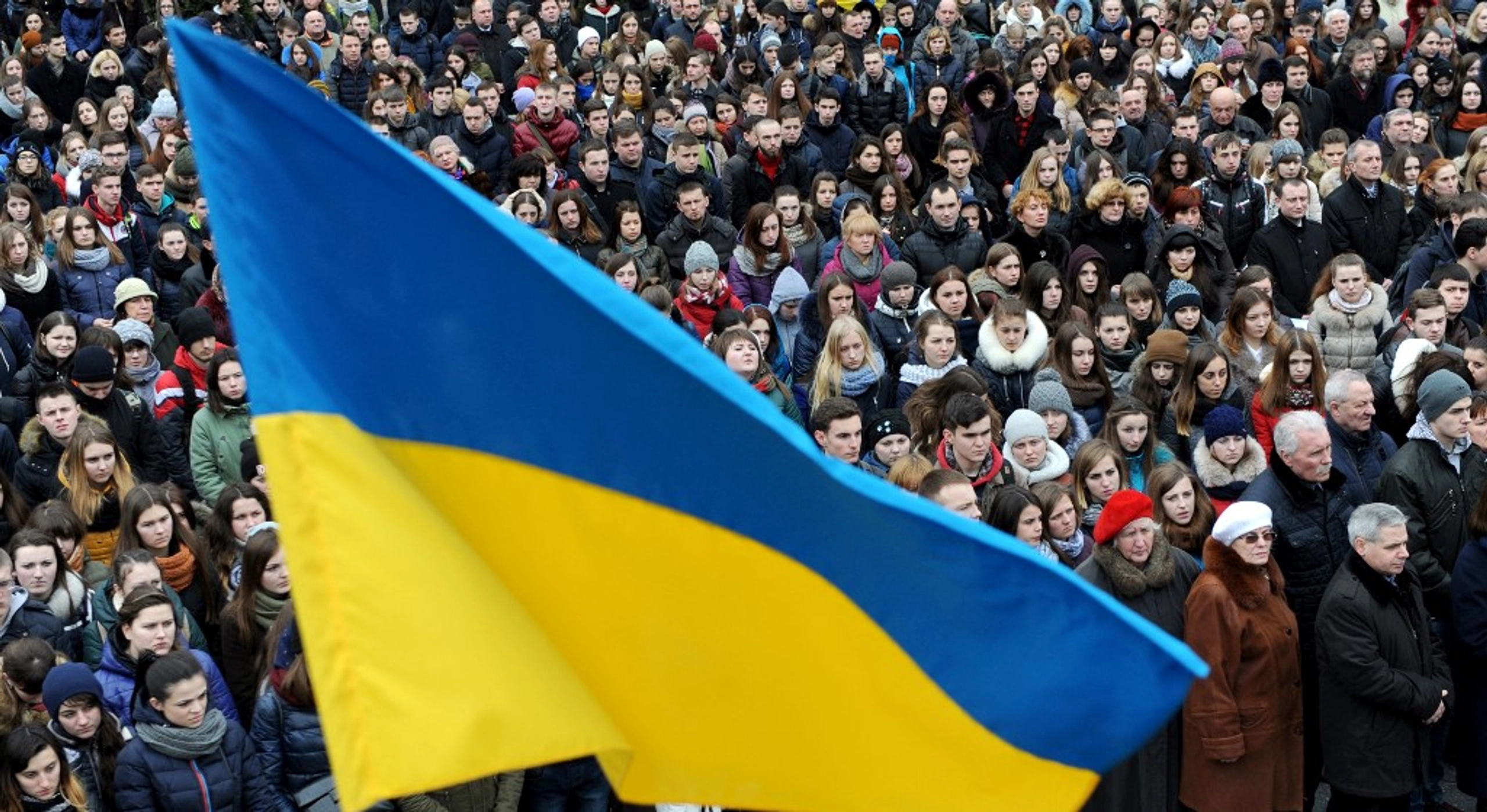
Do Ukrainians want to vote for a new president? Some likely do. Can it be done? Now that’s a different question.
But the question does not end there – what about drones? Can soldiers and refugees vote from different places? What does the law say? Those are just some of the basic, practical questions Ukraine now finds itself asking.
JOIN US ON TELEGRAM
Follow our coverage of the war on the @Kyivpost_official.
While it’s easy to dismiss the call for elections as careless or out of touch, the fact that the issue surfaced at all raises a deeper one: Who put it on the agenda – and who stands to gain?
Whose idea is it?
Washington is now pushing Ukraine to have an election – but it isn’t the first time the question came up.
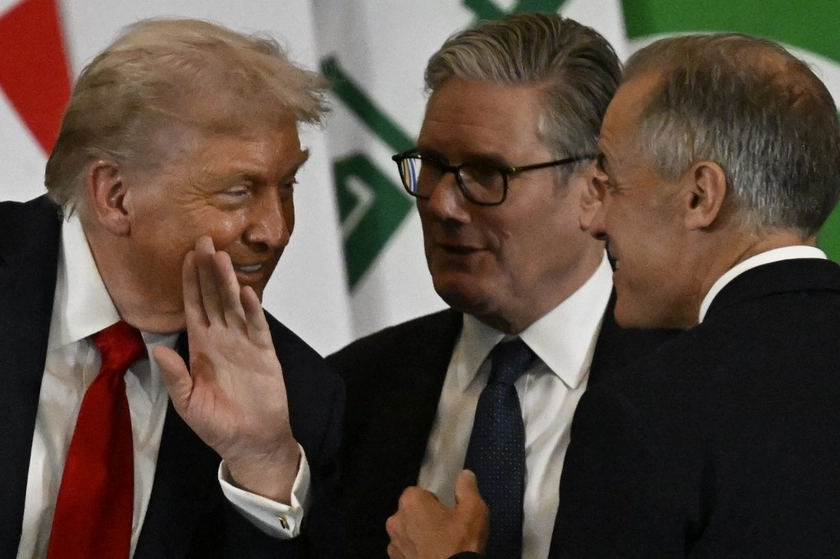
In recent weeks, US President Donald Trump has again pushed the idea that Ukraine should hold elections despite the ongoing war. He made a similar demand in February 2025, when he called President Volodymyr Zelensky a dictator – echoing language used by Russian propaganda.
This latest push came after Ukraine rejected a proposal to give up territory in Donbas as part of the US peace plan that originated from Russia, which Europe has asserted to be overly favorable to Moscow.
In reality, the demand for elections is a position long promoted by Moscow. Russian propagandists began pushing the idea in spring 2024, when Zelensky’s peacetime presidential term would have expired. Under Ukraine’s Constitution, however, elections cannot take place under martial law, and the president’s term is automatically extended.
G7 Summit to Address ‘Five-Point’ Peace Plan as Trump and Zelensky Join European Leaders
Despite this, pressure to hold wartime elections has continued – and now resurfaced.
Martial law, legal barriers
Ukraine does not have the legal mechanism to facilitate elections during martial law, which has been in effect because of Russia’s invasion.
Even in parliament, where election-related decisions originate, there are no draft proposals on holding national elections, according to Oleksandr Korniyenko, head of the governing “Servant of the People” faction.
Speaking on national television, he said Ukraine has no legal framework for elections during wartime and warned that conducting them without proper safeguards would violate the law and undermine the legitimacy of any new government.
Ukraine, as an EU candidate country, must meet democratic standards, he noted – and elections require security guarantees from international partners, primarily the US and EU.
“This is because of the war, because of Russian missiles, daily drones, because the Russians are advancing in the east and south. And it is not because we do not want democracy,” Korniyenko said, adding that Ukraine is looking into it after Zelensky hinted that work is ongoing to look into the feasibility.
“We are an EU candidate country; we must fully comply with all Copenhagen democracy criteria, and we will work on this,” Korniyenko added.
Martial law also blocks changes to the Constitution and prohibits national and local elections and referendums. It gives the government the continuity and expanded powers needed during wartime.
Some lawyers said local elections could theoretically be held with limited legal changes, but even that raises major concerns. Martial law restricts demonstrations, assemblies and rallies – all central to campaigning and political competition, especially at the local level.
Many opposition politicians critical of Zelensky also oppose elections.
They argue that wartime conditions heavily favor the incumbent, who appears constantly in national media as commander in chief, while opposition figures receive far less attention.
“Martial law implies the strengthening of central authority and effectively pauses political debate. What does this mean in practice? Many potential new candidates simply will not have time to make themselves known, while Zelensky and his team will have a far greater chance of being re-elected by using the telemarathon,” wrote opposition lawmaker Oleksiy Honcharenko.
“So I simply ask you to consider whether these are the elections you want.”
Popular legitimacy, voter access
Even greater concerns center on whether wartime elections could produce legitimate results – specifically, whether they represent the people of Ukraine.
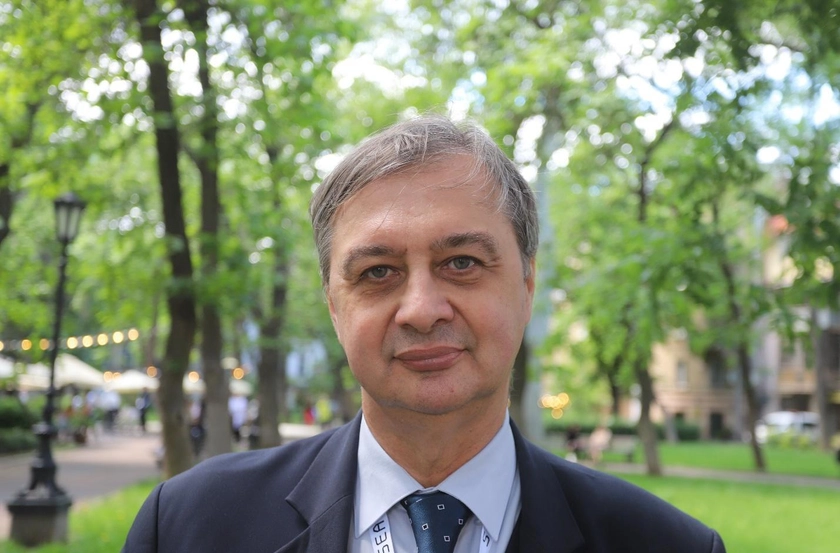
Ukraine’s pre-war population exceeded 40 million, excluding occupied parts of Donetsk, Luhansk and Crimea. Today, the population in government-controlled territory may be as low as 28 million, according to Ella Libanova, director of the Institute for Demography and Social Research.
“We do not yet have estimates for 2025. The figure for 2024 is between 28 and 30 million. Mobile operator data gives us about 30 million, while state registries suggest around 28 million,” Libanova said.
She added that over four million Ukrainian refugees are in EU countries, with another million or so scattered in the US, Canada, South America and New Zealand.
Experts say most will not be able to vote.
“At present, the system of embassies and consulates cannot process more than 150,000 – at most 200,000 people during elections,” a source in Ukraine’s Ministry of Internal Affairs told Kyiv Post.
This is roughly 4% of all Ukrainians in Western countries, while other experts estimated that only up to 120,000 outside Ukraine can vote, as most Ukrainian refugees in Europe are based in countries closer to Ukraine, while far fewer live in Scandinavia, the Balkans, or the UK.
Ultimately, this means that over 10 percent of the population now living in the West would be effectively excluded.
Electronic voting could help, but creating the technology and databases would take at least six months, and the system would be more vulnerable to manipulation. The opposition is skeptical, and the governing party cannot pass such legislation alone.
Then comes the issue of those living in occupied territories.
According to the Ministry for Reintegration, about six million Ukrainians were in occupied territory or inside Russia as of summer 2024. They have no ability to vote.
Issues for internally displaced Ukrainians, military personnel
Inside Ukraine, access is also limited.
About four million internally displaced people live away from their registered addresses, complicating ballot distribution. Millions more in high-risk regions – from Chernihiv in the north to Mykolaiv in the south and Donbas in the east – face dangers simply gathering to vote, with Russian forces routinely targeting large public assemblies.
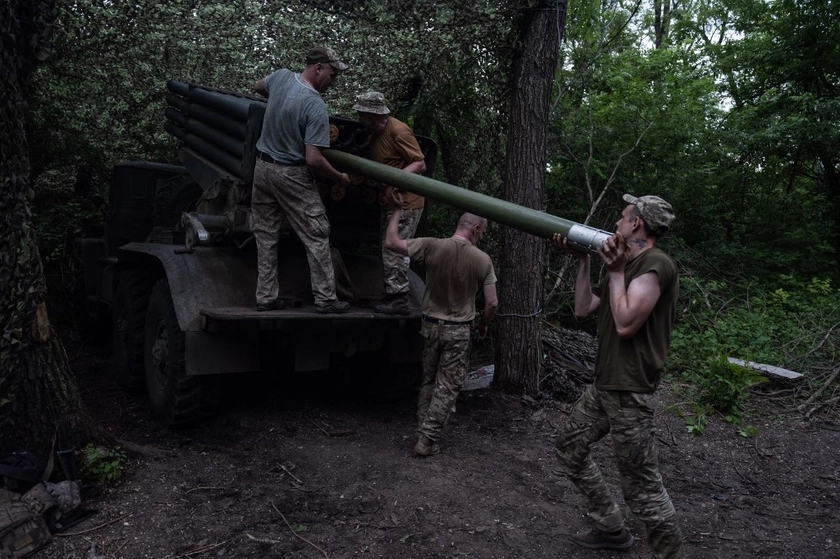
The most serious issue, however, is the military. Roughly a million men and women now defending Ukraine cannot vote in wartime conditions. That undermines any election’s legitimacy, especially since the military is the most trusted institution in Ukraine during wartime.
“It is unacceptable that those who defend the country’s sovereignty in the trenches will be unable to participate in voting,” a battalion commander from a brigade currently fighting in the Zaporizhzhia region told Kyiv Post.
“What kind of elections are these if the very people thanks to whom the country exists cannot vote?”
When all groups are counted, about 20 million people – half the prewar population – would either be unable to vote or would face major obstacles. Kyiv Post’s sources warn this would delegitimize the results and could trigger a political crisis – an outcome that would only benefit Russia, they said.
What’s next?
Zelensky has said he is personally ready for elections, but only if full security is restored so the greatest number of Ukrainians can vote. In practice, that means the war must end.
On Feb. 20, 2025, more than 400 civic groups and organizations issued a statement declaring that democratic elections are impossible without lasting peace.
They argued that Russia’s invasion is what prevents elections in Ukraine and that only Ukrainians can determine the legitimacy of their government.
“It is Russia, having committed an unprovoked act of aggression against a sovereign state, that makes it impossible to hold presidential and parliamentary elections in Ukraine. Russia is not democratic: It has no opposition, media, basic rights and freedoms, or political pluralism,” the statement says.
“The legitimacy of Ukrainian authorities is the exclusive prerogative of the Ukrainian people,” it adds.
They outlined a three-step process for restoring elections: a stable cease-fire guaranteed by partner countries, preparation and rebuilding of electoral infrastructure, and elections only after peace is established and martial law is lifted.
All of this depends on whether the US supports strengthening Ukraine’s democratic process – or risks fueling political instability during wartime, something Russia actively seeks.
You can also highlight the text and press Ctrl + Enter

Putin’s Worst Nightmare