WASHINGTON DC – For decades, Dec. 10 has been a day for US administrations to celebrate global human rights champions and reaffirm US commitment to democratic values.
This year, under the Trump administration, the day passed almost entirely unnoticed.
JOIN US ON TELEGRAM
Follow our coverage of the war on the @Kyivpost_official.
Human Rights Day, commemorating the adoption of the Universal Declaration of Human Rights in 1948, has traditionally served as a moment for the US to spotlight efforts to defend basic freedoms around the globe.
In contrast, the Trump administration has signaled a pivot: prioritizing trade and strategic interests over democracy promotion – a move that has left civil society advocates and human rights defenders sounding the alarm.
Shaheen stands alone on Senate floor
On Capitol Hill, only one voice spoke on the floor to mark the occasion. Senator Jeanne Shaheen (D-NH) on Thursday delivered a measured yet pointed address highlighting the global stakes of human rights abuses.
“I rise today to speak on International Human Rights Day, which marks the adoption of the Universal Declaration of Human Rights in 1948,” Shaheen began, emphasizing that after the atrocities of World War II, world leaders understood that large-scale abuses do not begin with mass violence.
“They begin when governments cut off basic rights, freedoms, and silence their own people. The declaration was an effort to build a more stable and predictable world by setting clear rules for how governments should treat their citizens,” she reminded.

Iran Rebuilds Missile Arsenal During US Truce, Stockpiling Fresh Russian Munitions
Shaheen drew parallels between historical violations and contemporary crises, citing Russia’s invasion of Ukraine and political repression in Georgia.
She praised local democracy advocates, including Nino Dolidze, for their courage in defending basic rights, and warned that US disengagement from democracy funding and election monitoring risks emboldening authoritarian regimes.
“Supporting democracies and independent civic groups makes America safer. That takes US leadership,” Shaheen concluded. “So I urge my colleagues to back steady funding, credible election observation, and the resolve to call out abuses when they occur.”
New framework for human rights
The Trump administration’s approach to human rights has shifted from the traditional focus on group-based and identity-focused rights to a framework emphasizing individual, “unalienable” rights, grounded in the Declaration of Independence.
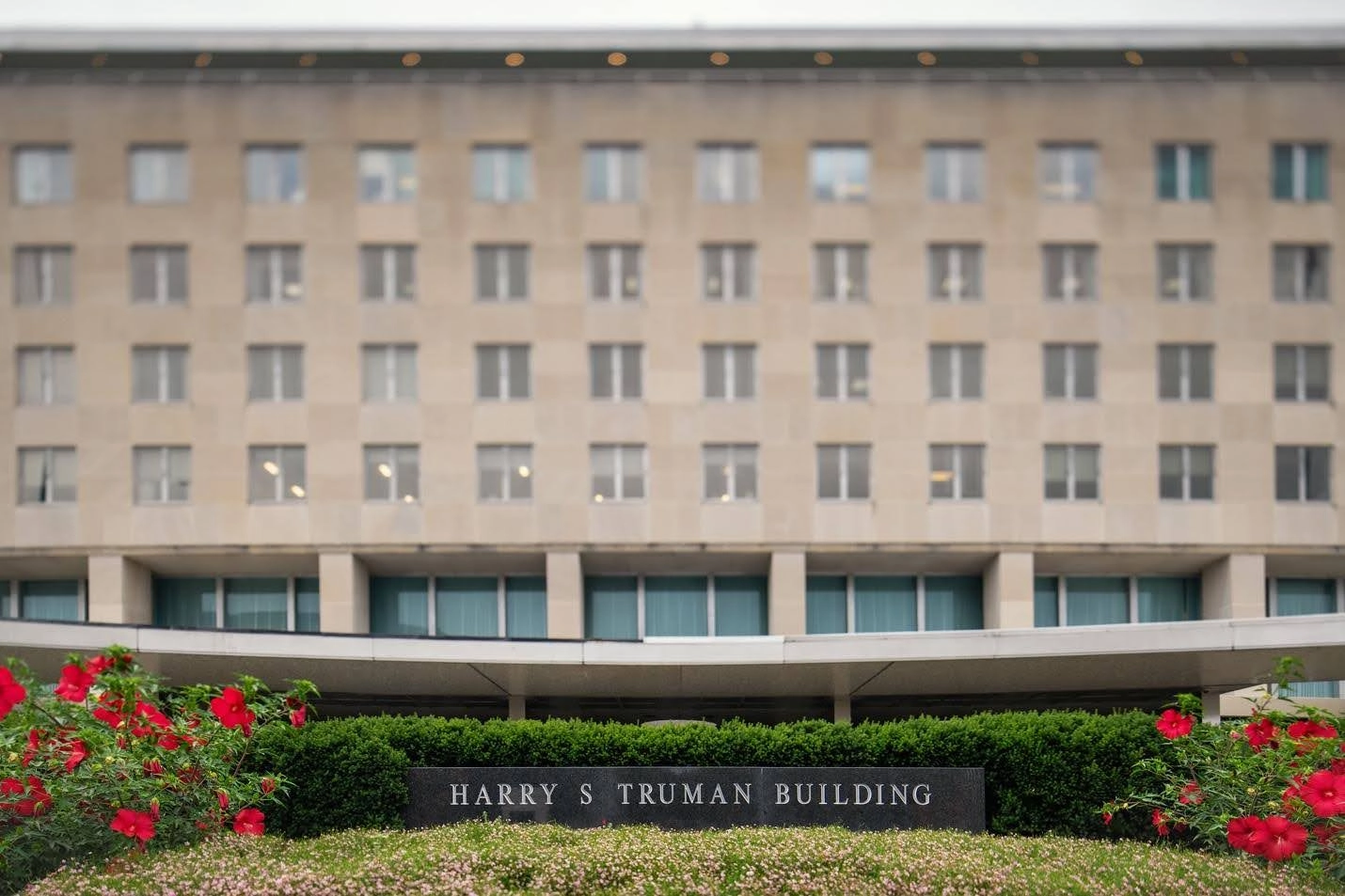
Last month, US embassies and consulates were instructed to begin preparing the annual Human Rights Reports under this new model.
A senior State Department official explained that the reports will highlight rights “endowed by a creator” and “pre-exist governments,” a corrective to previous administrations’ work, which was criticized for being “politicized” or influenced by “ideology.”
“These reports will be nonpartisan, factually based, and hard hitting,” the official said. “Of course, transnational oppression and imprisonment of journalists and curtailing of freedom of speech – violations of a person’s life and physical security – we will call that out across the world, whether a friend or a foe.”
Deputy State Department Spokesperson Tommy Pigott underscored the administration’s priorities. “In recent years, new destructive ideologies have given safe harbor to human rights violations,” he said last month, adding, “The Trump administration will not allow these human rights violations, such as the mutilation of children, laws that infringe on free speech, and racially discriminatory employment practices, to go unchecked. We are saying enough is enough.”
Silence speaks volumes
Even as the administration emphasizes procedural changes to its reporting, critics say the absence of any public acknowledgment on Human Rights Day is telling.
One senior congressional aide, speaking on background, lamented, “The optics matter. You can change report language, but ignoring the day itself signals that human rights are no longer a priority.”
For advocates of democracy and human rights, Dec. 10, 2025 may be remembered not as a celebration, but as a warning: US engagement in defending basic freedoms is increasingly subordinated to commercial and geopolitical priorities.
The administration’s silence, punctuated only by Shaheen’s speech, underscores a new era in which the podium for human rights – once a symbol of American moral leadership – now sits empty.
As one Capitol Hill staffer put it bluntly: “This administration talks about ‘hard-hitting’ reports, but right now, the world is watching an empty podium on Human Rights Day.”
And in the halls of power, where ritual and symbolism often matter as much as policy, the message was clear: when it comes to human rights, silence has become the administration’s loudest statement.
You can also highlight the text and press Ctrl + Enter
EU Approves New Russia Sanctions Listings
Ukraine Sees Increase in Civilian Casualties in May